Rottweiler Protection Sport and Whether to Do It
It's completely understandable why the idea of training your Rottweiler in protection sport might capture your imagination. After all, these magnificent dogs possess a powerful presence and a natural inclination to guard, making them seem like perfect candidates. However, the world of protection sport is far more nuanced than many realize, requiring immense dedication, a very specific temperament in your dog, and careful consideration of what it truly entails. This guide will walk you through the realities of Rottweiler protection sport, helping you discern if it's the right path for you and your cherished companion.
Understanding Protection Sport Versus Guarding Instinct
Before diving headfirst into specialized training, it’s crucial to understand the fundamental difference between a Rottweiler’s natural protective instincts and the highly structured, disciplined world of protection sport. They are not the same, and mistaking one for the other can lead to serious misunderstandings or even dangerous situations.
The Natural Rottweiler Guarding Instinct
Rottweilers were, for centuries, the "Metzgerhund" or butcher's dog, tasked with herding cattle, pulling carts of meat, and, yes, guarding the butcher's money. This history has imbued them with a strong, inherent guarding instinct. What does this look like in a typical Rottweiler? It often manifests as a keen awareness of their surroundings, a tendency to observe strangers with a calm, discerning gaze rather than effusive greetings, and a deep loyalty to their family and territory. They are naturally watchful, and many owners describe their Rottweilers as "wait and see" dogs – they take their time to assess a new person or situation before deciding how to react.
This natural guarding is not about aggression; it's about discerning threats and protecting their perceived flock. A well-bred Rottweiler with a stable temperament will not typically attack without provocation. Instead, they act as a deterrent. Their imposing size, deep bark, and confident demeanor are often enough to make an intruder think twice. This instinct, when properly channeled through socialization and basic obedience, makes them excellent family protectors without needing any specialized "bite work" training. Understanding The Rottweiler Guarding Instinct and How to Shape It is key to having a well-adjusted companion.
What Protection Sport Actually Is
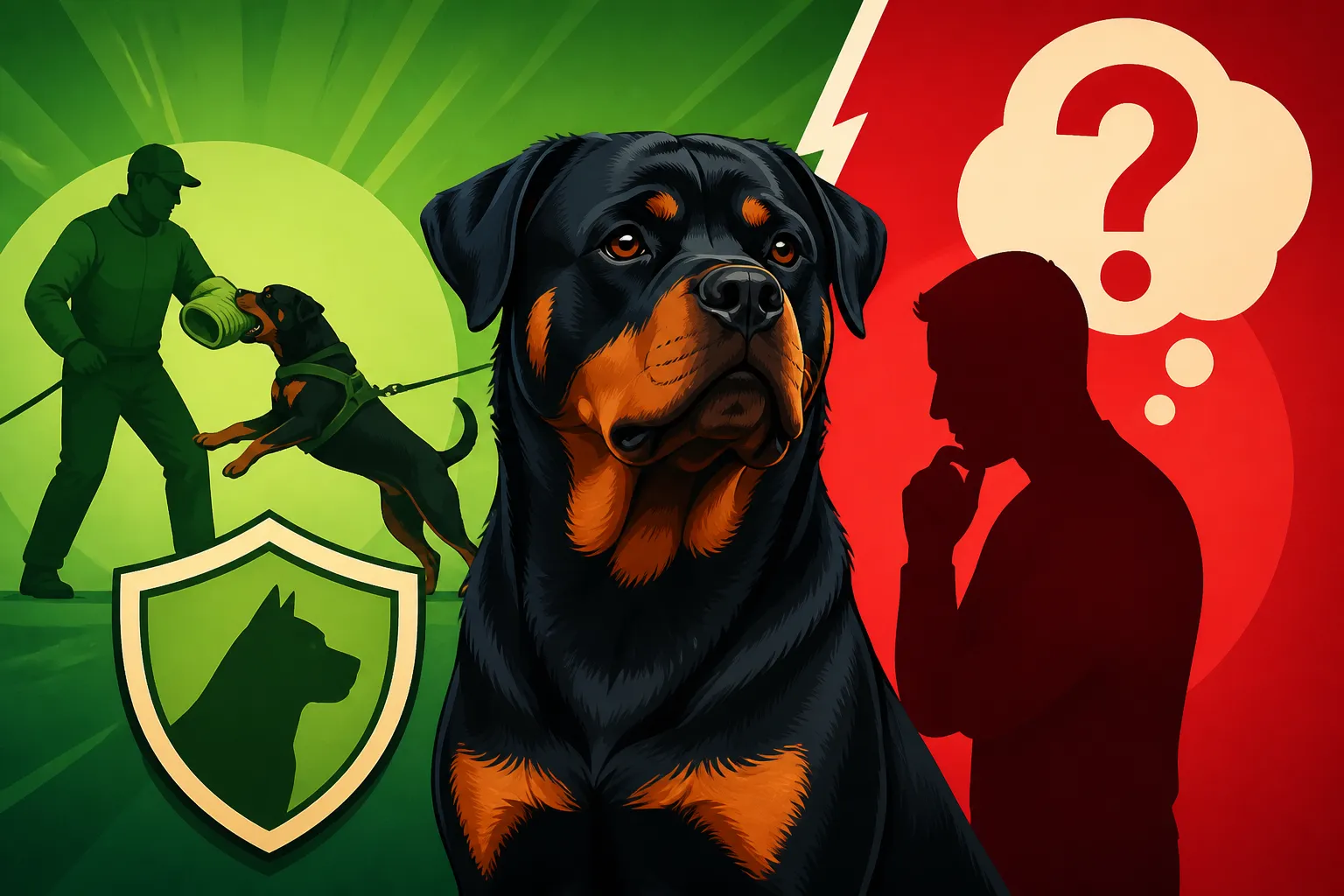
Protection sport, often referred to as IGP (Internationale Gebrauchshunde Prüfung, formerly Schutzhund) or simply "working dog sport," is a highly formalized competitive sport that tests a dog's courage, intelligence, physical prowess, and handler control. It consists of three distinct phases: tracking, obedience, and protection. The "protection" phase involves the dog demonstrating control and courage in confronting a "decoy" (a person wearing protective gear), engaging in bite work, and then releasing on command. It’s important to understand that this is a sport, not a street fight. The dog is not being trained to be indiscriminately aggressive.
True protection sport is built on a foundation of rigorous obedience and handler control. The dog must be able to switch from intense drive and bite work to calm, attentive obedience instantaneously. This level of control is paramount. The goal is to develop a highly disciplined working dog that can perform under pressure, not a dog that is dangerous or out of control. The training develops specific drives – prey drive and defensive drive – and channels them into a structured exercise.
Misconceptions and Dangerous Training
One of the biggest pitfalls when people consider protection sport for their Rottweiler is falling prey to dangerous misconceptions. Many imagine training a "tough" dog to be a personal bodyguard, but this often leads to backyard training that encourages indiscriminate aggression or reactivity. This is not protection sport and is incredibly irresponsible and dangerous for the dog, the family, and the community. True protection sport is never about making a dog "mean" or "vicious." It’s about channeling natural drives into a controlled, predictable sequence of behaviors.
Trainers who promise a "protection dog" in a few weeks without emphasizing control, temperament, and comprehensive obedience are a massive red flag. Such training can lead to fear-aggression, making a dog unpredictable and a liability. These dogs often become a danger to their own families or innocent bystanders because they lack the critical control and stability required for actual protection work. The consequence of improper training can be severe, often leading to a dog being deemed dangerous and, in worst-case scenarios, euthanasia. This is a primary reason why Why Protection Training Can Backfire on a Rottweiler is such a critical topic to consider.
The Demands and Commitment of Protection Sport
Embarking on the journey of protection sport with your Rottweiler is not a casual endeavor. It requires a significant investment of time, money, and emotional energy, demanding a great deal from both dog and owner. This isn't a weekend hobby; it's a lifestyle.
Ideal Temperament for Protection Sport
Not every Rottweiler, despite the breed's natural guarding instincts, is suited for protection sport. In fact, many are not. The ideal protection sport candidate possesses a very specific set of psychological and physical traits. First and foremost, they must have incredibly stable nerves. This means they are not easily startled, can recover quickly from novel or stressful situations, and do not react with fear or aggression. They need to be confident and resilient, able to handle pressure and loud noises without crumbling.
Secondly, a strong drive is essential. This includes high prey drive (the natural inclination to chase and capture) and a healthy defensive drive (the instinct to protect themselves or their handler). Coupled with these drives, they must also have a high degree of biddability – the willingness and desire to work with their handler and take direction. Intelligence is also key, as they must learn complex sequences of commands and adapt to changing scenarios. A dog that is merely "tough" or "aggressive" will not succeed; they need courage, control, and a strong partnership with their handler. The dog should also display the calm, confident demeanor expected of a Rottweiler as outlined in the breed standard.
Time, Effort, and Financial Investment
Let's be blunt: protection sport is a massive time sink. Training isn't something you do once a week for an hour and then forget about. It involves multiple weekly training sessions, often traveling to specialized clubs that have decoys and facilities. These sessions are intensive, demanding full focus and physical participation from both you and your dog. Beyond formal club training, there's daily homework – reinforcing obedience, building fitness, and practicing drive work. This can easily consume 10-20 hours a week, sometimes more, especially as you progress through titles and competitions. For individuals with demanding jobs or busy family lives, carving out this kind of consistent time can be a monumental challenge.
The financial investment is equally substantial. Expert protection sport trainers and club memberships don't come cheap. You're paying for highly specialized knowledge, experienced decoys, and access to proper training equipment. Add to that the cost of high-quality food to fuel a working dog, specialized gear like bite sleeves and suits, travel expenses to training locations and trials, and potential vet bills for a highly active dog. While it's hard to put an exact figure on it, it's safe to say you're looking at hundreds, if not thousands, of dollars per year. A private trainer can charge significant fees, and even group classes at a reputable club represent a notable expense. Exploring options like What a Private Rottweiler Trainer Charges and Board and Train Costs for a Rottweiler will quickly reveal the financial commitment involved.
Finding the Right Trainer and Club
This is perhaps the most critical step in pursuing protection sport safely and ethically. A good trainer and club are indispensable. Do not, under any circumstances, engage in "protection training" with someone who is not deeply experienced, certified, and reputable. Look for trainers associated with national or international working dog organizations (like the American Working Dog Federation or Deutscher Verband der Gebrauchshundesportvereine – DVH). These individuals and clubs adhere to strict standards of training, ethics, and safety.
When vetting a trainer or club, observe several training sessions without your dog. Look for positive reinforcement methods, clear communication between trainer and dog, and an emphasis on control. Do the dogs look happy and engaged, or stressed and fearful? Do the decoys work safely and correctly? Ask about their philosophy, their experience with Rottweilers, and their success rates in competition. A red flag would be any trainer who guarantees a "protection dog" quickly, encourages aggression, or doesn't emphasize the importance of obedience and temperament testing from the outset. A reputable club will prioritize the dog's well-being and the handler's ability to maintain control above all else. They should also require a temperament evaluation of your dog before allowing them into bite work.
Benefits and Potential Drawbacks
Like any intense activity, engaging in protection sport with your Rottweiler comes with both rewarding benefits and significant potential drawbacks. It’s essential to weigh these carefully before making a decision.
Benefits for Dog and Owner
For the right dog and handler, protection sport can be an incredibly enriching and rewarding experience. One of the most profound benefits is the unparalleled bond it forges between dog and owner. You are working together as a team, pushing boundaries, and overcoming challenges, which deepens trust and understanding. The intricate communication required in the sport hones your handling skills and teaches you to read your dog's body language with incredible precision. Your Rottweiler, in turn, learns to rely on your guidance implicitly.
Mentally, it provides a tremendous outlet for a Rottweiler's inherent intelligence and working drive. These dogs thrive on having a job to do, and protection sport provides a complex, engaging challenge that prevents boredom and destructive behaviors often stemming from a lack of mental stimulation. Physically, it keeps them in peak condition, building strength, endurance, and agility. Watching your Rottweiler perform with power, precision, and unwavering focus can be an immense source of pride and satisfaction, showcasing the breed's capabilities as a true working dog. It also helps instill a level of discipline and confidence that can translate into an even more well-behaved and stable dog in everyday life.
Risks and Ethical Concerns
However, it's crucial not to overlook the potential risks and ethical considerations. The physical demands of the sport can be strenuous, and there is always a risk of injury to the dog, especially given the Rottweiler's size and potential for joint issues. Proper conditioning and veterinary care are paramount. More significantly, the public perception of Rottweilers is often already skewed, and training them in bite work can exacerbate negative stereotypes. You might face increased scrutiny, fear, or even hostility from people who misunderstand the nature of the sport. This can complicate daily life, from finding housing to simply walking your dog in public.
Ethically, one must constantly ask if this activity truly benefits the individual dog. If a dog doesn't possess the ideal temperament – if they are fearful, anxious, or truly aggressive – forcing them into bite work is cruel and dangerous. It's not about making a fearful dog brave; it's about channeling the courage of an already confident dog. Furthermore, even a well-trained protection dog carries an inherent level of risk that requires constant vigilance from the owner. You are responsible for ensuring that your dog's training is never misused or misinterpreted, and that they remain a safe, controlled member of society. Why Protection Training Can Backfire on a Rottweiler highlights these risks in detail, emphasizing the need for extreme caution and proper guidance.
Managing a Trained Protection Dog in Daily Life
Owning a Rottweiler trained in protection sport is a profound responsibility that extends far beyond the training field. These dogs are not "off-duty" from their training; the principles of control and discipline must be maintained in every aspect of their daily lives. This means even more stringent leash manners, impeccable recall, and absolute reliability on all commands. You must always be acutely aware of your dog's state of mind and environment. This often means carefully managing introductions to new people or animals, even if the dog is well-socialized, simply due to the ingrained drives.
Furthermore, legal implications vary widely by locality. Some cities or counties have breed-specific legislation or restrictions on dogs trained for protection. It’s imperative to be fully aware of and comply with all local ordinances. This might mean securing additional permits, liability insurance, or adhering to specific containment requirements. The perception of your dog by others also needs constant management. Even if your dog is a perfectly stable, well-behaved family member, the "trained protection dog" label can carry significant weight and stigma, requiring you to be an advocate for your dog and responsible ambassador for the sport.
Alternatives to Formal Protection Sport
If protection sport feels too demanding, too risky, or simply not the right fit for your Rottweiler, don't despair! There are countless other ways to channel their intelligence, strength, and desire to work, fulfilling their breed specific needs without venturing into bite work.
Other Working Dog Sports for Rottweilers
Rottweilers excel in a wide array of working dog sports that play to their strengths in different ways. Obedience and Rally competitions, for instance, are fantastic for building precision, focus, and a strong partnership. They require your dog to perform a series of commands and navigate courses, demanding mental engagement and physical coordination. For dogs with a strong nose, tracking and scent work are incredibly rewarding. Rottweilers have excellent scenting abilities and thoroughly enjoy using their noses to solve problems, whether it's following a human scent trail or finding hidden articles.
Draft work and carting capitalize on their historical role as pulling dogs. It's a wonderful way to give them a "job" and harness their physical strength in a constructive manner, often done in a non-competitive, recreational setting. Rottweiler Carting and Draft Work goes into more detail on this noble pastime. Even herding trials, while less common for modern Rottweilers, can be an option for those few with a rekindled droving instinct, offering an engaging mental and physical challenge. Rottweiler Herding Trials discusses this further. While agility might seem appealing, it's generally approached with caution for such a heavy, large-boned breed, due to the impact on joints. However, a modified, lower-impact agility course could be an option if your vet approves and your dog is sound. You can also explore Rottweiler Obedience and Rally Competition for more ideas on focused, challenging sports.
Enhancing Natural Guarding Through Basic Training
You don't need formal protection sport to have a well-mannered, naturally protective Rottweiler. In fact, strong basic obedience and socialization are far more effective at creating a safe and reliable family guardian. A Rottweiler who is confidently socialized from a young age understands the world around them and learns what is and isn't a threat. Socializing a Rottweiler Puppy Properly is a foundational step here, introducing them to various sights, sounds, people, and other dogs in a positive, controlled manner. This builds their confidence and reduces the likelihood of fear-based aggression.
Coupled with this, consistent and thorough obedience training teaches them control. A Rottweiler that consistently responds to "sit," "stay," "come," and "leave it" commands is a dog that you can trust to respond to your direction in any situation. This kind of training should start early, as Training a Rottweiler Before It Outweighs You emphasizes, because it's much harder to train a powerful adult dog than a pliable puppy. A confident, well-behaved Rottweiler with excellent manners is itself a powerful deterrent, signaling to any potential threat that this dog is under control and likely well-protected by an owner who is equally in charge.
Enrichment and Mental Stimulation at Home
Beyond formal training and sports, everyday enrichment is vital for a Rottweiler's well-being and to prevent behavioral issues. These intelligent dogs need to use their brains! Puzzle feeders are fantastic for this, making them "work" for their meals and slowing down their eating. You can find many robust options on Amazon designed for strong chewers. Interactive toys that dispense treats or require manipulation can keep them engaged for extended periods.
Structured play, like fetch, hide-and-seek, or even teaching new tricks, provides mental and physical exercise. Rotate toys to keep them novel and exciting. Providing appropriate chew toys – durable ones that won't splinter or be swallowed – also satisfies a natural instinct and helps keep teeth clean. A well-exercised and mentally stimulated Rottweiler is a happier, calmer, and better-behaved companion. Websites like BAXTER & Bella offer online training resources and ideas for enriching your dog's life and continuing their education at home, which can be a huge asset. Remember, a tired Rottweiler is usually a good Rottweiler. For more ideas on how to keep your big dog happy and engaged, consider Puzzle Feeders Built for a Rottweiler and Rottweiler Enrichment Beyond Walks.
| Feature / Aspect | Formal Protection Sport | General Guarding & Deterrent Training |
|---|---|---|
| Primary Goal | Competitive sport; highly controlled bite work | Responsible pet ownership; natural deterrence & safety |
| Dog Temperament | High drive, stable nerves, courageous, biddable, confident | Stable, confident, discerning, loyal |
| Training Focus | Tracking, precision obedience, structured bite work | Basic to advanced obedience, strong socialization, impulse control |
| Time Commitment | Very High (multiple weekly sessions, homework) | Moderate (daily practice, regular classes) |
| Financial Cost | Very High (club fees, expert trainers, gear, travel) | Moderate (basic classes, quality food, vet care) |
| Risks | Physical injury, negative public perception, legal complexities | Lower physical risk, generally positive public perception |
| Trainer Required | Highly specialized, certified IGP/working dog trainer | Certified professional dog trainer, behaviorist if needed |
| Outcome | Highly disciplined working dog, potential competitor | Well-behaved, confident, safe family guardian |
Ultimately, the decision to engage in protection sport with your Rottweiler is a deeply personal one, requiring honest self-assessment of your resources and your dog's true temperament. For the few Rottweilers with the correct genetic makeup and the dedicated owners willing to commit fully, it can be a profoundly rewarding journey. However, for most, channeling their natural instincts through comprehensive socialization, rigorous obedience, and engaging alternative activities will lead to a happier, healthier, and safer life for everyone involved. Your Rottweiler is a magnificent companion, and nurturing their best qualities in a responsible way is the greatest protection you can offer them.
Disclaimer
This article is for general informational purposes only and does not constitute professional advice. Laws, prices and regulations vary by location and change over time. Consult a qualified professional for guidance on your specific situation.