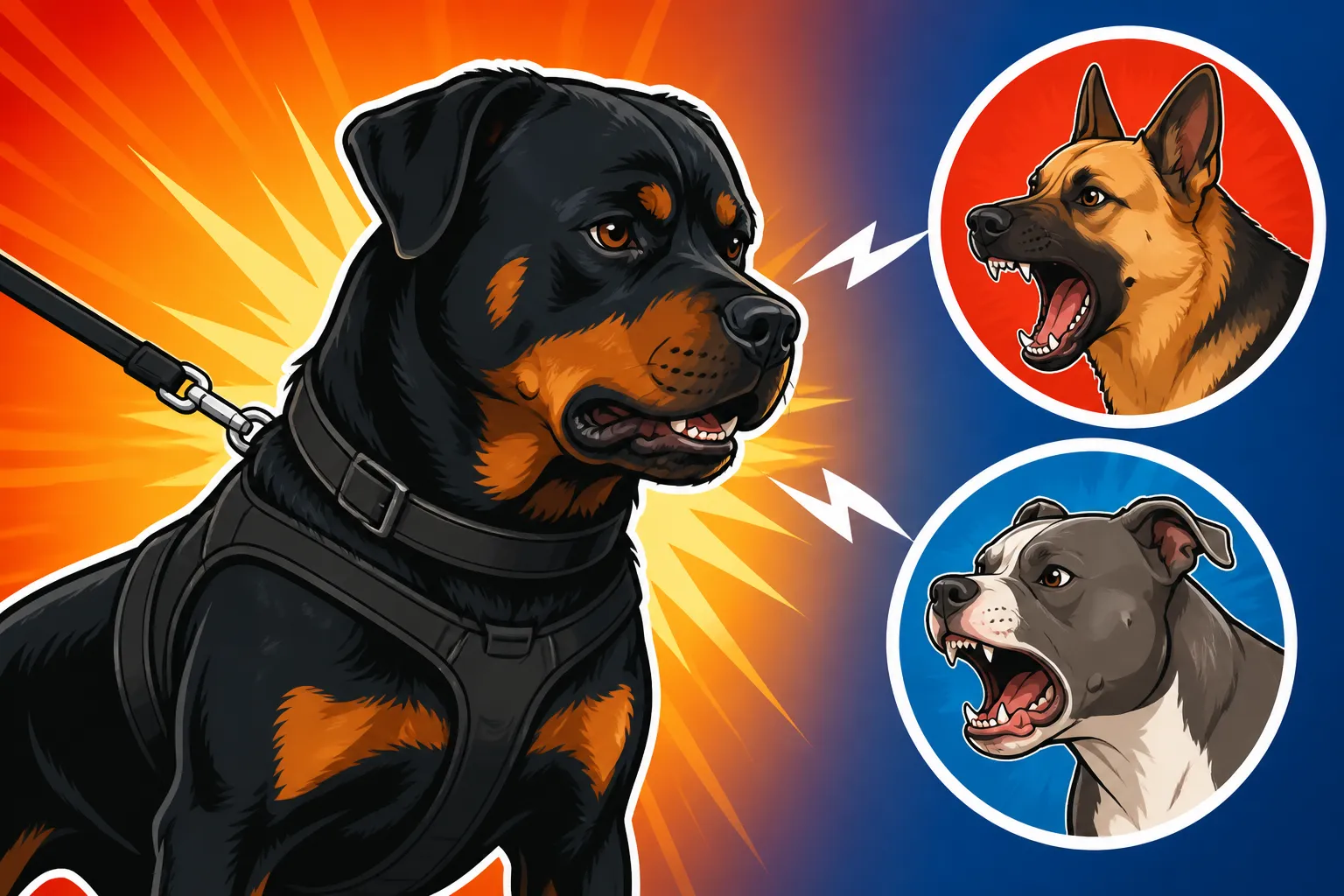
Rottweiler Reactivity Toward Other Dogs
It's incredibly disheartening and often downright embarrassing when your big, beautiful Rottweiler suddenly turns into a barking, lunging mess at the sight of another dog on a walk. You love your companion, but those outbursts can make you dread leaving the house, feeling judged by strangers, and wondering if you'll ever have those calm, peaceful strolls you dreamed of. This guide is here to walk you through understanding why your Rottweiler reacts this way, how to manage these situations, and practical steps you can take to foster a more confident, less reactive dog, making your walks enjoyable again.
Understanding What Reactivity Actually Is
When your Rottweiler erupts into a flurry of barks, growls, and lunges at the sight of another dog, it’s easy to label them as "aggressive." But often, what you're seeing is actually reactivity – a strong, over-the-top response to a trigger. It’s a crucial distinction, because understanding the underlying emotion behind the behavior is the first step toward helping your dog. Reactivity isn't necessarily about wanting to harm, but rather a profound inability to cope with a situation.
The Difference Between Reactivity and Aggression
True aggression usually stems from a desire to inflict harm or intimidate to get another animal to back off. While a reactive display can look aggressive to an untrained eye – and can certainly escalate if not managed – it often originates from a place of fear, anxiety, frustration, or even over-excitement. Imagine feeling overwhelmed and lashing out because you don't know what else to do; that's often what's happening with a reactive dog. They might be trying to make the other dog go away, not because they want to fight, but because they're scared or feel trapped and threatened.
On the other hand, aggression is a more deliberate intent to cause harm. A truly aggressive dog might seek out confrontation, whereas a reactive dog is often just trying to create distance or diffuse a situation in the only way they know how. The key is that reactivity is a learned response to stress, not necessarily an innate desire to be confrontational. It's a dog trying to communicate "Please, go away!" in the loudest, most dramatic way they can.
Why a Rottweiler Might Be Reactive
Rottweilers, by nature, possess a powerful guarding instinct and can be discerning about strangers, both human and canine. This inherent trait, combined with their sheer size and strength, can make reactivity particularly challenging. A poorly socialized Rottweiler puppy might never have learned appropriate canine communication, leaving them feeling insecure and prone to lashing out when faced with unfamiliar dogs. Perhaps they had a negative experience with another dog – a fight, being jumped on, or even just repeated rude approaches from off-leash dogs. This can quickly turn them into a dog that believes the best defense is a good offense, especially if their initial attempts to avoid confrontation were ignored.
Consider also the physical aspect. A large, powerful breed like a Rottweiler naturally demands respect, and their reactive displays can be incredibly intimidating. If they've learned that a big display makes other dogs (and their owners) give them space, that behavior is self-reinforcing. It "works" for them, even if it's distressing for everyone else. Furthermore, pain can play a significant role. An undiagnosed ache in their hips or elbows could make them wary of other dogs getting too close, leading to snappiness or reactivity as a way to say, "Don't touch me, I hurt!" Always rule out medical causes with your vet.
Common Triggers for Rottweiler Reactivity
Understanding what sets your Rottweiler off is paramount. It’s not always "any dog." Often, reactivity is specific. Some Rottweilers react primarily to off-leash dogs, feeling vulnerable when constrained on a leash. Others might react to dogs of a certain size, breed, or even color. A smaller, yappy dog might be a bigger trigger than a calm, large dog because of the perceived threat or annoyance. Distance is also a huge factor – a dog might be fine with another dog across the street but explode if they come within ten feet.
Common triggers often include other dogs appearing suddenly, especially around corners or from behind parked cars. The sudden surprise element can cause an immediate spike in anxiety. High-arousal environments like busy dog parks – which are generally not recommended for reactive dogs, as discussed in Rottweiler Dog Park Risks at Adult Size – or crowded sidewalks can also be overwhelming. Even something as simple as your Rottweiler being tired, hungry, or not having had enough mental stimulation can lower their tolerance threshold, making them more prone to a reactive outburst.
Identifying the Signs of Reactivity Early On
Many Rottweiler owners feel like their dog's reactivity comes out of nowhere, but often, there are subtle cues that we miss in the moment. Learning to read your dog's body language is a superpower in managing reactivity. It allows you to intervene before your Rottweiler escalates, preventing the full-blown outburst and reinforcing calmer behavior. Think of it as catching the whisper before the shout.
Subtle Cues Before the Outburst
Before your Rottweiler barks and lunges, they'll likely give off a series of quieter signals that they're becoming uncomfortable. These can be incredibly subtle, like a slight stiffening of their body, a direct stare that freezes on the other dog, or their ears swiveling to lock onto the trigger. You might notice a tightening of their lips, a slight wrinkle in their brow, or even a slow, deliberate tail wag that looks friendly but is actually a sign of internal conflict or tension. They might pull their leash taut, even before barking, indicating their intention to move towards or away from the trigger.
Another common pre-cursor is what's called "whale eye," where you see the whites of their eyes on either side of their iris as they turn their head away slightly but keep their eyes fixed on the trigger. This is a clear sign of stress or anxiety. They might also yawn, lick their lips, or shake their body as if wet, all out-of-context behaviors that indicate stress. Learning Reading a Still Rottweiler That Is Not Relaxed can give you an edge in identifying these early signals and acting on them. The more you watch your dog, the better you’ll become at recognizing their unique tells.
The Full-Blown Reactive Display
When the subtle cues are missed, or the trigger is too intense, that's when you get the full-blown display: the barking, growling, lunging, and pulling. Your Rottweiler might become a coiled spring, straining against their leash with all their might. Their hackles might go up along their spine, indicating arousal and heightened emotion, whether that's fear or excitement. They might emit a deep, guttural growl that sends shivers down your spine, coupled with sharp, insistent barks.
In these moments, your Rottweiler isn't thinking rationally; they're operating on instinct, driven by their heightened emotional state. It can feel like they're completely ignoring you, and in a way, they are. Their focus is 100% on the trigger, and their brain is flooded with stress hormones. This is why shouting or punishing them in this state is often counterproductive; it only adds to their stress and can damage your bond. You might even find that they're redirecting their frustration onto you, by nipping at the leash or even your hand. This is not aggression towards you, but an outlet for their extreme emotional overflow.
Reading Your Rottweiler's Body Language
To truly help your reactive Rottweiler, you need to become fluent in their language. Pay attention to their entire body: ears, eyes, mouth, posture, and tail. Are their ears pinned back, or forward and alert? Is their mouth closed tightly, or are they panting with a stiff jaw? What is the set of their body – relaxed and fluid, or stiff and leaning forward? A high, stiff tail wag is very different from a relaxed, sweeping one.
| Body Language Cue | Potential Meaning (in context of reactivity) |
|---|---|
| Stiff body, frozen stance | Alertness, tension, preparing to react |
| Direct, hard stare | Challenge, warning, high focus on trigger |
| "Whale eye" (whites of eyes showing) | Stress, fear, anxiety |
| Lip licking, yawning (out of context) | Calming signal, stress indicator |
| Tail stiff, high, rapid wag | Arousal, tension (not always friendly) |
| Hackles raised | Arousal, fear, excitement, sometimes aggression |
| Low growl, air snap | Warning, request for distance |
| Panting with a closed mouth | Stress, fear, anxiety |
| Pulling intensely on leash | Desire to move toward or away from trigger |
| Ears pinned back or flattened | Fear, appeasement, submission |
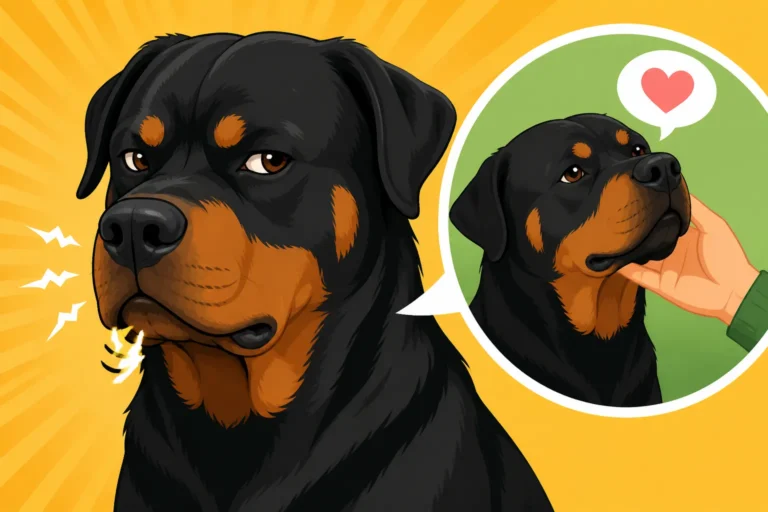
Understanding The Rottweiler Grumble That Is Not a Growl can also be key, as not all vocalizations are aggressive. Many Rottweilers have a "talking" grumble that's quite endearing within the family but can be misinterpreted by strangers. However, in a reactive context, any vocalization coupled with stiff body language usually means trouble. Consistent observation is how you’ll learn to predict and prevent.
Management Strategies for Reactive Rottweilers
Managing a reactive Rottweiler is all about setting them up for success. This often means temporarily changing your routine and being highly strategic about exposure to triggers. It's not about avoiding triggers forever, but about reducing their impact while you work on changing your dog's emotional response. Think of it as creating a safe bubble for your Rottweiler while they learn new coping mechanisms.
Proactive Avoidance and De-escalation
The golden rule of managing reactivity, especially in the early stages, is avoidance. If you know your Rottweiler reacts to other dogs within a certain distance, then don't let them get within that distance. This might mean walking at off-peak hours, choosing less trafficked routes, or even driving to a quiet park where you can observe from a safe distance. If you see another dog approaching, don't hesitate to turn around, cross the street, or duck behind a car or bush. It might feel awkward or rude, but your dog's emotional well-being and everyone's safety are far more important.
When avoidance isn't possible, de-escalation is your next best tool. Keep your walks moving, avoid stopping and allowing your dog to fixate. If you find yourself too close to a trigger, a quick, happy-sounding "Let's go!" and a brisk change of direction can often break their focus. Reward them heavily for disengaging, even if it's just for a split second. The goal is to make it clear that looking at you and moving away from the trigger is far more rewarding than fixating and reacting. Practicing a solid Rottweiler Recall Away From a Squirrel or other distractions in low-stimulus environments can lay a great foundation for emergency disengagements in reactive situations.
Essential Gear for Safe Walks
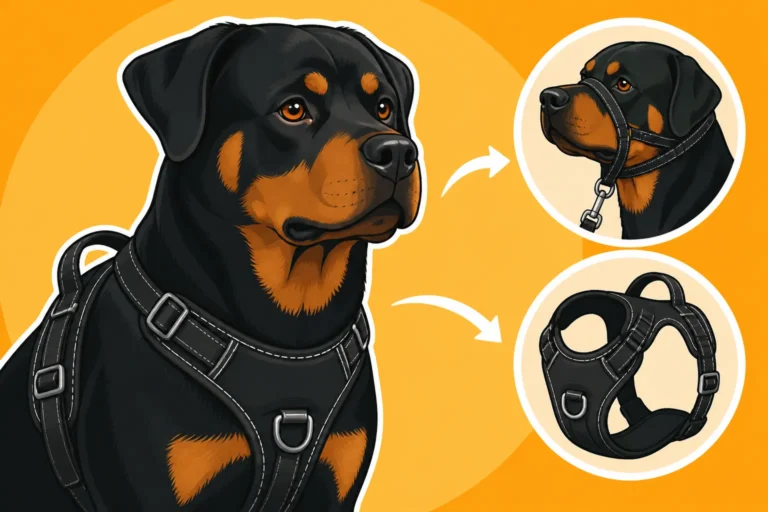
With a powerful dog like a Rottweiler, the right gear isn't just helpful; it's essential for your safety and control. A standard flat collar often isn't enough when a hundred-plus pound dog decides to lunge. Many owners find success with a front-clip harness, like those widely available on Amazon, which redirects your dog's pulling power back towards you, making it much harder for them to drag you forward. Brands like Freedom No-Pull Harness are popular options. Head halters are another effective tool, giving you much more control over your dog's head, and thus, their direction and focus. However, these require careful introduction to ensure your Rottweiler accepts them comfortably.
A strong, comfortable leash is also critical. A 6-foot standard leash made of durable material is usually sufficient. Avoid retractable leashes, as they offer little control, can snap, and teach your dog that pulling extends their range. For training in controlled, open spaces, a long line (15-30 feet) can be invaluable for practicing recall and distance work without the risk of your dog running off. Always ensure your Rottweiler is wearing proper identification tags and is microchipped, just in case they manage to slip free during a particularly intense reaction. Finding Harness Hardware That Holds a Pulling Rottweiler is key to ensuring reliability.
Managing the Home Environment
Reactivity isn't just an outdoor problem; the home environment plays a significant role too. If your Rottweiler reacts to dogs walking by your fence or passing your window, it's vital to manage these exposures. Use privacy film on windows, or simply keep your dog in a part of the house where they can't see triggers. A well-placed dog gate can prevent them from rushing to the front door if another dog is passing. The less your Rottweiler practices the reactive behavior, the less ingrained it becomes.
Enrichment is also crucial. A bored Rottweiler is often a stressed Rottweiler, and stress lowers their coping threshold. Provide plenty of mental stimulation with puzzle toys (you can find robust ones on Amazon designed for strong chewers), snuffle mats, and training games inside the house. Regular, calm exercise is also important – not necessarily high-intensity runs, which can sometimes over-excite a reactive dog, but steady, sniff-filled walks in quiet areas where you can manage encounters. A tired dog, both mentally and physically, is often a calmer dog.
Training Interventions for Long-Term Change
While management is about preventing reactions, training is about changing your Rottweiler's emotional response to other dogs. This is where the real, lasting progress happens. It takes consistency, patience, and a positive reinforcement approach, focusing on making positive associations with previously scary or frustrating triggers. Remember, you're not trying to punish the reaction, but to change the underlying emotion.
Counter-Conditioning and Desensitization
These two techniques are the bedrock of reactivity training. Desensitization means gradually exposing your Rottweiler to their trigger at a distance where they can see it but without reacting. This is their "threshold." If your dog reacts at 50 feet, you need to start at 75 feet. Counter-conditioning means changing your dog's emotional response to that trigger. Instead of seeing another dog and feeling fear or frustration, you want them to think, "Oh, another dog! That means good things happen!"
Here's how it works: Find your dog's threshold distance. When another dog appears at that distance or further, immediately start feeding your Rottweiler high-value treats (think cooked chicken, cheese, hot dogs). Keep feeding until the other dog passes and is out of sight, then stop. The key is that the treats only appear when the trigger is present. This creates a positive association: other dog = yummy treats. Over time, you can gradually decrease the distance as your dog shows a calm response. This process is detailed further in Counter-Conditioning a Reactive Rottweiler. It's slow work, but incredibly effective.
Building a Stronger "Look at That"
A fantastic exercise for reactive dogs is teaching a solid "Look at That" (LAT) cue. The goal is for your Rottweiler to see a trigger, look at it, and then voluntarily look back at you for a reward, rather than fixating and reacting. You want to capture that moment of choice.
Start in a low-distraction environment. When your Rottweiler notices something (anything, not just another dog yet), say "Yes!" or use a clicker the instant they look at the object, then immediately reward them when they turn their head back to you. Practice this many, many times with various low-level distractions. Once they're reliably looking at the object and then back at you, you can start incorporating it with distant dog triggers. The command isn't "look at me," but rather "look at that (then look at me for treats)." This empowers your dog to process the trigger and then choose to disengage, giving them a sense of control and building confidence. Many online training platforms, such as BAXTER & Bella, offer structured lessons on exercises like LAT, which can be invaluable.
The Importance of a Professional Trainer
While this guide offers strategies, dealing with a reactive Rottweiler can be complex and overwhelming. This is especially true given their size and strength; a mistake could be dangerous. Don't hesitate to seek help from a certified professional dog trainer or a veterinary behaviorist experienced in working with large, powerful breeds like Rottweilers. They can accurately assess your dog's specific triggers, body language, and the underlying emotions driving the reactivity.
A good trainer will work with you using positive, force-free methods. They can help you identify your dog's precise threshold, refine your timing for counter-conditioning, and teach you advanced leash handling skills that can make a world of difference. They can also help rule out any underlying fear or anxiety issues that might benefit from medication in conjunction with training. Remember, seeking professional help is a sign of a responsible owner committed to their dog's well-being, not a sign of failure. Don't be afraid to ask for recommendations or research Finding a Rottweiler-Experienced Trainer Near You.
Living with a Reactive Rottweiler: Expectations and Support
Bringing a reactive Rottweiler into a state of calm doesn't happen overnight. It's a journey, often with ups and downs, but it's a journey worth taking. Setting realistic expectations and building a strong support system for yourself and your dog are crucial for long-term success and maintaining your own sanity.
Realistic Progress and Patience
It’s tempting to want a quick fix, especially when those reactive outbursts are so public and disruptive. However, training a reactive Rottweiler is a marathon, not a sprint. You'll have amazing days where your dog ignores three dogs in a row, and then you'll have days where they react to a squirrel. This is normal. Progress isn't linear. Celebrate the small victories: a shorter reaction, quicker recovery, or even just noticing a trigger before your dog does and successfully redirecting them.
Consistency is key. Every walk, every outing, is a training opportunity. Even if you're not actively doing a counter-conditioning session, you're always managing the environment and observing your dog. Understand that your Rottweiler may never be the dog that happily greets every single dog at the local dog park – and that's okay. The goal is often to achieve a dog that can calmly pass other dogs without losing control, allowing both of you to enjoy your time together. Patience with yourself and your dog will be your most valuable asset.
Finding Your Support System
Living with a reactive dog can be isolating. You might feel like you can't join friends for walks, or that you're constantly making excuses. It's vital to find a support system. This could be an understanding friend who walks with you, allowing you to practice parallel walking at a distance from their calm dog. It could be an online community of reactive dog owners who share strategies and offer encouragement. Many cities also have local reactive dog classes or "bat-dog" (behavior adjustment training) groups where you can practice in a controlled, safe environment with others who understand.
Your vet is also a crucial part of your team. Regular check-ups can rule out pain as a cause of reactivity, and they can discuss options like anti-anxiety medication if appropriate. Don't underestimate the mental and emotional toll that managing a reactive dog can take on you. Lean on your support system, and don't be afraid to take a break if you're feeling overwhelmed.
The Joy of the Small Victories
While the big goal might feel far off, the journey of working with a reactive Rottweiler is filled with moments of genuine joy. It's the moment your dog sees another dog and chooses to look at you for a treat. It’s the walk where you successfully navigate a busy street without a single bark. It's the feeling of understanding your dog's subtle cues and knowing you prevented an outburst. These small victories are proof that your hard work is paying off and that your bond with your Rottweiler is strengthening.
Witnessing your Rottweiler gain confidence and feel safer in the world is incredibly rewarding. While the world might not always understand, you will understand your dog better than ever. The effort you put into managing and training their reactivity deepens your connection, transforming those once-dreaded walks into opportunities for growth and quiet companionship. It's a testament to the powerful loyalty and resilience of the Rottweiler, and to your dedication as their guardian.
Disclaimer
This article is for general informational purposes only and does not constitute professional advice. Laws, prices and regulations vary by location and change over time. Consult a qualified professional for guidance on your specific situation.