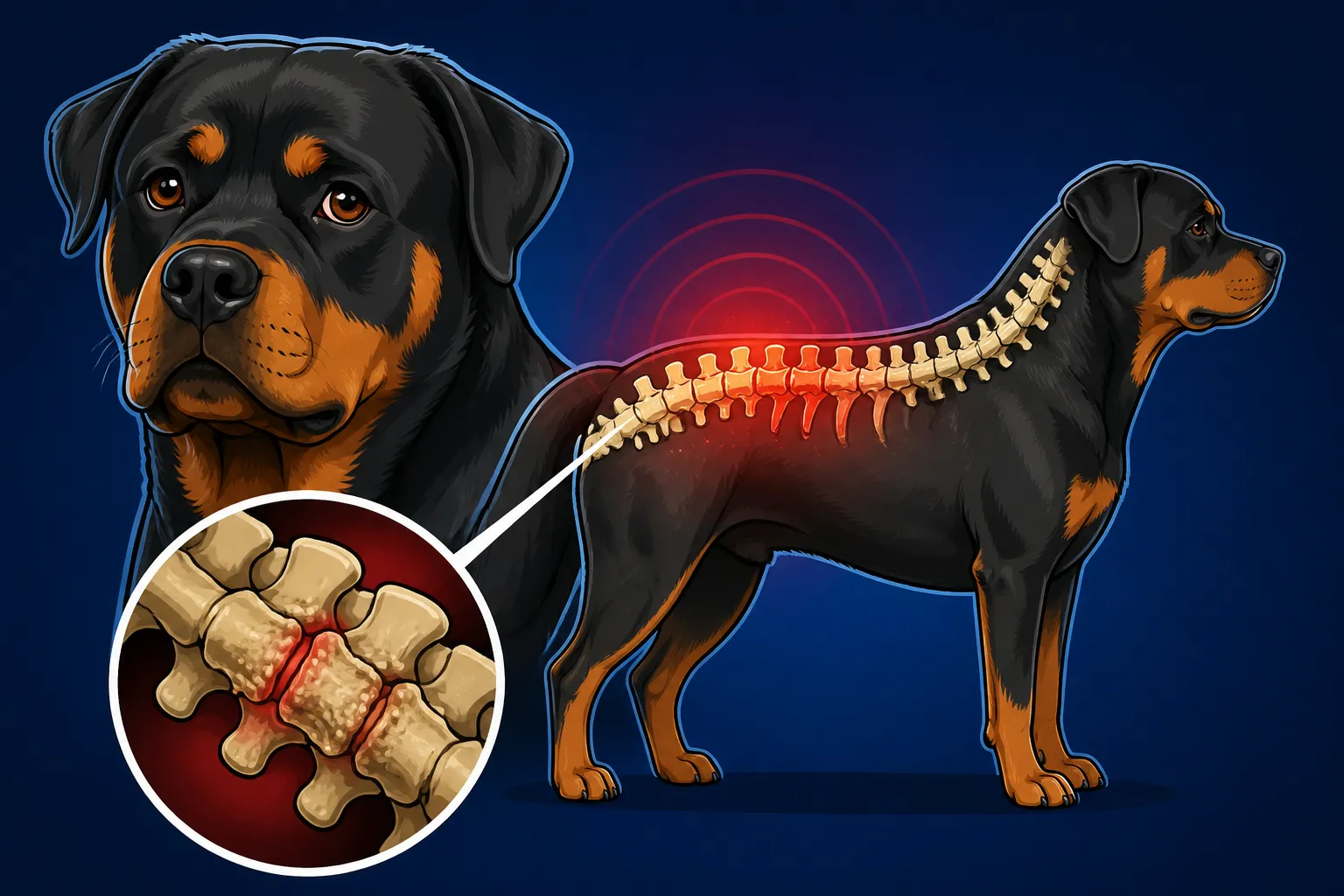
Spondylosis Along a Rottweiler’s Spine
It’s a heart-wrenching moment when you notice your beloved Rottweiler, once so full of powerful strides and playful energy, starting to move with a little less fluidity. Perhaps they hesitate before jumping into the car, or their morning stretch looks more like a painful effort than a limber awakening. These subtle shifts, particularly as your Rottweiler ages, can often point to conditions like spondylosis along their spine, a common and often misunderstood ailment. This guide will help you understand what spondylosis is, how to spot its signs, and what you can do to manage this chronic condition to keep your Rottweiler as comfortable and mobile as possible.
Understanding Spondylosis Deformans in Rottweilers
Spondylosis deformans, often simply called spondylosis, sounds intimidating, but it's essentially a degenerative condition affecting the vertebrae of the spine. It's a natural part of aging for many large breeds, but for a powerful dog like a Rottweiler, it can have a significant impact on their quality of life if not managed properly.
What Spondylosis Is and How It Develops
Imagine the spine as a stack of bony blocks (vertebrae) separated by soft, spongy discs that act as shock absorbers. Spondylosis occurs when bony spurs, called osteophytes, start to form along the edges of these vertebrae. These spurs can grow quite large, sometimes forming bridges between adjacent vertebrae, which essentially fuses them together. This isn't usually the primary cause of pain itself, but rather a body's attempt to stabilize an area of the spine that has become unstable or damaged over time due to wear and tear.
The process often starts with instability in the intervertebral discs. Over years of movement, jumping, and just general dog-life activities, these discs can degenerate, losing their elasticity and height. This loss of cushioning can lead to increased motion and friction between the vertebrae, signaling to the body that it needs to fortify the area. So, the body responds by laying down new bone, creating these osteophytes. While it's trying to help, this bridging can reduce the flexibility of the spine, leading to stiffness and, in some cases, nerve compression if the spurs grow into the spinal canal or nerve root exits.
Why Rottweilers Are Prone to Spondylosis
Rottweilers, with their robust build and significant body weight, are unfortunately more susceptible to the kind of wear and tear that leads to spondylosis. Their size and powerful musculature put considerable stress on their joints and spine throughout their lives. Think about a 100-plus pound Rottweiler jumping off a couch, running full tilt, or simply getting up and down dozens of times a day – each action puts pressure on their spinal column.
Genetics also play a role, although not as overtly as with some other orthopedic conditions. Certain lines may be more predisposed to early or more severe spondylosis. Coupled with factors like Rottweiler Obesity and the Load It Adds, which exacerbates spinal stress, and inappropriate exercise during their developmental stages, it creates a perfect storm for the condition to manifest. It’s not just a matter of age; how they live their life, their weight, and even their general activity levels all contribute to the likelihood and severity of spondylosis.
Recognizing the Signs of Spondylosis in Your Rottweiler
Spotting spondylosis can be tricky because the condition itself often doesn't cause obvious pain until it's quite advanced. Instead, you'll often see changes in your Rottweiler's movement or behavior that can be attributed to general aging or other conditions. It requires careful observation and a good understanding of your dog's normal routines.
Early Indicators and Subtle Changes
In the initial stages, the signs of spondylosis are often quite subtle. You might notice a slight stiffness, particularly after your Rottweiler has been resting or sleeping, which seems to improve once they've warmed up. They might seem a bit slower to get up, or they might take an extra moment to settle down into a comfortable position. You might also observe changes in their gait, perhaps a subtle shift in how they carry their tail or a reluctance to twist their body.
Sometimes, owners report their Rottweiler might be less enthusiastic about activities they once loved, like chasing a ball or going for long walks. They might be reluctant to use stairs or jump into the car, or you might see them struggling slightly when trying to relieve themselves, as bending the spine becomes uncomfortable. It’s easy to dismiss these as just "getting old," but they are crucial clues. If you start to notice your Rottweiler exhibiting these kinds of behaviors, it's worth a conversation with your vet. Early detection can make a significant difference in managing the condition before it progresses too far.
Advanced Symptoms and Impact on Mobility
As spondylosis progresses and the bony bridges become more extensive, the symptoms become more pronounced and can significantly impact your Rottweiler's mobility. You might see obvious signs of pain, such as whimpering or yelping when touched along the spine, or a general reluctance to move at all. Stiffness will be constant, not just after rest, and they might develop a noticeable hunched posture or a choppy, unnatural gait.
In some severe cases, if the bone spurs impinge on spinal nerves, you might observe neurological signs like weakness in the hind legs, limping, or even partial paralysis. They might drag their feet, leading to scrapes on their paw tops, or show signs of incontinence if the nerves controlling bladder and bowel function are affected. This stage can be incredibly distressing for both dog and owner. Recognizing these signs means it's time for immediate veterinary attention, as the impact on their Senior Rottweiler Mobility Decline can become quite severe, often indicating the pain is no longer just mild discomfort but a significant issue.
Diagnosing and Managing Spondylosis in Rottweilers
Once you suspect spondylosis, the next step is a trip to your veterinarian. They can confirm the diagnosis and help you develop a management plan. While spondylosis is degenerative and cannot be cured, its progression can be slowed, and your Rottweiler's comfort can be greatly improved.
Veterinary Diagnosis Through Imaging
Diagnosing spondylosis typically involves a thorough physical examination, observing your Rottweiler's gait, and palpating their spine for pain or stiffness. However, the definitive diagnosis comes from imaging. X-rays are usually the first port of call. These images will clearly show the characteristic bony spurs and bridges along the vertebrae. Your vet might take several views of the spine to get a comprehensive picture of the affected areas and the extent of the bridging.
Sometimes, if nerve impingement is suspected or if the X-rays are inconclusive, your vet might recommend more advanced imaging techniques like a CT scan or MRI. These can provide a more detailed view of the spinal cord, nerve roots, and soft tissues, helping to rule out other conditions that might mimic spondylosis, such as disc herniation or spinal tumors. While these diagnostics can be costly, understanding the full scope of the issue is crucial for effective treatment. Pet insurance providers like Healthy Paws can often help offset these significant veterinary expenses.
Treatment Options and Supportive Care
Managing spondylosis in Rottweilers is all about alleviating pain, reducing inflammation, and improving mobility. The treatment approach is usually multi-modal, combining several strategies.
- Medication: Non-steroidal anti-inflammatory drugs (NSAIDs) are commonly prescribed to reduce pain and inflammation. Your vet might also prescribe other pain relievers, muscle relaxants, or nerve pain medications, depending on your dog's specific symptoms. It's crucial to follow your vet's dosing instructions precisely, as these medications can have side effects.
- Physical Therapy: Just like humans, Rottweilers can benefit immensely from physical therapy. This can include therapeutic exercises, hydrotherapy (swimming or underwater treadmill), massage, and stretching. A certified canine rehabilitation therapist can design a personalized program to strengthen core muscles, improve flexibility, and reduce stiffness without putting undue stress on the spine. If your Rottweiler has undergone any joint surgery, physical therapy after Rottweiler joint surgery is usually part of the recovery, and it's equally beneficial for chronic conditions like spondylosis.
- Acupuncture and Chiropractic Care: Many owners find complementary therapies like acupuncture and veterinary chiropractic adjustments to be very beneficial for their Rottweilers with spondylosis. These treatments aim to reduce pain, improve nerve function, and restore spinal alignment. Always seek out a veterinarian or animal chiropractor who is certified and experienced in these modalities.
- Joint Supplements: While not a direct treatment for the bony bridges, supplements containing glucosamine, chondroitin, MSM, and Omega-3 fatty acids can help support overall joint health and may have anti-inflammatory properties, providing some relief and potentially slowing disc degeneration. It’s worth discussing Joint Supplements Started Before a Rottweiler Turns Two with your vet, even as a preventative measure.
Lifestyle Adjustments for Comfort and Quality of Life
Beyond medical and therapeutic interventions, several practical lifestyle adjustments can significantly improve your Rottweiler's comfort and quality of life when dealing with spondylosis.
- Soft Bedding: Ensure your Rottweiler has a comfortable, orthopedic bed that provides ample support for their joints and spine. Hard floors can exacerbate discomfort.
- Ramps and Stairs: Minimize jumping, especially on and off furniture or in and out of vehicles. Invest in ramps or portable stairs to help them navigate these obstacles safely. This reduces impact on their spine.
- Warmth: Keeping your Rottweiler warm can help ease stiffness. A warm bed or a dog coat in colder weather can make a noticeable difference.
- Elevated Bowls: For Rottweilers experiencing spinal discomfort, bending down to eat or drink can be painful. Elevated food and water bowls can help them maintain a more neutral spinal posture.
- Weight Management: As mentioned, maintaining a healthy weight is paramount. Extra pounds add significant stress to an already compromised spine. Work with your vet to ensure your Rottweiler is at their ideal weight, which will directly reduce the load on their hips and back. This directly links to How Rottweiler Weight Multiplies the Load on Its Hips, impacting the entire skeletal system.
- Regular, Moderate Exercise: While strenuous activity should be avoided, regular, gentle exercise like short, leashed walks or swimming can help maintain muscle tone and flexibility without over-stressing the spine. Avoid high-impact activities, sudden stops, or sharp turns.
Preventing or Delaying Spondylosis Onset
While you can't entirely prevent spondylosis, especially if there's a genetic predisposition, there's a lot you can do throughout your Rottweiler's life to delay its onset and minimize its severity. It's all about proactive care and making smart choices from puppyhood through their senior years.
Maintaining a Healthy Weight and Diet
One of the most impactful things you can do for your Rottweiler's long-term spinal health is to keep them at a lean, healthy weight. Every extra pound adds stress to their joints and spine, accelerating wear and tear. A Rottweiler Obesity and the Load It Adds means more pressure on all their weight-bearing structures, including their vertebrae. Work with your vet to determine your Rottweiler's ideal body condition score and calorie needs. Feed a high-quality, balanced diet appropriate for their life stage and activity level, and be mindful of treats.
A lean puppy grows into a healthy adult. Don't fall into the trap of overfeeding to make them "bigger." Rapid growth can put undue strain on developing bones and joints, which can have lifelong consequences for conditions like hip and elbow dysplasia, and contribute to early spinal issues. Focus on controlled, steady growth, using a large-breed specific puppy food that manages calcium and phosphorus ratios carefully.
Appropriate Exercise and Joint Support
Exercise is vital for a Rottweiler, but how they exercise matters, especially when they are young and their growth plates are still open. Avoid forced, high-impact exercise like long-distance running or repetitive jumping before your Rottweiler is fully mature (around 18-24 months). Instead, focus on controlled walks, gentle play, and swimming, which is excellent low-impact exercise. Overworking a growing Rottweiler's joints can contribute to future orthopedic problems, including spinal issues.
As they get older, continue with moderate, regular exercise to maintain muscle tone and flexibility. Strong core muscles help support the spine. Consider incorporating regular stretching and warm-up/cool-down routines. Discuss with your vet whether joint supplements would be beneficial, especially as your Rottweiler approaches The Age at Which a Rottweiler Counts as Senior. Products containing glucosamine, chondroitin, and Omega-3 fatty acids can provide nutritional support for joint cartilage and may help reduce inflammation. Regular Vet Visit Frequency for a Senior Rottweiler also allows for early detection of any spinal changes, allowing you to begin management sooner.
| Symptom Category | Early Spondylosis Signs | Advanced Spondylosis Signs |
|---|---|---|
| Mobility | Stiffness after rest, reluctance to jump or use stairs, slightly slower gait | Constant stiffness, hunched posture, difficulty getting up/down, limping, weakness in hind legs, dragging feet |
| Behavior | Reduced enthusiasm for play, hesitation, subtle changes in posture for urination/defecation | Yelling/whimpering when touched, visible pain, irritability, changes in gait, reluctance to move |
| Physical | No visible changes, possibly mild muscle loss in hindquarters | Noticeable muscle atrophy, palpable bony spurs on severe cases (by vet), paw scrapes from dragging |
| Neurological | None or very subtle changes | Nerve impingement causing weakness, incoordination, or incontinence |
When considering medical interventions or physical therapy, remember that costs can add up quickly. Having a comprehensive pet insurance plan, such as one from Healthy Paws, can provide invaluable financial support, covering a significant portion of diagnostic tests, medications, and rehabilitation therapies for conditions like spondylosis. It allows you to make treatment decisions based on what's best for your Rottweiler, rather than solely on your wallet. Proactive care, including financial planning for potential health issues, is a cornerstone of responsible Rottweiler ownership.
Disclaimer
The information provided in this article is for general informational purposes only and is not a substitute for professional veterinary advice. Always consult with a qualified veterinarian regarding any medical concerns or before making any decisions about your pet's health or treatment.