How a Cane Corso Differs From a Rottweiler
It’s a natural thing to look at a Rottweiler and a Cane Corso and see similarities. Both are incredibly powerful, confident dogs with a deep-seated protective instinct, and both can be utterly devoted to their families. But while they might share a general silhouette of strength and a certain gravitas, digging a little deeper reveals that these two magnificent breeds actually have distinct histories, temperaments, and care needs that make them suited to different types of homes and owners. This guide will help you understand the nuances, so you can appreciate what makes each breed special and distinct.
Tracing Their Roots: Where Rottweilers and Cane Corsos Began
Understanding a dog breed often starts with its history. The jobs our canine companions were bred to do centuries ago still echo in their modern-day personalities and physical traits. With Rottweilers and Cane Corsos, these origins set them on quite different paths, even if both eventually became guardians.
The Roman Cattle Drivers and Butchers' Dogs
The Rottweiler's story begins with the Roman legions, specifically their drover dogs who accompanied the armies across Europe, herding and guarding the cattle that fed the troops. These ancient mastiff-type dogs eventually settled in the German town of Rottweil. There, they found a new purpose, becoming known as "Metzgerhunds," or "butcher dogs." Their role wasn't just to guard the butcher's livestock and money bags, but also to drive cattle to market. Imagine a powerful dog, compact and immensely strong, nudging a stubborn cow down a road. That takes a particular kind of physical prowess and a very specific temperament – confident enough to control large animals, yet biddable enough to work closely with a human.
This heritage instilled in the Rottweiler a certain methodical, self-assured nature. They are thinkers, observing situations before acting. Their guarding instinct is strong, but it often comes with a degree of discernment, a "wait-and-see" approach that is a hallmark of the breed. They were not typically confrontational unless provoked, preferring to control and manage. This history also points to why they are often described as having a "herding" or "droving" bump; a tendency to lean into their handlers or nudge them, a relic of pushing cattle. You can read more about The Roman Drover Dogs Behind the Rottweiler and What Rottweil Made the Metzgerhund Do to truly appreciate their lineage.
Ancient Roman Warriors and Italian Farm Guardians
The Cane Corso, on the other hand, descends from the ancient Roman Molossian dogs, huge war dogs used in battle. When the Roman Empire fell, these formidable dogs transitioned from the battlefield to the farms and estates of rural Italy, particularly in the southern regions. Their primary job became guarding property, livestock, and people, as well as hunting big game. This wasn't about herding; it was about direct, unwavering protection against intruders, both human and animal. They were the family's watchful protector, a sentry whose very presence was a deterrent.
This background gave the Cane Corso a different intensity. While equally loyal and devoted to their family, their guarding instincts are often more overt and reactive. They were bred to defend, not just manage. This means their territorial nature can be more pronounced, and their suspicion of strangers, while still controlled in a well-bred and socialized dog, can be a more immediate reaction. Their historical role as direct protectors and hunters also contributes to their more athletic, agile build compared to the Rottweiler's stockier frame. This breed was never meant to be a cattle drover; it was meant to be a formidable shield.
Physical Traits: Size, Structure, and Appearance
At first glance, both breeds are powerful, muscular, and imposing. However, a closer look at their physical characteristics reveals distinct differences in their overall structure, size, and coat.
The Rottweiler's Sturdy, Rectangular Build
Rottweilers are often described as having a "sturdy, rectangular build." They are powerfully built, with substantial bone and muscle, giving them a very solid and robust appearance. Males typically stand between 24-27 inches at the shoulder and can weigh anywhere from 95 to 135 pounds, with females slightly smaller. The breed standard calls for a body that is slightly longer than it is tall, contributing to that distinctive rectangular silhouette. Their head is broad between the ears, with a well-developed muzzle.
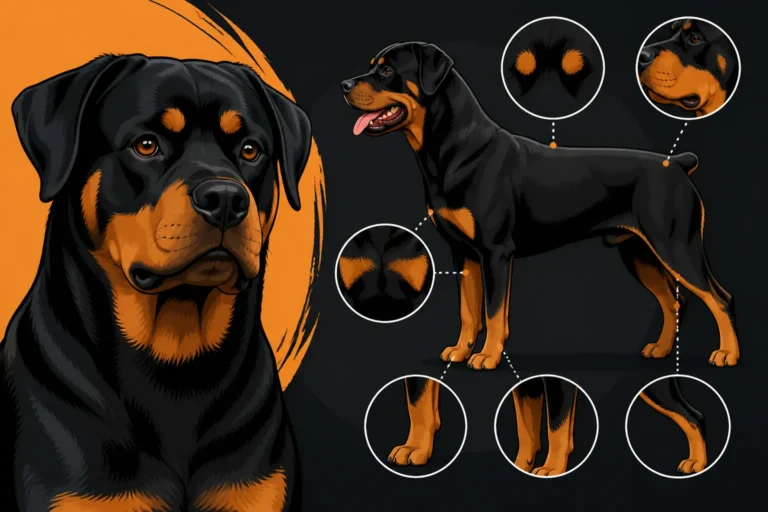
Their coat is always black with clearly defined rust or mahogany markings on the cheeks, muzzle, chest, legs, and under the tail. The coat is short, dense, and coarse, with an undercoat that provides insulation. You'll find their shed can surprise you for a short-coated dog, especially during seasonal blows, so be ready with a good brush from Grooming a Rottweiler That Sheds More Than It Looks. Historically, tails were docked short, though many countries now ban this practice, leading to more Rottweilers with natural tails. Their eyes are dark brown, and their expression is often described as noble and confident. For a full breakdown of their physical requirements, you can delve into Rottweiler Size Under the AKC Standard.
The Cane Corso's Athletic, Leaner Physique
Cane Corsos, while also powerful, tend to have a more athletic, leaner, and somewhat more elegant build than Rottweilers. They are typically taller, with males standing 25-27.5 inches at the shoulder and females 23.5-26 inches, often weighing between 90-110 pounds for males and 80-100 pounds for females. They possess a defined musculature that speaks to their agility and speed, rather than just brute force. Their body is also longer than it is tall, but often appears less "blocky" than a Rottweiler's. The head is large, with a broad skull and a powerful muzzle, but often with a slightly different facial expression – perhaps more intense or watchful.
Cane Corsos come in a wider variety of colors, including black, grey, fawn, and red, with various brindle patterns also accepted. Small white markings on the chest and toes are also permissible. Like Rottweilers, they have a short, stiff, shiny coat that is dense and has a light undercoat, but their shedding may be less pronounced than a Rottweiler's heavy seasonal blow. Traditionally, Cane Corsos also had their ears cropped and tails docked, a practice rooted in their working history to prevent injury. Again, these practices are increasingly restricted or banned in many places, leading to more natural-eared and tailed Corsos. Their eyes are typically medium in size and can range from dark to lighter shades depending on the coat color.
Here's a quick comparative table to summarize some key physical differences:
| Feature | Rottweiler | Cane Corso |
|---|---|---|
| Origin | Germany (Roman drover dogs, butcher's dog) | Italy (Roman Molossian war dogs, farm guardian) |
| Build | Sturdy, blocky, rectangular, heavy-boned | Athletic, leaner, more agile, well-muscled |
| Height (Male) | 24-27 inches | 25-27.5 inches |
| Weight (Male) | 95-135 pounds | 90-110 pounds |
| Coat Color | Black with rust/mahogany markings (bi-color) | Black, grey, fawn, red, brindle (solids, brindles) |
| Tail/Ears | Traditionally docked tail (ears natural) | Traditionally docked tail & cropped ears |
| Head Shape | Broad skull, distinct stop, powerful muzzle | Large head, broad skull, defined stop, strong muzzle |
| Expression | Noble, confident, discerning | Intense, watchful, alert |
Temperament and Personality: Guarding Instincts and Family Life
This is where the most significant differences often lie for potential owners. Both breeds are incredibly loyal and protective, but the way they express these traits, and their general approach to life, varies.
The Rottweiler's Confident Aloofness and Devotion
A well-bred and properly socialized Rottweiler is renowned for its calm, confident, and self-assured demeanor. They are incredibly devoted to their families, forming strong bonds and often wanting to be right in the middle of family activities. However, their affection isn't always demonstrative; they might lean into you or quietly observe rather than demand constant attention. With strangers, they typically exhibit an "aloofness," which can sometimes be mistaken for unfriendliness or disinterest. This isn't rudeness; it's a cautious, discerning approach. They observe new people and situations, taking their time to assess whether a person is trustworthy before offering even a hint of acceptance. This trait is deeply ingrained in their protective nature, as they historically needed to differentiate between friend, neutral party, and threat. You can learn more about Rottweiler Aloofness and Why It Reads as Cold.
Their guarding instinct is strong, but it's often expressed with a quiet authority. They prefer to deter rather than confront, using their imposing presence to make a point. A Rottweiler might stand between you and a perceived threat, or simply watch intently, rather than immediately becoming boisterous. This calm confidence requires an owner who understands and respects it, providing consistent training and socialization from a young age. Without it, a Rottweiler can become overly protective or fearful, which can be a dangerous combination in a dog of their size and strength. Early and ongoing socialization is key for a Rottweiler puppy; don't underestimate the importance of Socializing a Rottweiler Puppy Properly.
The Cane Corso's Intense Watchfulness and Protective Drive
The Cane Corso's temperament is often described with words like "intense," "powerful," and "unflinching." Like the Rottweiler, they are fiercely devoted to their families, often forming a deep, almost instinctual bond, and they are particularly gentle and protective with children in their care. However, their protective instincts tend to be more outwardly expressed and immediate. They are highly territorial and can be openly suspicious of strangers entering their space, a trait directly linked to their history as estate guardians. They will typically alert loudly and may maintain a direct, unwavering gaze, making it clear they are on duty.
A Cane Corso thrives on having a "job" and can become destructive or anxious if not given enough mental and physical stimulation. They possess a higher energy level than many Rottweilers and a strong prey drive, reflecting their hunting background. This intensity means that early socialization and training are absolutely critical, perhaps even more so than with a Rottweiler, as their protective tendencies can be harder to manage if not properly channeled. A Cane Corso requires an owner who is not only experienced with large, powerful breeds but also deeply committed to providing consistent leadership, structure, and mental engagement. They need clear boundaries and consistent expectations. Their natural guarding tendencies are something to work with and shape, not suppress entirely. You'll find many resources for high-quality, durable training aids, toys, and large-breed food on platforms like Chewy, which can be essential for channeling their energy productively.
Care, Training, and Suitability for Owners
Both the Rottweiler and the Cane Corso are serious commitments, requiring significant time, effort, and financial resources. They are not breeds for novice owners, though a dedicated, well-researched first-time large-breed owner might successfully manage a Rottweiler under ideal circumstances. For a Cane Corso, prior experience with strong, protective breeds is highly recommended.
Exercise, Training, and Health Considerations for Rottweilers
Rottweilers need regular, moderate exercise to stay healthy and happy. Daily walks, playtime in a secure yard, and mental stimulation are essential. However, it's crucial to remember that Rottweiler Growth Plates and Why They Close So Late, meaning excessive high-impact exercise should be avoided until they are at least 18-24 months old to protect their developing joints. Once mature, activities like hiking, swimming, and even carting can be excellent outlets.
Training a Rottweiler is non-negotiable. Their size and strength mean they must be well-mannered and responsive to commands. Early obedience classes, consistent positive reinforcement, and clear boundaries are key. Training a Rottweiler Before It Outweighs You is not just good advice, it's a necessity. They are intelligent and eager to please their family, making them highly trainable, but they can also be stubborn if they don't see the point. Their calm nature usually means they respond well to patient, consistent methods. You'll want sturdy leashes and harnesses; check sites like Chewy for options designed for powerful breeds.
Health-wise, Rottweilers are prone to certain genetic conditions, including hip and elbow dysplasia, Subaortic Stenosis in Rottweiler Puppies, and certain cancers like Osteosarcoma, the Cancer That Takes Most Rottweilers. Reputable breeders perform extensive health clearances, which you can read about in The Five Clearances a Rottweiler Breeder Must Have. Regular vet check-ups, a high-quality large-breed diet (which you can purchase from a wide selection at Chewy), and maintaining a lean body weight are crucial for their long-term health.
Exercise, Training, and Health Considerations for Cane Corsos
Cane Corsos generally require more rigorous exercise and mental stimulation than Rottweilers. Their athletic build and high drive mean they thrive with a structured routine that includes daily vigorous activity, such as long jogs, advanced obedience work, or participation in dog sports like agility or protection work. A bored Corso can become destructive or develop behavioral issues, so they need an owner committed to meeting their needs for physical and mental engagement.
Training a Cane Corso also requires a firm, consistent hand and an understanding of their protective drive. They are highly intelligent and capable of learning complex commands, but their strong will and independent nature mean they need a confident leader. Early and extensive socialization is paramount to ensure they are well-adjusted and do not become overly aggressive or fearful towards strangers. A good trainer with experience in working breeds is a valuable asset.
Like Rottweilers, Cane Corsos are large breeds susceptible to conditions such as hip and elbow dysplasia, bloat, and certain eye abnormalities. Selecting a puppy from health-tested parents is crucial. Their robust health is often linked to their working past, but responsible breeding practices are still essential. Given their active lifestyle, providing appropriate nutrition, including joint-supporting supplements if recommended by your vet, is vital. Many high-quality large breed dog foods that support joint health are available at Chewy.
Which Breed is Right for You?
Choosing between a Rottweiler and a Cane Corso boils down to your lifestyle, experience, and what you're looking for in a canine companion.
- Rottweiler: May be a better fit for a dedicated owner who values a confident, discerning guardian with a strong family bond, who can commit to consistent training and moderate exercise. They often adapt well to families but require clear leadership. Their calm nature can be deceptive; they are powerful dogs that need respect and proper handling.
- Cane Corso: Is typically suited for highly experienced owners who can provide rigorous exercise, intense mental stimulation, and very strong, consistent leadership. They are exceptional guardians who bond deeply, but their protective instincts are often more pronounced and require careful management. They thrive in an environment where they have a purpose and plenty of activity.
Regardless of the breed, a commitment to early socialization, lifelong training, and providing a loving, structured environment are critical for raising a well-adjusted, confident, and safe companion.
Disclaimer
This article is for general informational purposes only and does not constitute professional advice. Laws, prices and regulations vary by location and change over time. Consult a qualified professional for guidance on your specific situation.