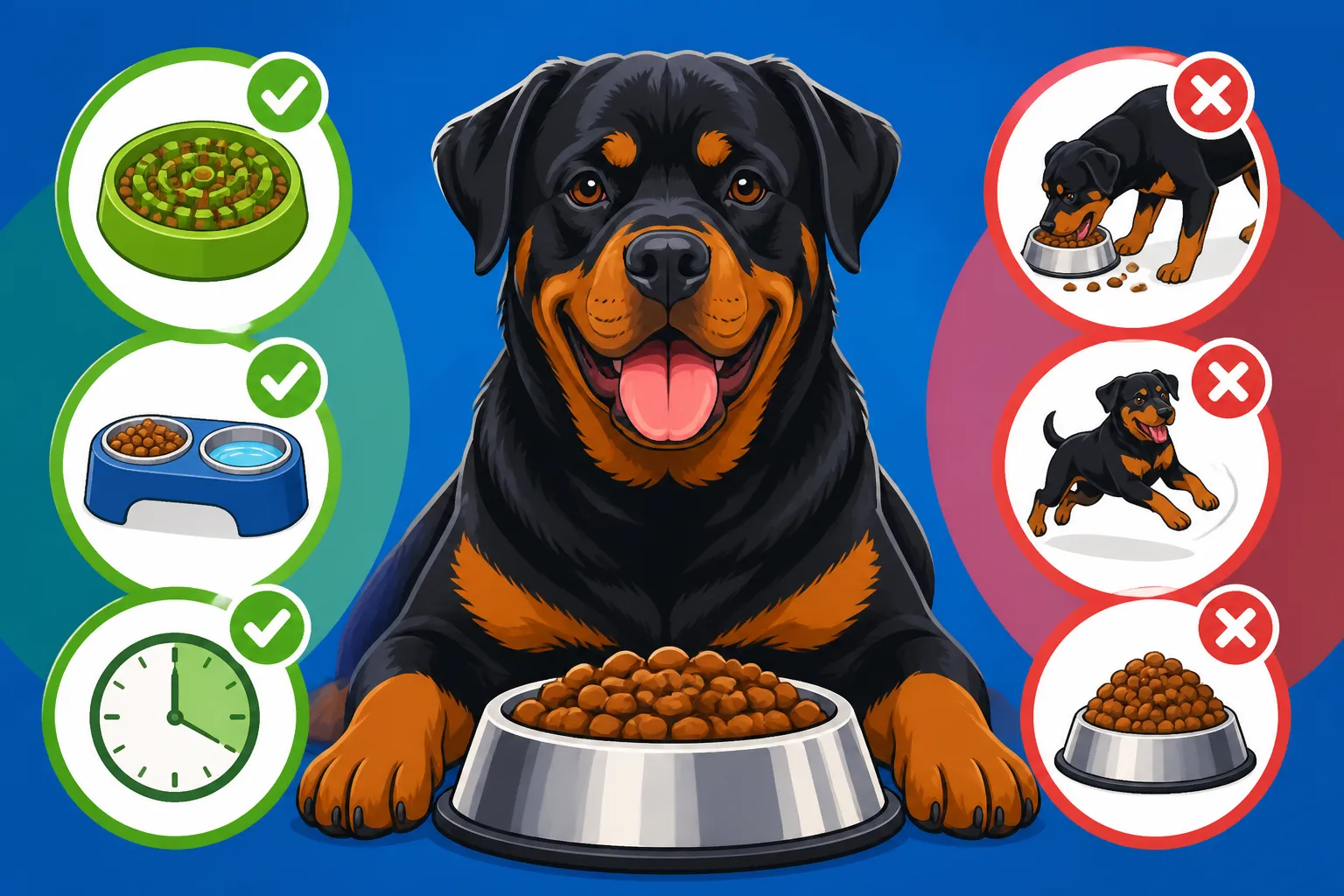
Feeding Rules That Lower Rottweiler Bloat Risk
One of the most terrifying emergencies a Rottweiler owner can face is bloat, or Gastric Dilatation-Volvulus (GDV). This sudden, life-threatening condition can strike without much warning, turning a perfectly healthy dog into a critical patient in a matter of hours, sometimes even minutes. While not every case is preventable, implementing smart, consistent feeding rules can significantly reduce your Rottweiler's risk, offering peace of mind and, more importantly, protecting your beloved companion.
Understanding the Terrifying Reality of Rottweiler Bloat
Bloat is a condition that haunts the dreams of many large breed dog owners, and for good reason. It's swift, incredibly painful, and often fatal if not treated immediately. For us Rottweiler guardians, understanding this silent threat and its mechanisms is the first step in prevention.
What Happens During Gastric Dilatation-Volvulus GDV
Imagine your dog's stomach. In a bloat episode, it first fills with gas, food, or fluid, causing it to distend like an overinflated balloon. This is the "dilatation" part. This alone is excruciatingly painful, pressing on organs and making it hard for your dog to breathe. The true horror, however, comes with the "volvulus"—the twisting. The distended stomach can rotate on its axis, pinching off both the entry (esophagus) and exit (duodenum). This traps everything inside, cutting off blood supply to the stomach wall, and leading to rapid tissue death. It also impacts the spleen, which is often attached, and can restrict blood flow back to the heart, leading to shock. The speed at which this can progress is what makes it so terrifying.
A twisted stomach can quickly lead to irreversible damage, and it's a race against the clock to get your dog to emergency veterinary care. Even if surgery is successful, there are significant post-operative risks. Learning to identify the subtle cues and then escalating quickly is paramount; recognizing bloat in a Rottweiler means knowing what to look for, as every minute truly counts.
Why Rottweilers Are Particularly Susceptible
Rottweilers, unfortunately, are on the list of breeds at higher risk for GDV. Their deep-chested conformation is often cited as a contributing factor, as it creates more space for the stomach to distend and twist. Genetics also play a role, with bloat sometimes running in family lines, though the exact genes aren't fully understood. Beyond physical build, a host of other factors contribute, including eating habits, stress levels, and even age, with the risk rising as your Rottweiler ages. It's a cruel twist of fate that our sturdy, robust Rottweilers, bred for strength and endurance, are vulnerable to such a fragile point in their anatomy. Understanding why a Rottweiler stomach twists at all helps us address the risk factors more proactively.
The Urgency of Immediate Action
There is no "wait and see" with bloat. If you suspect your Rottweiler is bloating, it is an absolute, undeniable emergency. Every minute lost reduces the chances of survival and increases the likelihood of severe complications. Symptoms can include unproductive retching (trying to vomit but nothing comes up), distended abdomen, restlessness, pacing, excessive drooling, pain when touched, or even collapse. If you see these signs, do not hesitate. Call your vet or the nearest emergency animal hospital immediately while you are getting your dog into the car. Time is literally tissue, and delay can be fatal. This is why having a plan for handling The Emergency Signs That Send a Rottweiler In is critical.
Strategic Meal Frequency and Timing
How you feed your Rottweiler is just as important as what you feed them. Thoughtful management of meal frequency and timing can be a powerful tool in your bloat prevention arsenal.
The Case for Multiple Smaller Meals Daily
One of the most impactful feeding rules you can implement is to break your Rottweiler's daily food ration into at least two, and ideally three, smaller meals throughout the day. Instead of one large meal that fills the stomach to capacity, smaller meals prevent excessive gastric distension, which is a major precursor to bloat. Think of it like a human eating Thanksgiving dinner versus three balanced meals; the former puts immense strain on the digestive system. For a large, deep-chested breed like a Rottweiler, giving the stomach less volume to manage at any one time can make a significant difference.
This approach not only reduces the immediate risk of stomach distension but also helps maintain a more stable energy level throughout the day. Many owners find that splitting a Rottweiler's food into two meals is manageable, but if you're home for lunch, adding a third, even smaller, portion can be even better. It keeps their metabolism gently ticking over without overloading their system.
Establishing a Consistent Feeding Schedule
Routines are incredibly beneficial for dogs, and feeding is no exception. Sticking to a consistent meal schedule helps regulate your Rottweiler's digestive system. When your dog knows when to expect food, their body can anticipate digestion, releasing the necessary enzymes and acids in a more controlled manner. Irregular feeding times, on the other hand, can lead to your dog eating too quickly out of heightened hunger or anxiety, which is another known risk factor for bloat.
Try to feed your Rottweiler at roughly the same times each day. For example, if you feed twice daily, perhaps 7 AM and 5 PM. If three times, maybe 7 AM, 1 PM, and 7 PM. This predictability reduces stress and encourages a calmer, more measured eating pace. It creates a rhythm for their body that supports overall digestive health, minimizing extreme hunger that can lead to rapid ingestion.
The Critical Importance of Pre and Post-Meal Rest Periods
This rule is perhaps one of the most emphasized by veterinarians and experienced Rottweiler owners: never allow vigorous exercise immediately before or after a meal. The ideal guideline is to enforce a quiet period of at least one hour before eating and at least two hours after eating. During exercise, blood flow is diverted away from the digestive organs and towards the muscles. If a dog eats and then immediately exercises, the stomach, full of food and gas, can be jostled, increasing the risk of twisting. Conversely, a dog that exercises intensely and then gulps down a meal is also at risk.
Imagine going for a run right after a large meal—it's uncomfortable for us, and potentially dangerous for a dog predisposed to bloat. This quiet period means no running, no jumping, no intense play, and ideally, just a calm potty break on a leash. This allows the stomach to process food without additional physical stress. This is crucial advice that often gets overlooked, but knowing how long to wait after a Rottweiler meal before exercise could be life-saving.
Optimizing Your Rottweiler's Eating Environment
Beyond when and how often you feed, where and from what your Rottweiler eats can also influence their bloat risk. Creating a calm, efficient eating experience is part of a comprehensive prevention strategy.
Choosing the Right Food Bowl Type
There's a lot of debate about food bowl types, particularly raised bowls. For years, the conventional wisdom suggested that raised bowls could help prevent bloat, but more recent research indicates they might actually increase the risk in some large breeds. The thought is that eating from a raised bowl might encourage dogs to eat faster or gulp more air. For Rottweilers, it's generally recommended to stick with bowls on the floor unless there's a specific medical reason (like severe arthritis) to use a raised one. If you have an older Rottweiler and are using a raised bowl, discuss the specific pros and cons with your vet.
What's universally beneficial, however, is a slow feeder bowl, especially if your Rottweiler tends to "hoover" their food. These bowls have various ridges, mazes, or obstacles that force your dog to eat around them, significantly slowing down their ingestion speed. This reduces the amount of air they swallow with their food and prevents rapid gorging, both of which are common triggers for bloat. You'd be amazed how effective they are; what used to take 30 seconds can suddenly take 5-10 minutes. This goes hand-in-hand with addressing Rottweiler gulping and ensuring they eat at a reasonable pace. Brands like Outward Hound offer excellent slow feeder options designed for larger breeds.
Minimizing Stress and Competition During Meals
A calm eating environment is paramount. Stress, excitement, or perceived competition can all lead to faster eating and increased air intake. If you have multiple dogs, feed them separately in different rooms or crates to eliminate any sense of rivalry. Even if your Rottweiler is the only dog, ensure mealtime is a peaceful event. Avoid loud noises, frantic activity, or teasing. A quiet corner where they can focus solely on their food is ideal.
Some Rottweilers are naturally anxious eaters, even without external stressors. Observe your dog's behavior. If they seem rushed or stressed, consider hand-feeding a portion of their meal, or using a puzzle toy that dispenses food slowly, to make the process more engaging and less frantic. The goal is to make mealtime a relaxed, positive experience, not a race.
Considering Diet Composition and Kibble Quality
While specific foods don't directly cause bloat, diet composition can be a contributing factor. Some studies suggest that dry kibble with certain ingredients or particle sizes might be associated with higher risk. Generally, kibble that has a fat or oil listed among the first four ingredients, or kibble with citric acid, has sometimes been implicated, although evidence isn't conclusive. Many vets recommend avoiding diets that rely heavily on soy products or ingredients that might produce a lot of gas during digestion.
When feeding an adult Rottweiler at a hundred twenty pounds, ensure you are choosing a high-quality, large-breed formula that is appropriate for their age and activity level. Opt for a reputable brand known for extensive research and quality control. While there's no single "bloat-proof" diet, feeding consistent, high-quality food that agrees with your dog's digestive system is always a good practice. Consult your veterinarian for specific dietary recommendations tailored to your Rottweiler's individual needs.
Hydration and Water Consumption Habits
Water is essential for life, but even healthy hydration needs to be managed strategically for a breed prone to bloat. It's not just about how much water, but how and when they drink it.
Ensuring Constant Access to Fresh Water
It might seem obvious, but ensuring your Rottweiler always has access to fresh, clean water is incredibly important for their overall health and digestive function. Dehydration can lead to a host of problems, including potentially contributing to digestive upset. Make sure water bowls are always full and refreshed multiple times a day. If your Rottweiler spends time outside, have multiple water stations, especially in warmer weather.
However, "constant access" doesn't mean allowing them to gulp down an entire bowl after an intense play session. It means ensuring they can take small sips regularly throughout the day, preventing extreme thirst that leads to rapid, large volume water intake. A good rule of thumb is to place water bowls in easily accessible, quiet locations.
Managing Water Intake Around Exercise
Just like food, water consumption needs to be managed carefully around physical activity. Allowing your Rottweiler to drink a large volume of water immediately before or after strenuous exercise can be risky. The combination of a full stomach (from water) and physical exertion increases the likelihood of stomach movement and potential twisting.
Instead of one large drink, offer smaller amounts of water frequently during and after exercise sessions. For example, if you're on a hike, offer a few sips every 15-20 minutes, rather than letting them drain an entire bottle at the end. Once back home, wait 15-20 minutes before offering a full bowl, and ensure they are calm. This helps prevent sudden distension and gulping.
The Dangers of Gulping Large Volumes of Water
Rapid consumption of large quantities of water, much like rapid eating, can lead to the ingestion of excess air. This air, trapped in the stomach, contributes to the initial dilatation phase of bloat. Rottweilers, being large dogs, can drink a lot of water very quickly when thirsty, which can be a problem.
If your Rottweiler is a rapid drinker, consider using a slow-water bowl or adding a large, clean rock or a few ice cubes to their water bowl. These obstacles will force them to drink around them, slowing down their intake. While not as common as food-related bloat, water-induced bloat is still a risk to be mindful of.
| Feeding Rule | Why It Helps Prevent Bloat | Practical Application |
|---|---|---|
| Multiple Small Meals | Reduces stomach distension and air intake. | Divide daily food into 2-3 meals (e.g., 7 AM, 1 PM, 7 PM). |
| Consistent Schedule | Regulates digestion, reduces anxiety/fast eating. | Feed at roughly the same times daily, creating a routine. |
| Pre/Post-Meal Rest | Prevents stomach jostling and blood diversion from digestion. | 1 hour rest before, 2 hours after meals (no strenuous exercise or play). This is part of the broader guidance on Rest Before and After a Rottweiler Meal. |
| Slow Feeder Bowls | Curbs rapid eating, reduces air swallowing. | Use bowls with ridges/mazes for Rottweilers that gulp food. |
| Calm Environment | Minimizes stress and competitive eating. | Feed in a quiet, separate area, especially if multiple pets are present. |
| Managed Water Intake | Prevents stomach distension from rapid drinking, minimizes air. | Offer frequent small sips during/after exercise instead of large gulps. |
| High-Quality Diet | Supports healthy digestion and reduces gas production. | Choose a reputable large-breed formula; avoid diets high in certain potentially gas-producing ingredients (discuss with vet). |
Lifestyle Choices Beyond the Bowl
While feeding rules are critical, they are part of a larger picture of holistic bloat prevention. Your Rottweiler's overall lifestyle, including exercise, stress levels, and routine veterinary care, also plays a significant role.
The Balance of Exercise and Digestion
We've already touched on exercise immediately around meal times, but it's important to consider your Rottweiler's overall activity level. Regular, moderate exercise is vital for their physical and mental health. A fit dog generally has better muscle tone, including abdominal muscles, which might offer some subtle support. However, extreme or sudden bursts of intense exercise, especially after a period of inactivity, could theoretically contribute to risk factors.
The key is balance and consistency. Daily walks, gentle playtime, and appropriate activities for their age and physical condition are perfect. Avoid pushing them too hard, especially in hot weather, or demanding sudden, intense activity without proper warm-up. This is particularly important when considering Rottweiler Growth Plates and Why They Close So Late, as overexercise can harm joints long before bloat becomes a concern. Always ensure a good cool-down period before offering water or food.
Stress Reduction and a Calm Home Environment
Stress is a known contributor to many health issues in dogs, and bloat is no exception. Anxious or highly stressed dogs may eat faster, gulp more air, and generally have a more unsettled digestive system. Loud noises, changes in routine, separation anxiety, or conflict within the household can all elevate a Rottweiler's stress levels.
Creating a calm, predictable home environment can go a long way. Provide a safe, quiet space where your Rottweiler can retreat. Maintain consistent routines for feeding, walks, and playtime. Positive reinforcement training helps build confidence and reduces anxiety. If your Rottweiler exhibits chronic stress or anxiety, consider speaking with a professional dog behaviorist or your vet about strategies, which might include enrichment activities or, in some cases, medication. A calm dog is often a healthier dog.
Regular Veterinary Check-ups and Proactive Health Discussions
Consistent veterinary care is fundamental to any comprehensive health strategy for your Rottweiler. Regular check-ups allow your vet to monitor your dog's overall health, body condition, and discuss any changes in appetite, weight, or behavior. This is an excellent opportunity to review your feeding practices and ensure they align with the latest recommendations for bloat prevention. Your vet can also assess other risk factors your individual Rottweiler might have.
This open dialogue is especially important as your Rottweiler ages, because Rottweiler Bloat Risk Rising With Age. Discuss any concerns you have, no matter how small. They can provide personalized advice on diet, exercise, and preventative measures. This proactive approach, coupled with a solid pet insurance plan from providers like Healthy Paws, ensures that you're not only preventing what you can but also prepared for unexpected emergencies.
When to Explore Advanced Prevention: Prophylactic Gastropexy
While feeding rules and lifestyle adjustments are incredibly important, for some Rottweilers, an additional, more direct preventative measure might be appropriate: prophylactic gastropexy. This surgical procedure permanently attaches the stomach to the abdominal wall, significantly reducing the chance of life-threatening twisting.
Understanding the Surgical Option
Prophylactic gastropexy is a surgical procedure performed to prevent the stomach from twisting in the event of bloat. During the surgery, a section of the stomach wall is permanently sutured to the abdominal wall. This attachment allows the stomach to distend with gas or food (dilatation) but prevents it from rotating (volvulus). While the dog can still experience gastric dilatation, which requires veterinary attention, the life-threatening twist is largely averted, buying precious time and increasing survival rates dramatically.
This procedure can be performed conventionally, requiring a larger incision, or laparoscopically, which is less invasive and involves smaller incisions. The laparoscopic option generally means a faster recovery time and less discomfort for your dog. It's a significant decision, but one that many owners of at-risk breeds like Rottweilers seriously consider.
Discussing Risks and Benefits with Your Vet
Deciding whether to pursue prophylactic gastropexy is a conversation you absolutely need to have with your veterinarian, and possibly a board-certified veterinary surgeon. They will evaluate your individual Rottweiler's health, age, temperament, and family history to determine if it's a suitable option. The benefits are clear: dramatically reduced risk of a fatal gastric twist. However, like any surgery, there are risks, including anesthesia complications, infection, and post-operative pain.
Your vet will weigh these factors against the specific bloat risk profile of your Rottweiler. For a breed with such a high incidence of bloat, the benefits often outweigh the risks for many owners. It's also common to combine this procedure with other planned surgeries, such as spaying or neutering, which can simplify the process and minimize the number of times your dog undergoes anesthesia; considering gastropexy done during a Rottweiler spay or neuter is a common discussion point.
Considering it Alongside Responsible Feeding Practices
It's crucial to understand that even with a gastropexy, responsible feeding practices remain essential. While the surgery prevents the stomach from twisting, it does not prevent the stomach from distending with gas or food. Gastric dilatation alone can still be painful, cause distress, and put pressure on other organs, potentially leading to discomfort or secondary issues. Therefore, all the feeding rules we've discussed—multiple small meals, slow feeders, proper rest periods, and managed water intake—should still be diligently followed.
Prophylactic gastropexy is a powerful safety net, but it's not a license to disregard preventative feeding strategies. Think of it as an extra layer of protection, allowing you to provide the best possible chance for a long, healthy life for your Rottweiler. It's a proactive step that aligns perfectly with a commitment to their well-being, helping you answer the question of whether preventive gastropexy is worth it for your peace of mind.
Disclaimer
The information provided in this article is for educational purposes only and is not intended to be a substitute for professional veterinary advice, diagnosis, or treatment. Always seek the advice of your veterinarian or other qualified animal health provider with any questions you may have regarding a medical condition.