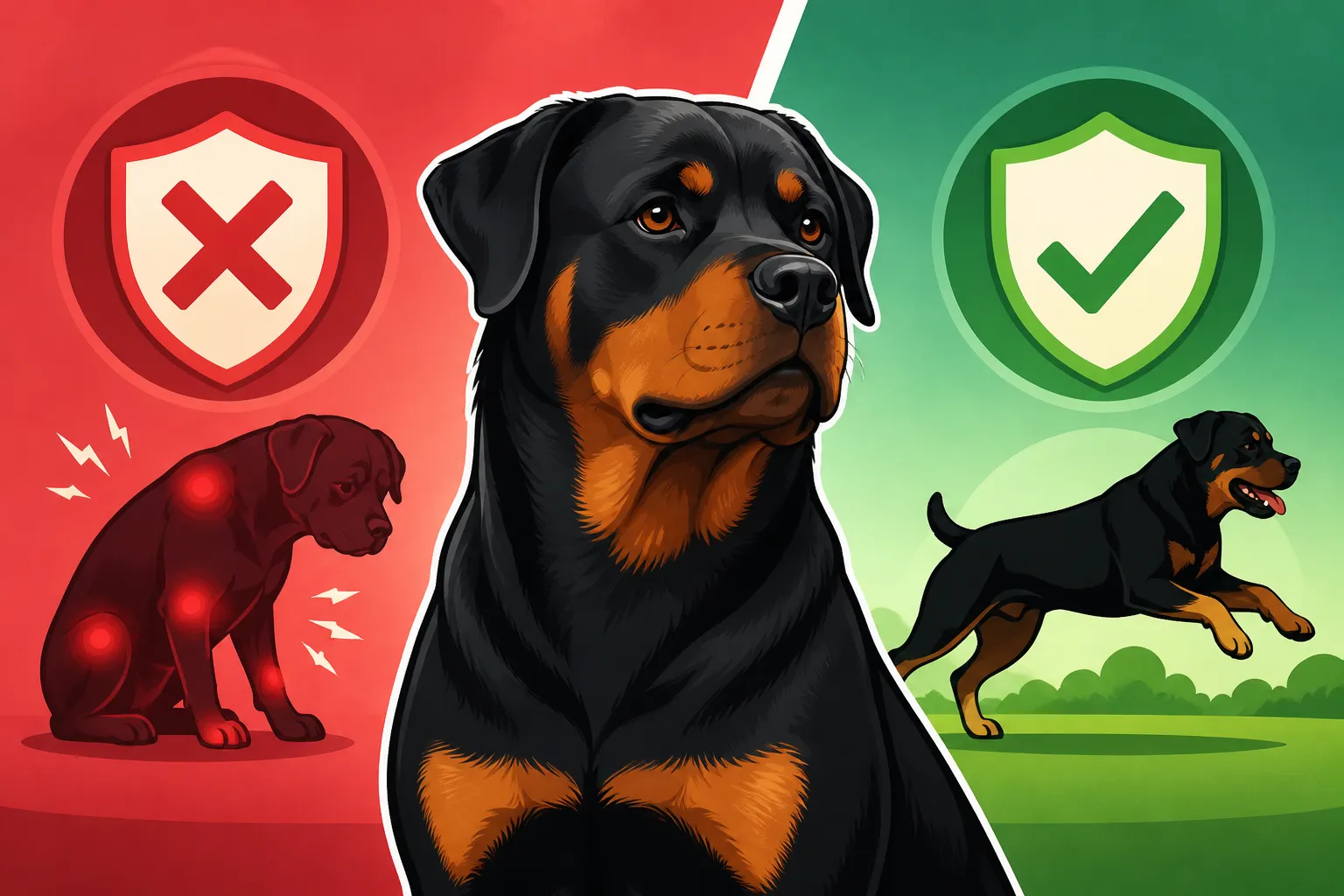
Whether German Rottweilers Are Actually Healthier
It’s a question that echoes through many Rottweiler owner forums and Facebook groups: "Are German Rottweilers really healthier than American lines?" This isn't just a casual query; it stems from a genuine desire to give our beloved dogs the longest, healthiest life possible, and it often comes with a hefty dose of confusion and conflicting opinions. Many prospective owners feel overwhelmed trying to decipher the nuances between these perceived "lines" and worry they might unknowingly choose a dog predisposed to more health problems. This guide aims to clear up some of that confusion, diving into the distinctions, the breeding practices, and ultimately, what truly contributes to a Rottweiler's health, regardless of its country of origin.
Understanding the "German" vs. "American" Rottweiler Distinction
When people talk about "German" versus "American" Rottweilers, they're usually referring to dogs whose lineage traces back to different breeding philosophies and regulatory environments. It’s not about two entirely separate breeds, but rather two different approaches to breeding within the same breed standard. This distinction has created a common perception that one is inherently superior or healthier, a notion we need to explore with a clear, realistic lens.
The Historical Context and Breeding Philosophies
The Rottweiler originated in Germany, and for a long time, the Allgemeine Deutsche Rottweiler-Klub (ADRK) was the primary governing body for the breed worldwide. The ADRK has historically maintained very strict breeding regulations. To be eligible for breeding under ADRK rules, a Rottweiler must pass a series of rigorous tests. These aren't just about looking pretty; they include temperament assessments (the ZTP, or Breed Suitability Test), working aptitude tests (like the BH, or Companion Dog test, and IPO/IGP titles, which involve tracking, obedience, and protection work), and mandatory health clearances for hips, elbows, eyes, and heart. These requirements are deeply embedded in the German philosophy: a Rottweiler must be sound in mind, body, and working ability before it contributes to the gene pool.
In contrast, the American Kennel Club (AKC) in the United States, while setting a breed standard for conformation, has traditionally had fewer mandatory requirements for breeding stock beyond registration. While many responsible American breeders voluntarily adhere to high standards, including health testing and sometimes working titles, these are not always prerequisites for breeding an AKC-registered litter. This difference in mandatory oversight is often the root of the "German is healthier" argument. The idea is that with more stringent, universally enforced breeding requirements, the overall health and temperament of the breed in Germany would naturally be more consistent and robust.
Physical Differences and Breed Standards
While both "German" and "American" Rottweilers are bred to the same fundamental breed standard, subtle differences in interpretation and focus have emerged over the years. Dogs from predominantly German lines are often perceived as having a blockier, more substantial head, a heavier bone structure, and a generally more powerful, robust build. They might also retain natural tails more often, as tail docking has been banned or severely restricted in many European countries, including Germany, for quite some time now.
American-bred Rottweilers, especially those focused heavily on conformation showing, sometimes exhibit a slightly finer bone structure, a more refined head, and of course, traditionally have docked tails to conform to the AKC standard for show. However, this is a generalization, and it's crucial to understand that responsible breeders in both camps are striving for a sound, healthy Rottweiler. There's considerable overlap, and a well-bred American Rottweiler might look very similar to a well-bred German-line Rottweiler. These perceived physical differences are often more about specific breeder preferences and interpretations of the standard rather than a fundamental divergence in breed type. The key takeaway here is that "German" doesn't automatically mean "better," but rather points to a specific set of breeding priorities and regulations that have shaped some lines.
Deconstructing the "Healthier" Claim
The idea that "German Rottweilers are healthier" isn't entirely without merit, but it's often oversimplified. The claim largely stems from the stringent health screening requirements imposed by the German breed club, the ADRK, which we touched upon earlier. Let's delve into what these requirements entail and why they contribute to the perception of superior health, alongside the reality that no Rottweiler line is completely immune to health challenges.
Mandatory Health Clearances in German Breeding Programs
The cornerstone of the "German is healthier" argument lies in the mandatory health clearances required for breeding stock under the ADRK. Before a Rottweiler can receive a ZTP (Breed Suitability Test) and be considered eligible for breeding, it must undergo specific health evaluations. These typically include:
- Hip and Elbow Dysplasia: Dogs must have official hip and elbow radiographs evaluated by an approved veterinary specialist, and meet strict criteria to pass. This is similar in principle to the Orthopedic Foundation for Animals (OFA) or PennHIP evaluations common in the US, but the ADRK's standards are often perceived as being even more rigorous, with fewer acceptable "passing" grades. The intent is to significantly reduce the incidence of these debilitating joint conditions, which are unfortunately common in large breeds like Rottweilers. Passing these clearances means a dog is less likely to produce offspring with these issues, assuming proper breeding practices.
- Cardiac Evaluation: While specific requirements can evolve, a heart check, often an echocardiogram, is typically required to screen for conditions like Subaortic Stenosis (SAS). Rottweiler Heart Disease and Subaortic Stenosis is a serious, inherited condition that can shorten a Rottweiler's life dramatically, so screening breeding dogs is vital.
- Eye Certification: Dogs must have their eyes examined by a veterinary ophthalmologist to rule out inherited eye diseases such as entropion or ectropion.
- Juvenile Laryngeal Paralysis & Polyneuropathy (JLPP): This is a relatively newer, but critical, genetic test. JLPP is a devastating neurological disorder unique to Rottweilers that causes paralysis of the larynx and other neurological issues in puppies, often leading to euthanasia. JLPP and the RAB3GAP1 Gene in Rottweilers ensures that at least one parent of a litter is genetically clear, preventing affected puppies from being born.
These mandatory screenings, which are part of The Five Clearances a Rottweiler Breeder Must Have, mean that a Rottweiler from an ADRK-compliant breeding program has a documented history of parental health. This system should reduce the likelihood of puppies inheriting serious genetic conditions, giving them a better start in life.
The Reality of Health Risks Across All Rottweilers
Despite the admirable breeding standards in Germany, it's a critical error to believe that "German" Rottweilers are immune to health problems, or that "American" Rottweilers are inherently sickly. The truth is, Rottweilers as a breed, regardless of their geographical lineage, are predisposed to a number of serious health issues that prospective owners must be aware of. Genetics are complex, and even with the best screening, some conditions are polygenic (caused by multiple genes) or influenced by environmental factors.
Common health challenges for Rottweilers include:
- Hip and Elbow Dysplasia: While breeding programs aim to reduce this, no program can guarantee 100% freedom from these conditions. They are still prevalent, and factors like growth rate, nutrition, and exercise can also play a role. Rottweiler Hip Dysplasia Symptoms Before Age Two can appear even in dogs from well-screened parents.
- Cancers: Rottweilers have a higher predisposition to various cancers, tragically shortening their Rottweiler Lifespan and the Eight to Ten Year Average. Osteosarcoma, a aggressive bone cancer, is particularly devastating. Osteosarcoma, the Cancer That Takes Most Rottweilers remains a leading cause of death. Lymphoma, hemangiosarcoma, and mast cell tumors are also significant concerns.
- Bloat (Gastric Dilatation-Volvulus – GDV): This life-threatening condition, where the stomach fills with gas and can twist, is an emergency for any deep-chested breed. Bloat in a Rottweiler and the Hours That Matter is critical, and knowing how to respond is paramount for all Rottweiler owners.
- Cardiac Issues: Beyond SAS, other heart conditions can affect Rottweilers. While testing helps, vigilance from owners is always needed.
- Allergies and Skin Issues: Many Rottweilers can struggle with environmental or food allergies, leading to skin infections or discomfort.
What this means is that while a dog from German lines might have a stronger statistical chance of avoiding some genetic conditions due to mandatory parental screening, it's not a magical shield. A responsible American breeder who voluntarily performs all the same health clearances and more, and provides excellent care for their breeding stock, can produce equally, if not more, healthy puppies. The label "German" itself doesn't confer health; the breeding practices behind the label do.
What Truly Drives a Rottweiler's Health Beyond Lineage
So, if the "German" label isn't a guarantee of perfect health, what truly makes a difference? The answer lies in a holistic approach that prioritizes responsible breeding, diligent ownership, and comprehensive care. It's about empowering yourself with knowledge and making informed choices throughout your Rottweiler's life.
The Crucial Role of a Reputable Breeder
This is, without a doubt, the single most important factor in acquiring a healthy Rottweiler puppy. A reputable breeder, whether their lines are "German," "American," or a blend, will go above and beyond to ensure the health and temperament of their puppies. Here’s what to look for, and what questions to ask:
- Health Clearances: Demand proof of health clearances for both parents. This should include OFA or PennHIP certifications for hips and elbows, an OFA Cardiac clearance, an eye exam (like CERF or OFA Eye), and a DNA test for JLPP. Don't just take their word for it; ask to see the certificates or look up the dogs on the OFA website, which provides public databases. These are the "health papers" mentioned in Health Papers to Ask a Rottweiler Breeder For.
- Transparency and Honesty: A good breeder will be open about any health issues in their lines, even if they've passed clearances. They'll answer all your questions thoroughly, and they'll probably ask you a ton of questions too, to ensure their puppy is going to a good home.
- Proof of Accomplishment: Look for breeders who actively show their dogs in conformation, obedience, agility, or working trials. This demonstrates that their dogs not only meet the breed standard in terms of health and structure but also possess the intelligence and temperament to perform.
- Environment and Care: Visit the breeder's facility if possible. Are the dogs clean, well-socialized, and healthy-looking? Are the puppies raised in a stimulating environment?
- Health Guarantee and Contract: A reputable breeder will offer a health guarantee, often covering genetic issues for a certain period, and will provide a contract outlining terms and conditions.
Don't fall for marketing buzzwords like "100% German lines" if the breeder can't back it up with verifiable health clearances and a commitment to the breed's well-being. The best breeders are those who prioritize health, temperament, and adherence to the breed standard, irrespective of national origin.
Lifestyle, Nutrition, and Preventative Care
Even with the best genetics, a Rottweiler's health is profoundly impacted by its daily life. As an owner, you hold immense power in shaping your dog's well-being.
- Nutrition: A high-quality, large-breed specific dog food is crucial, especially during the long growth phase of a Rottweiler puppy. Avoid overfeeding, which can lead to rapid growth and exacerbate joint problems like hip and elbow dysplasia. Calcium intake, in particular, needs careful monitoring during growth; avoid supplements unless directed by a vet, as excess calcium can be detrimental to Rottweiler Growth Plates and Why They Close So Late. For adult dogs, maintaining an ideal weight is critical. Feeding an Adult Rottweiler at a Hundred Twenty Pounds means careful portion control, as Rottweiler Obesity and the Load It Adds significantly strains their joints and overall health. Many owners find platforms like Chewy helpful for sourcing high-quality large breed formulas and supplements recommended by their vet.
- Appropriate Exercise: While Rottweilers are powerful, growing puppies need careful exercise management. Avoid intense, high-impact activities like long jogs or excessive jumping until their growth plates have closed, usually between 18-24 months of age. Short, frequent walks and playtime are best. As adults, they thrive on regular, moderate exercise to maintain muscle tone and a healthy weight.
- Preventative Veterinary Care: Regular vet check-ups are non-negotiable. This includes vaccinations, parasite prevention (flea, tick, and heartworm medications, often found on Chewy), and annual health screenings. Your vet can catch potential issues early, recommend appropriate dietary adjustments, and help manage any chronic conditions. Don't underestimate The Yearly Cost of Feeding and Keeping a Rottweiler and veterinary care; these dogs are large and require substantial investment.
- Mental Stimulation: A bored Rottweiler is often an unhappy, unhealthy Rottweiler. Provide plenty of mental enrichment through training, puzzle toys (you can find robust ones on Chewy), and interactive games. A mentally stimulated dog is generally less prone to stress-related health issues and destructive behaviors.
The Importance of Early Intervention and Awareness
Being proactive and educated about Rottweiler health is another vital layer of protection. Knowing what to look for and when to act can literally save your dog's life or prevent a minor issue from becoming a major one.
- Educate Yourself: Familiarize yourself with common Rottweiler health issues. Understand the early signs of conditions like bloat, such as restlessness, unproductive retching, a distended abdomen, or excessive drooling. Recognizing Bloat in a Rottweiler can be the difference between life and death.
- Monitor for Lameness: Large breed dogs are prone to joint issues. Any limping, stiffness, or reluctance to move should prompt a vet visit. Early signs of hip dysplasia can sometimes be spotted as Rottweiler Hip Dysplasia Symptoms Before Age Two. Prompt diagnosis and management can significantly improve your dog's quality of life.
- Regular Body Checks: Get into the habit of performing regular "at-home" checks. Feel for any new lumps or bumps, check their ears for signs of infection, look at their teeth and gums, and examine their paws. Catching a lump early could be critical for conditions like mast cell tumors or other cancers.
- Don't Ignore Subtle Changes: Rottweilers are stoic and can hide pain or discomfort remarkably well. Any change in appetite, energy levels, breathing, or behavior should be noted and, if persistent, discussed with your vet. Sometimes, a subtle shift in gait or a slight decrease in enthusiasm for walks can be the first sign of an underlying issue.
Ultimately, a truly healthy Rottweiler is the result of a responsible breeder's dedication, combined with a committed owner's consistent care, vigilance, and willingness to invest in their dog's well-being throughout its entire life. The "German" label, while indicative of a rigorous breeding system, is not a shortcut to guaranteed health.
| Feature / Factor | "German Line" Rottweiler (from ADRK-compliant breeding) | "American Line" Rottweiler (from responsible AKC breeder) |
|---|---|---|
| Mandatory Health Tests | Yes (Hips, Elbows, Cardiac, Eyes, JLPP – before breeding) | Voluntary, but highly recommended by responsible breeders (OFA Hips/Elbows, Cardiac, Eyes, JLPP) |
| Temperament/Working Tests | Mandatory (ZTP, often BH/IPO/IGP for breeding eligibility) | Voluntary (CGC, various working titles common among ethical breeders) |
| Physical Appearance | Often perceived as blockier head, heavier bone, more substantial body; natural tails more common | Often perceived as slightly more refined head, sometimes finer bone; docked tails traditional |
| Regulatory Body | ADRK (Allgemeine Deutsche Rottweiler-Klub) – very strict | AKC (American Kennel Club) – sets standard, but breeding requirements less stringent |
| "Healthier" Verdict | Potentially due to mandatory, comprehensive pre-breeding health screening. | Equally healthy if breeder voluntarily matches/exceeds German screening. |
| Owner's Role in Health | Still paramount: diet, exercise, vet care, awareness. | Still paramount: diet, exercise, vet care, awareness. |
Disclaimer
This article is for general informational purposes only and does not constitute professional advice. Laws, prices and regulations vary by location and change over time. Consult a qualified professional for guidance on your specific situation.