Rottweilers in Search and Rescue Teams
It’s easy to get caught up in the traditional image of a Rottweiler – a powerful guardian, aloof and watchful, perhaps even a bit intimidating. Many people see these incredible dogs and only think of protection, or maybe a loyal family pet. But what if I told you that beneath that powerful exterior and confident demeanor lies a heart perfectly suited for one of the most selfless and demanding jobs a dog can have: search and rescue? It’s a reality that often surprises folks, but Rottweilers are increasingly proving their worth as invaluable members of SAR teams, finding lost people and bringing hope where there was none.
Beyond the Stereotype: Why Rottweilers Make Excellent SAR Dogs
When you picture a search and rescue dog, your mind probably jumps to a Golden Retriever or a German Shepherd, right? Those breeds are fantastic, no doubt about it. But the truth is, Rottweilers possess a unique combination of traits that make them incredibly effective in SAR. Their stoic nature, immense physical strength, and unwavering dedication to their handler often get overlooked in favor of more common perceptions, but these are precisely the qualities that shine in critical search situations. It's a testament to the breed's versatility and intelligence, proving they're far more than just "guard dogs."
Dispelling the Myth of Aggression and Unsuitability
Let's tackle this head-on: the biggest hurdle a Rottweiler faces in public perception is often the myth of inherent aggression. This simply isn't true for a well-bred, well-socialized Rottweiler. What's often perceived as aggression is actually an inherent aloofness and a "wait and see" attitude towards strangers. This calm, observant nature is actually a huge asset in SAR. A dog that is overly excited or easily distracted by new people can be a hindrance when trying to locate a subtle scent in a chaotic environment.
A properly trained Rottweiler is confident, stable, and focused on its work. They are not prone to random outbursts; instead, they exhibit a powerful, self-assured presence. Their loyalty to their handler is paramount, creating an unbreakable bond that translates into immense drive to perform the task at hand. This means they are less likely to be swayed by external stimuli and more likely to stick with the mission, no matter how long or difficult it becomes. It's about channeling that natural intensity into a positive, productive outlet, and when you do, you unlock incredible potential.
The Physical and Mental Stamina for Demanding Searches
Search and rescue isn't a walk in the park; it's physically gruelling and mentally exhausting for both dog and handler. Teams often work long hours in challenging conditions – dense forests, treacherous rubble piles, vast open fields, or even disaster zones. A dog needs to be able to cover a lot of ground, navigate obstacles, and maintain focus for extended periods.
Rottweilers are built for this. They are powerful, muscular dogs with incredible endurance. Their robust physique allows them to traverse difficult terrain, push through underbrush, and withstand varying weather conditions without quickly tiring. Beyond the physical, their mental stamina is just as important. They need to be able to concentrate on scent work, ignore distractions, and continue searching even when human handlers might be feeling frustrated or disheartened. Their inherent drive to work, combined with their loyalty, means they will push themselves to complete the task for their trusted partner. This isn't a breed that gives up easily; they have a tenacity that truly shines when lives are on the line.
Harnessing Their Keen Senses for Finding the Lost
While all dogs have a superior sense of smell compared to humans, some breeds are truly exceptional, and the Rottweiler is among them. Their powerful noses are their primary tool in SAR work. They can detect human scent, even faint traces, buried under debris, carried on the wind, or diffused over a large area. This keen olfactory ability is what allows them to differentiate between ambient environmental smells and the specific odor they are trained to find.
Whether it’s air scenting for a lost hiker in a vast wilderness, tracking a runaway child, or locating human remains, a Rottweiler's nose is an incredible instrument. They are taught to follow these invisible trails, to indicate where a scent is strongest, and to pinpoint the exact location of a missing person. This isn't just about sniffing; it's about interpretation, focus, and communicating what they find to their handler. The dedication they bring to this work is truly remarkable, often leading them to finds that human searchers would never discover on their own.
The Rigorous Path: Training a Rottweiler for SAR Work
Becoming a certified search and rescue dog is no small feat. It requires years of consistent, dedicated training, starting from puppyhood and continuing throughout the dog's working life. For a Rottweiler, this path emphasizes channeling their natural abilities into precise, life-saving skills. It’s a demanding commitment, but the payoff of potentially saving a life makes every hour, every lesson, and every challenge worthwhile.
Building a Solid Foundation: Early Socialization and Basic Obedience
The journey to becoming a SAR dog begins long before formal search training. A Rottweiler puppy destined for SAR needs an impeccable foundation of socialization and basic obedience. This means exposing them to a huge variety of sights, sounds, people, and places from a very young age. Think bustling city streets, quiet forest trails, loud construction sites, and calm vet visits. The goal is to create a dog that is bomb-proof in any environment, unfazed by novelty or chaos. This early exposure helps them develop into confident, adaptable adults ready for anything a search might throw at them.
Beyond environmental exposure, rock-solid obedience is non-negotiable. A SAR dog must be able to respond instantly to commands, regardless of distractions. This includes a bulletproof "stay," an immediate "come" (critical when working off-leash in dangerous areas), and reliable leash manners. Because a Rottweiler will eventually outweigh many people, establishing this control early is paramount. Why Rottweiler Training Cannot Wait Until Six Months. Training should always be positive, building a strong relationship based on trust and mutual respect. You'll go through a lot of high-value training treats, so stocking up from places like Chewy can be a real help in keeping motivation high! This early work isn't just about manners; it's about building the deep communication and trust that forms the bedrock of a successful SAR team.
Mastering the Art of Scent Work and Advanced Obedience
Once the foundational work is established, the real fun (and hard work) of scent training begins. This often starts with simple "hide and seek" games, where the dog learns that finding a person (or a specific scent article) leads to a fantastic reward – often their favorite toy or a jackpot of treats. These games gradually become more complex:
- Progressive Difficulty: Hides move from easy-to-find, short distances to long-distance, challenging terrain, and eventually, to areas with multiple scents or environmental distractions.
- Scent Discrimination: Dogs learn to differentiate between human scent and other animal scents, focusing only on the target.
- Indication: The dog must clearly signal to its handler when a find is made. For some, it might be barking; for others, a specific "down" or "sit" at the source.
Alongside scent work, advanced obedience continues. A SAR Rottweiler needs to be able to navigate obstacles, work around hazards, and maintain focus even when adrenaline is high. Rottweiler Recall Training That Holds becomes especially vital when working in dense woods or near water. This is also where specialized equipment comes into play. Finding durable gear that stands up to the demands of SAR work is key. Sturdy harnesses, long lines, and even specialized boots for rough terrain can often be found at online retailers like Chewy. The goal is to create a dog that is not only proficient at finding scent but is also a safe, reliable, and responsive partner in unpredictable environments.
Specializing in Search Disciplines
Search and rescue is a broad field, and Rottweilers, like other SAR breeds, can specialize in various disciplines:
| Discipline | Focus | Environment | Rottweiler Suitability |
|---|---|---|---|
| Wilderness Air Scent | Locating live individuals who are lost, often covering large areas. | Forests, mountains, open fields, rural areas. | Excellent stamina, keen nose, calm demeanor. Can cover vast, difficult terrain. |
| Tracking/Trailing | Following a specific person's scent trail from a known starting point. | Varied, from urban sidewalks to dirt roads, wilderness. | Strong scenting ability, focus, and drive to follow a continuous trail. |
| Human Remains Detection (HRD) | Locating deceased individuals, often in complex environments. | Disaster sites, water, wilderness, crime scenes. | Unflappable nature, intense focus, powerful nose for specific scent. Ability to work in emotionally challenging situations. |
| Disaster Search (Live Find) | Finding live survivors buried under collapsed structures after earthquakes, explosions, etc. | Rubble piles, unstable buildings, confined spaces. | Courage, agility (despite size), ability to work on unstable ground, and tolerate loud noises. Strong handler bond is key. |
A Rottweiler's natural guarding instinct, when properly channeled, translates into a powerful drive to "find their person" and protect them until help arrives. This focus makes them particularly adept at HRD and live find, where their unwavering concentration and ability to work through challenging conditions are invaluable. Making sure your Rottweiler has the right nutritional support for their high-energy work is paramount. Large breed performance formulas, often available on Chewy, provide the necessary calories and nutrients to fuel these demanding roles.
Why the Rottweiler's Temperament and Build are Ideal for SAR
It’s easy to focus on the flashier aspects of SAR work – the dramatic finds, the challenging environments. But at the core of every successful SAR team is the unique bond and working relationship between handler and dog. For the Rottweiler, their inherent temperament and physical characteristics align perfectly with the demands of this critical work.
Unwavering Loyalty and Deep Handler Focus
One of the most defining traits of a Rottweiler is their profound loyalty to their family, particularly their primary handler. This isn't just a pleasant characteristic; it's a vital component for SAR success. A SAR dog needs to be intensely handler-focused, constantly checking in, taking cues, and working as an extension of their human partner. This deep bond means the dog is highly motivated to please, to continue searching even when tired, and to trust their handler's judgment in unfamiliar or dangerous situations.
When a Rottweiler commits to its handler, it's an all-in dedication. This translates to an incredible work ethic in the field. They aren't searching for themselves; they're searching for their person, driven by that powerful desire to be a valuable partner. This trust allows the handler to guide them through complex searches, knowing the dog will respond reliably and remain engaged. This level of partnership is what elevates a dog from a good sniffer to an exceptional SAR asset.
Robust Physicality and Endurance on the Ground
Let’s be honest, a missing person isn't always going to be found on a neatly paved path. Search areas can be vast, rugged, and unforgiving. A SAR dog needs to be capable of covering significant ground, navigating obstacles, and doing so for hours on end. This is where the Rottweiler's substantial build truly shines.
Their powerful, muscular bodies are designed for endurance and strength. They can push through dense brush, climb over downed trees, and maintain their pace over uneven terrain without suffering immediate fatigue. Unlike some smaller breeds that might struggle with the sheer physical demands, a Rottweiler is built to last. Their natural athleticism, when developed safely and progressively through appropriate exercise like Building Adult Rottweiler Fitness Safely, allows them to withstand the rigors of deployment. Plus, their impressive size can also be an advantage in certain scenarios, such as moving small debris or giving them a better vantage point in some situations. For those longer training days or deployments, a portable water bowl and plenty of hydration are a must, readily available from Chewy.
The Calm, Confident Demeanor Under Pressure
SAR operations are inherently stressful and often chaotic. There can be flashing lights, sirens, many unfamiliar people, loud noises, and the emotional intensity of a crisis. A dog that becomes easily overwhelmed or agitated in such environments will not be effective. This is where the Rottweiler’s renowned self-assurance and calm confidence truly stand out.
A well-socialized and trained Rottweiler is typically unflappable. They observe their surroundings with a quiet intensity, processing information without reacting impulsively. This calm disposition allows them to focus on their scent work amidst distractions that would derail a more anxious dog. They are not prone to nervous energy or unnecessary barking, which can be crucial when quiet is needed or when working around sensitive areas. Their ability to remain steady under pressure not only makes them more efficient but also provides a sense of calm to their human teammates, allowing everyone to focus on the mission at hand. They don't just find people; they often do so with a quiet dignity that belies the intensity of their work.
Rottweilers in Action: Real-World Contributions and Overcoming Hurdles
It's one thing to talk about potential, and another to see it in action. Rottweilers are increasingly making a name for themselves in search and rescue teams across the country, silently contributing to life-saving efforts. However, their journey into these roles often involves navigating persistent public misconceptions and proving their capabilities against deeply ingrained stereotypes.
Serving in Diverse Search Environments
Rottweilers on SAR teams are proving their versatility across a spectrum of environments. You might find them:
- Searching wilderness areas: Imagine a dense forest after a snowstorm, or a sprawling field under a scorching sun. A Rottweiler’s stamina and powerful nose allow them to cover vast tracts of land, systematically searching for signs of a lost person. Their solid build helps them navigate underbrush and uneven terrain, making them suitable partners for wilderness searches.
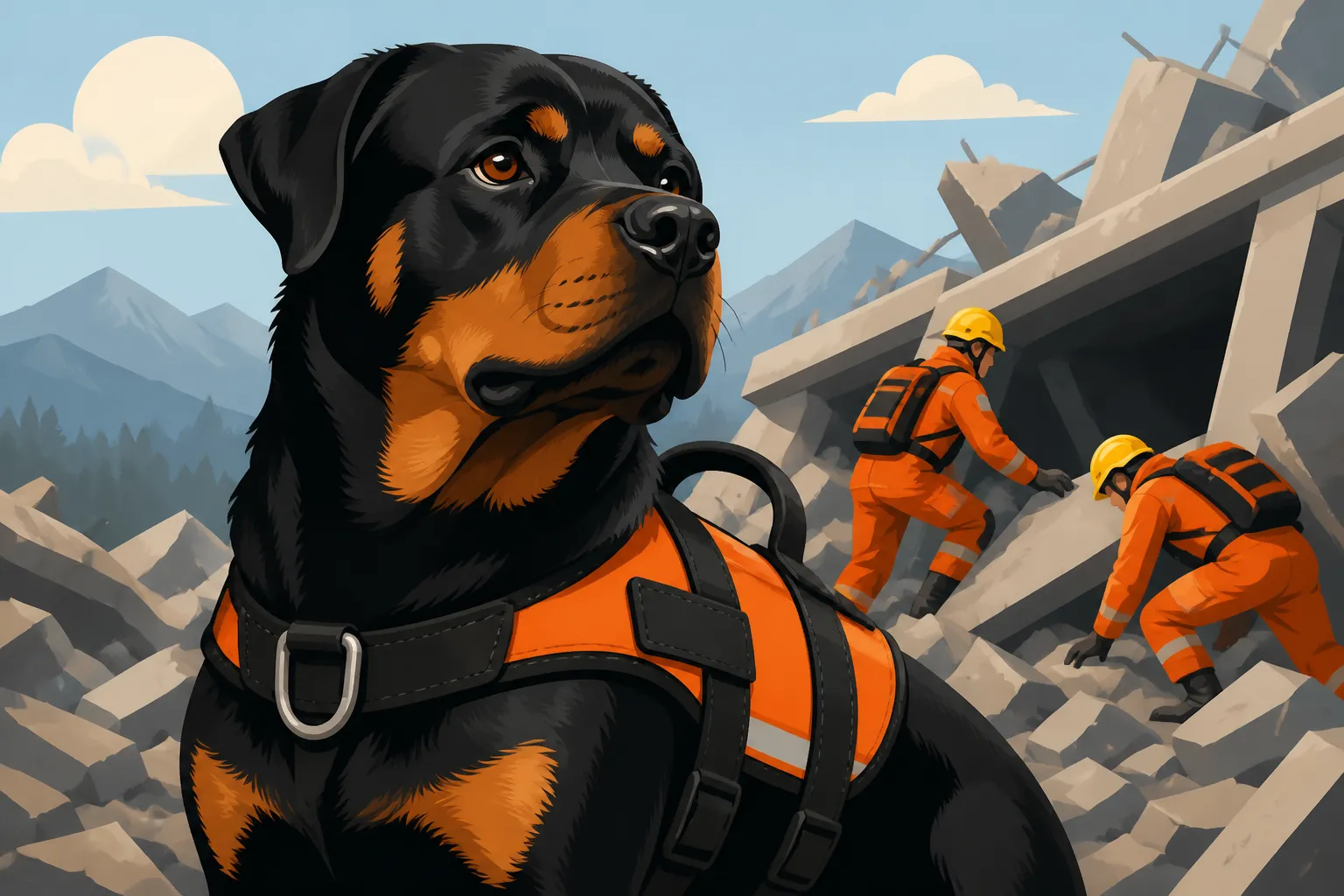
- Working urban and disaster sites: These scenarios demand a dog that is courageous, agile, and unfazed by unstable ground, loud noises, and confined spaces. While perhaps not as nimble as a Border Collie, a well-trained Rottweiler can methodically search rubble piles, collapsed structures, and industrial areas, using their size to their advantage when needing to peer over obstacles or push through debris. Their mental fortitude is paramount here, as these sites are often overwhelming.
- Engaging in water recovery: Some Rottweilers are even trained for water search, using their scenting abilities from a boat or shoreline to detect human remains underwater. This is a highly specialized skill that leverages their powerful sense of smell.
Each environment presents its own challenges, but the Rottweiler’s adaptability, paired with rigorous training, allows them to excel. Even specialized items like first-aid kits tailored for dogs, essential for any SAR team, can be sourced through vendors like Chewy.
The Emotional and Physical Demands on the Team
Working in search and rescue is profoundly demanding, both emotionally and physically. Handlers spend countless hours training, often at their own expense, and then dedicate themselves to real-world deployments that can be heartbreaking. For the Rottweiler, the physical toll is evident in long hours of intense activity, navigating difficult terrain, and enduring varying weather. Exercising a Rottweiler in Summer Heat is a serious consideration, given their black coats.
But beyond the physical, there’s an emotional aspect. While dogs don't understand the gravity of a human tragedy in the same way we do, they can sense the stress and urgency of their handlers. They carry the weight of the mission, and a "failed" search (where the person isn't found alive) can be draining for the entire team. The profound bond between a Rottweiler and its handler provides mutual support through these intense experiences, allowing them to rely on each other to get through even the toughest calls. It's a partnership built on trust, perseverance, and shared purpose.
Overcoming Lingering Breed Stereotypes
Despite their proven capabilities, Rottweilers in SAR still face an uphill battle against public perception. The media, insurance companies, and even some property owners often cling to outdated or inaccurate stereotypes about the breed. The Rottweiler Reputation That Reaches Insurers is a very real problem for many owners. Teams with Rottweilers might face extra scrutiny or resistance from landowners who are unfamiliar with the breed’s true temperament and working ability.
However, every successful deployment and every life saved by a Rottweiler SAR dog chips away at these misconceptions. These dogs are powerful ambassadors for their breed, demonstrating intelligence, trainability, and an incredible capacity for selfless service. Their quiet professionalism in the field speaks volumes, showing the world that the Rottweiler is a loyal, courageous, and highly capable working dog, fully deserving of respect and admiration for its contributions to public safety. They are not just dogs; they are heroes with fur, proving time and again that breed should never be a barrier to potential.
Disclaimer
This article is for general informational purposes only and does not constitute professional advice. Laws, prices and regulations vary by location and change over time. Consult a qualified professional for guidance on your specific situation.