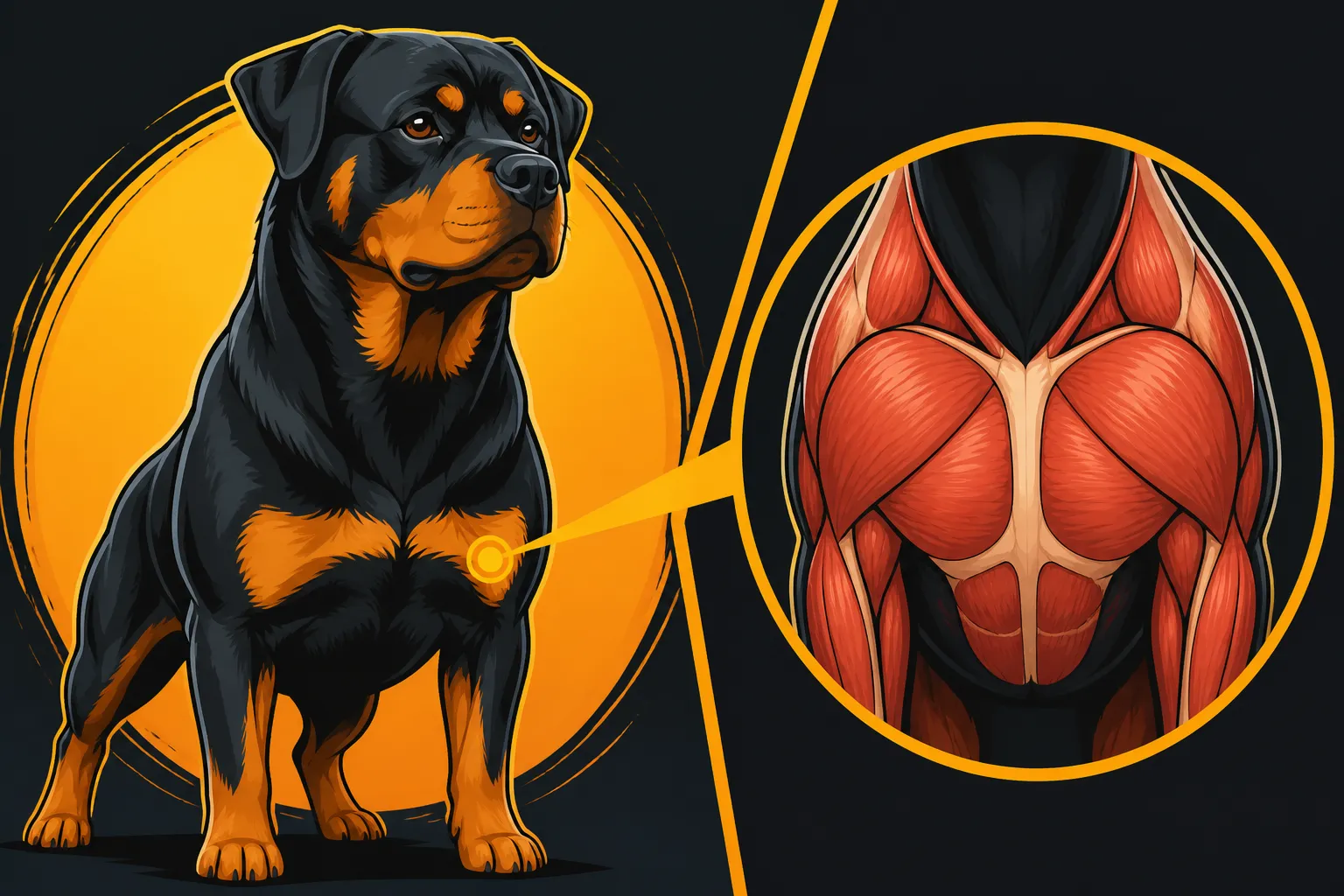
The Rottweiler Chest and Front Assembly
When you picture a powerful, sturdy Rottweiler, what often comes to mind is that imposing, broad chest and strong front end. But for many owners, it’s not just about looks; it's about making sure your dog is built to last and move comfortably throughout its life. It can be confusing to understand what a "correct" Rottweiler front assembly actually means, and what issues to watch out for. This guide will walk you through the specifics of the Rottweiler chest and front assembly, explaining its importance for health and function, and how you can support your dog’s structural soundness.
Understanding the Rottweiler Standard's Demands for the Chest and Front Assembly
The Rottweiler, as a breed, was developed for demanding work – herding and guarding cattle, pulling carts, and acting as a loyal protector. This isn't just a pretty picture on paper; every aspect of the breed standard, especially concerning their structure, is there for a reason. It ensures they can perform their historical duties efficiently and with enduring soundness. When we talk about the chest and front assembly, we're discussing the engine room and shock absorbers of a magnificent, powerful animal.
Why the Breed Standard Matters for Function and Form
Think about the original "Metzgerhund" – the butcher's dog from Rottweil, Germany. These dogs were constantly on the move, covering long distances with cattle, sometimes even pulling carts of meat or money. This kind of work demands immense stamina, strength, and a body that can withstand constant physical stress. A Rottweiler with a flimsy chest or weak forelegs simply couldn't hack it. The breed standard, meticulously developed over generations, outlines the physical characteristics that allow a Rottweiler to be both powerful and enduring. It's not just for the show ring; it's a blueprint for a healthy, capable working dog. Ignoring these structural imperatives can lead to a dog prone to injury, early arthritis, and a significantly diminished quality of life. For instance, a dog with a shallow chest might lack the lung capacity needed for sustained activity, while weak angulation in the shoulders could lead to excessive strain on joints, ultimately shortening their active years.
The Ideal Rottweiler Chest: Depth, Width, and Rib Spring
The Rottweiler's chest is often described using terms like "deep," "broad," and having "well-sprung ribs." But what do those really mean? A deep chest means it extends well down between the forelegs, ideally to the elbows or slightly below. This depth is absolutely crucial for housing vital organs like the heart and lungs, providing them with ample space to function during periods of exertion. Imagine a runner with restricted lung capacity; it's the same principle for a dog bred for endurance. A broad chest isn't about being barrel-chested, but rather a width that indicates strength and stability, especially through the ribcage. The ribs should be "well-sprung," meaning they curve out from the spine and then taper slightly towards the sternum, rather than being flat-sided or too round. This curvature provides resilience and protection. A proper chest not only gives the Rottweiler its characteristic powerful appearance but also supports its incredible strength and stamina. Without this correct structure, the whole foundation of the dog's movement and internal function can be compromised.
Forelegs and Shoulders: The Pillars of Power
Moving beyond the chest, the forelegs and shoulders are the primary means of propulsion and shock absorption for the Rottweiler. The shoulder blades should be long, well-laid back (angled), and lie close to the body, creating a smooth transition from the neck to the back. This specific angulation allows for excellent reach in movement, meaning the front legs can extend forward gracefully and efficiently without causing undue strain. The forelegs themselves must be straight, heavy-boned, and well-muscled, appearing straight from all angles. When viewed from the front, the legs should be parallel, not "bowed out" or "pinched in" at the elbows. Those elbows are particularly important: they should be held close to the body, not loose or "out," as this can lead to lameness and pain over time. Incorrect elbow placement is a common structural fault that can severely impact a Rottweiler's mobility and is often an indicator of Rottweiler Elbow Dysplasia and Front Leg Lameness. This entire assembly needs to work in harmony – the shoulder, upper arm, and foreleg – to provide the powerful, ground-covering gait characteristic of the breed, allowing them to carry their significant weight with ease and strength.
The Functional Importance of a Well-Built Front
It's easy to admire a Rottweiler's powerful build, but the true appreciation comes when you understand why that build is so important. A well-constructed chest and front assembly isn't just about winning ribbons in the show ring; it's fundamentally about the dog's ability to live a long, healthy, and active life without discomfort or debilitating issues. The functionality of this area directly impacts everything from their daily walks to their long-term joint health.
Impact on Mobility and Endurance
Imagine trying to run a marathon with a bad knee or an unstable shoulder. That's a bit like what an improperly built Rottweiler experiences in its daily life. Correct angulation in the shoulders and a heavy-boned, straight foreleg structure allow for efficient, fluid movement. This means less wasted energy and less strain on joints as the dog walks, trots, or even runs. A Rottweiler with proper structure can cover ground with impressive reach and drive, maintaining its powerful stride for longer periods. Conversely, a dog with a "fiddle front" (where the elbows are out and the pasterns are weak), or with too-straight shoulders, will experience a jarring impact with every step. This continuous stress on the joints and ligaments can lead to premature wear and tear, making them candidates for conditions like Managing Arthritis in an Older Rottweiler much earlier in life. Their endurance will be compromised, and even a simple long walk might become painful, robbing them of the joy of activity. This isn't just a hypothetical; it's a real frustration for owners whose dogs are limited by structural problems.
Power Transmission and Stability
The front assembly of a Rottweiler is where much of their power originates and is transmitted. When a Rottweiler pushes off with its hindquarters, the force travels through its spine to the powerful chest and shoulders, allowing the forelegs to reach and pull the body forward. This incredible system also acts as a crucial shock absorber, cushioning the impact of each step and protecting the spine and internal organs. A broad, deep chest provides a stable base for the shoulders, ensuring that the dog remains balanced and sturdy even when navigating uneven terrain or engaging in sudden turns. This stability is vital for a breed that can weigh well over a hundred pounds; a stumble or an awkward landing for a lighter dog might be a minor inconvenience, but for a heavy Rottweiler, it can lead to serious injury. Think of a Rottweiler working in protection sports, where quick changes in direction and powerful bursts of speed are required – without sound structure, the risk of injury skyrockets. The stability offered by a correct front also helps prevent conditions like Cruciate Tears in a Heavy Rottweiler by maintaining overall body balance and reducing compensatory strain on the rear.
Avoiding Common Structural Issues
Unfortunately, not all Rottweilers are blessed with ideal structure, and it's something responsible breeders work tirelessly to achieve. Common structural issues in the front assembly include:
- Loose Elbows: Where the elbows turn out from the body, often leading to a "paddling" gait. This can be a sign of elbow dysplasia, a painful condition.
- Straight Shoulders: Lacking the necessary angulation, which reduces reach, creates a short, choppy gait, and increases impact on the joints.
- Shallow Chest: A chest that isn't deep enough, limiting lung and heart space, impacting stamina.
- Narrow Chest: Lacking sufficient width, which can lead to a less stable stance and movement, and sometimes causes the front legs to converge too much or 'tie in' when moving.
- Weak Pasterns: The pasterns (the equivalent of a human wrist) should be strong and slightly sloped. Weak or too-straight pasterns can lead to "down in pastern" appearance and are prone to injury.
These issues don't just affect a dog's appearance; they significantly impact their comfort and longevity. A dog with a faulty front assembly will likely experience chronic pain, restricted mobility, and a need for more frequent veterinary interventions or joint supplements from a trusted retailer like Chewy, simply to maintain a basic level of comfort. Understanding these potential pitfalls is key to making informed choices about a puppy or rescue dog.
What to Look For and How to Assess Your Rottweiler's Front
So, how do you actually tell if your Rottweiler has a well-constructed front assembly? It's not always easy, especially if you're new to evaluating dog structure. But by observing them both standing still and in motion, and even by gently examining their bones and muscles, you can gain a much clearer picture. This kind of assessment isn't just for judges; it's for every owner who wants to ensure their dog is structurally sound.
Observing Stance and Movement
When your Rottweiler is standing naturally, take a moment to observe their overall balance. From the front, their forelegs should appear straight and parallel, not bowed out at the elbows or pinched in at the wrists. The chest should be broad but not excessively so, giving a powerful yet agile impression. From the side, the chest should be visibly deep, extending at least to the elbows. Look for the angulation of the shoulder blade – it should appear to slope back, not stand upright like a fence post.
Now, watch them move. A correct Rottweiler gait should be powerful, free, and harmonious. As they walk or trot, the front legs should extend smoothly forward with good reach, while the hindquarters provide strong drive. The legs should move in a straight line, converging slightly towards the centerline of the body at a faster trot. What are the warning signs?
- Paddling: The feet swing out in an arc instead of moving straight forward.
- Crabbing or Sidewinding: The dog moves with its body slightly angled, not straight.
- Loose or "Out" Elbows: The elbows protrude away from the body, especially when moving.
- Short, Choppy Strides: Lack of reach in the front, often indicating straight shoulders.
- Heavy or Cumbersome Movement: A lack of fluidity, suggesting inefficient structure.
These subtle indicators can often signal underlying structural issues that will impact your Rottweiler's long-term health and mobility.
Palpating for Structure: Feeling the Bones and Muscles
Beyond visual inspection, you can also gently feel your Rottweiler's structure. This isn't about being forceful, but about understanding what solid bone and well-developed muscle feel like. Start with the shoulder blades: they should feel long and lie flat against the body, not loose or separated. Run your hands down the forelegs – they should feel substantial, with good bone density. The elbows should be tucked close to the body, snug when you run your hand past them, not protruding outwards.
Feel the ribcage: it should be well-sprung, giving a rounded but not barrel-like feel. You want to feel muscle over the shoulders and chest that is firm and well-developed, not thin or atrophied. Compare both sides; symmetry is key. Any obvious asymmetry or areas of tenderness should be noted and possibly discussed with your vet. This hands-on assessment, combined with observation, helps reinforce what you see and detect potential areas of concern that might not be immediately obvious.
The Role of a Breeder in Producing Sound Fronts
The structure of a Rottweiler isn't just luck; it's the result of careful, intentional breeding. Responsible breeders understand the breed standard inside and out and actively strive to produce dogs with sound conformation. This involves extensive health testing of the parent dogs, specifically focusing on conditions that affect the front assembly. For Rottweilers, this means elbow evaluations through organizations like the Orthopedic Foundation for Animals (OFA). A breeder should be able to provide clear documentation of these clearances for both parents, showing good or excellent elbow health. Rottweiler Hips and Elbows and the 24-Month Rule is a vital concept here.
They will also consider the overall pedigree and the structural strengths and weaknesses of previous generations. A breeder should never breed a dog with known severe structural faults, as these are often hereditary. When choosing a puppy, ask about the parents' structure, how the puppies are raised (avoiding excessive jumping or strenuous exercise that could damage developing joints), and if you can see the parents in person. A good breeder is transparent and happy to discuss how they strive to produce physically sound Rottweilers. This dedication to sound structure at the genetic level is paramount for the health and well-being of the entire breed.
Nurturing a Healthy Front Assembly Through Care and Exercise
Even with the best genetics and a perfectly formed front assembly, how you raise and care for your Rottweiler plays a huge role in maintaining their soundness throughout their life. From puppyhood through their senior years, attention to appropriate exercise, nutrition, and weight management is critical for supporting those powerful bones and joints. This is where your everyday efforts really make a difference.
Appropriate Exercise for Growing Puppies
It’s a common misconception that more exercise equals a healthier, stronger puppy. For a large, fast-growing breed like the Rottweiler, the opposite is often true. Their growth plates, the soft areas at the ends of long bones, remain open and vulnerable to damage for a long time, sometimes up to 18-24 months. Rottweiler Growth Plates Closing at Eighteen to Twenty-Four Months means that strenuous, high-impact activities like long jogs, excessive jumping, or continuous retrieving can cause irreversible damage to these delicate structures.
Instead, focus on controlled, low-impact exercise. Short, frequent walks on soft surfaces are ideal. Allow free play in a safely enclosed yard, but monitor it closely to prevent overexertion or roughhousing with much larger or smaller dogs. Avoid stairs and jumping in and out of cars whenever possible, as these put immense stress on developing joints. Think about mental stimulation through puzzle toys (many excellent options available from Chewy) rather than purely physical exhaustion. The goal is to build muscle tone gradually, without stressing the skeletal system that is still forming. Prioritizing correct and gentle exercise in puppyhood sets the foundation for a lifetime of healthy mobility.
Nutrition for Bone and Muscle Development
Just as important as exercise is proper nutrition, especially during that critical growth phase. Rottweiler puppies need a high-quality large breed puppy formula, specifically designed to support their unique growth rate. These foods are formulated with carefully balanced calcium and phosphorus ratios, typically within a range of 1.0% to 1.5% calcium. Rottweiler Calcium Limits and Why Supplements Hurt is a crucial topic here; never supplement a growing Rottweiler puppy with extra calcium. Excess calcium can disrupt healthy bone development, leading to conditions like osteochondrosis (OCD) or hypertrophic osteodystrophy (HOD), which can severely compromise the front assembly.
The protein content should be appropriate for large breeds, usually between 22-26%. Crucially, keeping your Rottweiler puppy lean is one of the best things you can do for its developing joints. Keeping a Rottweiler Puppy Lean on Purpose means that a chubby puppy isn't cute; it's a puppy at higher risk for developmental orthopedic diseases due to the extra load on its immature bones and joints. Monitor their weight and body condition closely, feeling for their ribs and ensuring a visible waist. Proper nutrition supports strong bone density and robust muscle development, providing the necessary infrastructure for a sound front assembly.
Supporting the Adult Rottweiler's Front
Once your Rottweiler is fully grown (typically around 18-24 months), the focus shifts to maintenance. Continue with regular, moderate exercise that suits their age and fitness level. Daily walks, hiking, and swimming are excellent low-impact options. While they can handle more strenuous activities, always listen to their body and avoid overdoing it, especially in hot weather or on hard surfaces.
Weight management remains paramount. Rottweiler Obesity and the Load It Adds is a serious concern, as every extra pound dramatically increases the stress on their joints, particularly the front assembly which bears a significant portion of their weight. Feed a high-quality adult formula appropriate for their activity level, and measure their food accurately. Consider incorporating joint supplements like glucosamine and chondroitin sulfate into their diet, even if they aren't showing signs of joint issues, as a proactive measure. Many owners find these available at places like Chewy. Regular veterinary check-ups are also vital to catch any subtle changes in gait or discomfort early on. By continuing to prioritize balanced exercise, optimal nutrition, and a healthy weight, you can help ensure that your Rottweiler’s magnificent chest and front assembly serve them well throughout their active, happy life.
| Feature | Ideal Rottweiler Front Assembly | Common Faults to Avoid | Impact of Faults |
|---|---|---|---|
| Chest Depth | Deep, extending to or slightly below the elbows. | Shallow, ending well above the elbows. | Limited lung capacity, reduced stamina. |
| Chest Width | Broad, well-sprung ribs, providing ample space and strength. | Narrow, flat-sided, or barrel-chested. | Instability, compromised organ space, awkward gait. |
| Shoulder Angulation | Long, well-laid back shoulder blades (45-degree angle). | Straight, upright shoulders. | Short, choppy gait; increased impact on joints; reduced reach. |
| Elbow Placement | Held close to the body, clean and snug. | Loose, "out" or "in" at the elbow. | Lameness, pain, elbow dysplasia, inefficient movement. |
| Forelegs | Straight, heavy-boned, parallel from all views. | Bowed, "fiddle front" (elbows out, pasterns weak). | Increased strain on joints, abnormal weight distribution. |
| Pasterns (Wrists) | Strong, slightly sloped, resilient. | Weak, "down in pastern," or too straight. | Increased risk of sprains, strains, and arthritis. |
| Gait | Powerful, ground-covering, smooth reach and drive. | Paddling, crabbing, short-strided, cumbersome. | Wasted energy, premature joint wear, discomfort. |
Disclaimer
This article is for general informational purposes only and does not constitute professional advice. Laws, prices and regulations vary by location and change over time. Consult a qualified professional for guidance on your specific situation.