Why the Standard Wants a Rectangular Rottweiler
If you've ever observed a well-bred Rottweiler, you might have noticed a distinct characteristic beyond their impressive stature and striking black and rust coat: their body often appears longer than it is tall. This isn't just a quirk; it's a deliberate feature outlined in the breed standard, and it serves a very important purpose rooted in their history and function. This guide will delve into why the standard insists on a rectangular physique, exploring the functional advantages and what it means for the health and well-being of these magnificent dogs.
The Rottweiler's Original Calling and Its Influence on Body Shape
The Rottweiler's rectangular shape isn't just an aesthetic preference; it's a direct reflection of their original job description. These dogs were, first and foremost, working animals, bred for tasks that demanded stamina, strength, and agility, not necessarily speed. Understanding their history helps us appreciate why this specific body type became so integral to the breed.
Droving Cattle and Pulling Carts
Imagine a bustling cattle market in Rottweil, Germany, centuries ago. The ancestors of today's Rottweilers, known as Metzgerhunds or "butcher's dogs," were indispensable. Their primary roles included driving herds of cattle over long distances to market, often rough and uneven terrain, and then protecting the butcher's money bag on the way home. Later, they were also tasked with pulling heavy carts loaded with meat and other goods. For these jobs, a compact, square dog wouldn't cut it.
A longer body provided crucial leverage and endurance. When pushing against a stubborn steer or pulling a heavy load, a slightly elongated frame distributes weight more effectively and allows for a more powerful, sustained push or pull. It creates a longer base of support, enhancing stability, which was vital when working with unpredictable livestock or navigating difficult paths. This historical context is key to understanding What a Metzgerhund Did in a Day's Work and how their physical form was perfectly adapted for these strenuous tasks.
Strength, Stamina, and Stability
The rectangular body contributes directly to a Rottweiler's strength, stamina, and stability, all of which were paramount in their working life. A longer back allows for more flexible movement and better reach, enabling the dog to cover ground efficiently without expending excessive energy. This isn't about running like a greyhound; it's about a tireless trot and powerful, ground-covering strides.
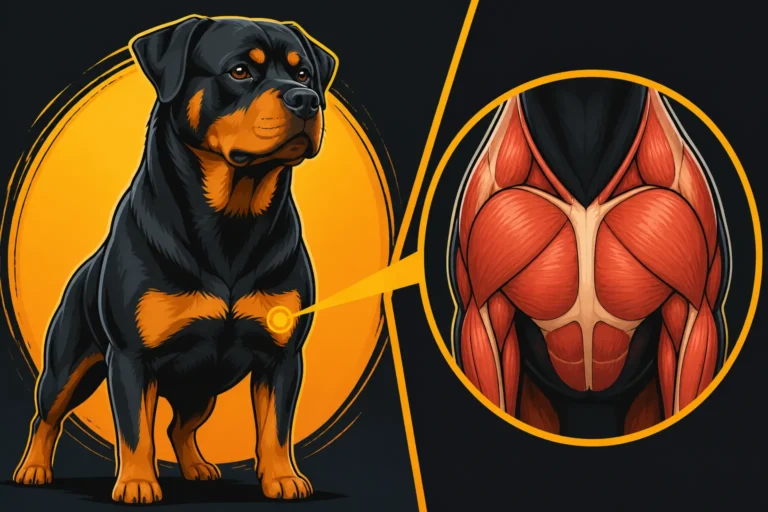
Think about the sheer muscle mass a Rottweiler carries. That powerful chest and hindquarters need ample space to develop and function optimally. A longer rib cage and loin provide room for larger lungs and digestive organs, supporting sustained physical exertion. This robust, stable build ensures that their immense power can be applied effectively, whether it's nudging a cow, standing guard, or holding their ground. It's a build designed for purposeful, powerful movement rather than explosive bursts.
The Mechanics of a Rectangular Build
When we talk about a rectangular Rottweiler, we're not just eyeballing it. There are specific anatomical reasons why this proportion is beneficial for a dog of this size and power. It's all about how the bones, muscles, and joints work together to create an efficient, strong, and enduring physique.
Enhanced Reach and Drive
A longer body generally correlates with a longer stride, which is essential for covering ground efficiently. Imagine the action of a powerful piston; the longer the stroke, the more ground it covers with each movement. For a Rottweiler, this means that their front and hind legs can extend and contract with greater reach and drive, propelling them forward with less effort over extended periods. This is vital for a dog that was historically expected to trot for miles.
This enhanced reach isn't just for speed; it also contributes to their stability and power. A Rottweiler isn't built for a fleeting sprint, but for sustained, powerful movement. The longer body allows for a more fluid and powerful gait, where the legs can swing through their full range of motion without hindrance. This is why when you observe a well-bred Rottweiler in motion, their gait appears powerful and coordinated, often described as a "ground-covering trot," as detailed in Rottweiler Movement as Judges Assess It.
Supporting a Heavy Frame
Rottweilers are substantial dogs, with males often weighing over 100 pounds. This significant body weight needs adequate structural support to prevent undue strain on their joints, especially over their projected Rottweiler Lifespan and the Eight to Ten Year Average. A rectangular body provides a longer and wider base, effectively distributing this weight across a more expansive frame.
Consider the spine: a slightly longer back can better absorb impact and provide a more stable foundation for the powerful muscles that attach to it. This design helps minimize the sheer force exerted on individual vertebrae and joints, which is particularly critical given the common joint issues seen in large breeds like Rottweiler Hip Dysplasia and the OFA Grade and Rottweiler Elbow Dysplasia and Front Leg Lameness. This thoughtful structural design helps ensure that the dog's powerful build is supported adequately throughout its working life and into its senior years.
Interpreting the Breed Standard
The breed standard is essentially the blueprint for what an ideal Rottweiler should look like, act like, and be capable of. It outlines specific proportions, and the rectangular body shape is a non-negotiable aspect. Breeders strive to produce dogs that conform to these guidelines, not merely for show but because these proportions are linked to the breed's fundamental purpose and health.
The Length-to-Height Ratio
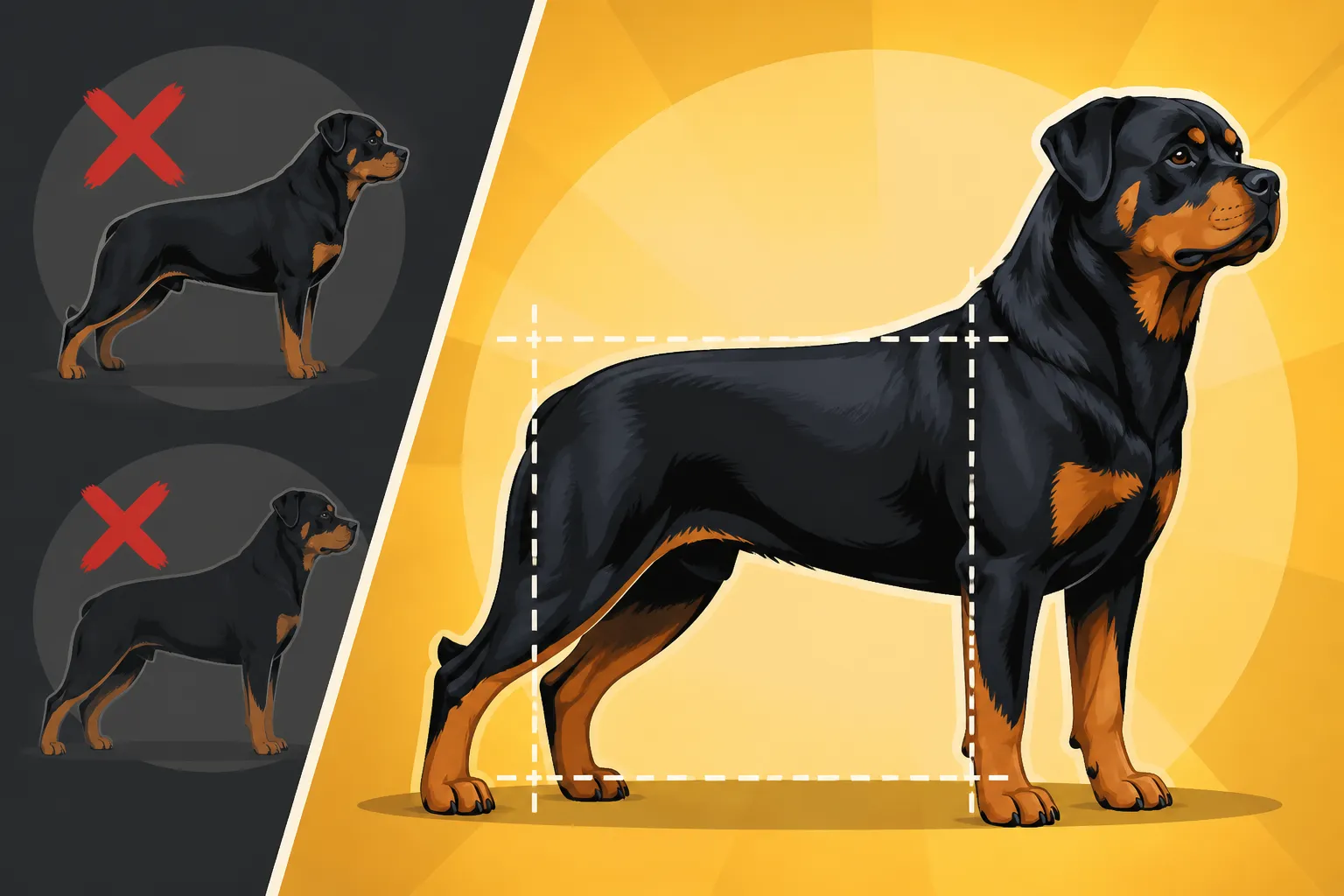
The American Kennel Club (AKC) standard, along with most international standards like the ADRK (Allgemeiner Deutscher Rottweiler-Klub) in Germany, clearly specifies the desired proportions. For a Rottweiler, the length of the body, measured from the prosternum (the prominent bone at the front of the chest) to the rear-most projection of the rump, should be slightly longer than the height at the withers (the highest point of the shoulder blades). While specific percentages can vary slightly between standards, a common guideline is that the body length should be approximately 10 to 15 percent greater than the height.
This ratio is critical. A dog that is too square (length equal to height) or too short in the body will not possess the desired reach and drive in its gait. Conversely, a dog that is excessively long can appear unbalanced and may have a weaker back, potentially leading to orthopedic issues. It's a fine balance that experienced breeders work hard to achieve, ensuring functionality and longevity are prioritized. The goal is a dog that looks balanced, powerful, and capable.
What Constitutes a Fault
Deviations from the rectangular standard are considered faults in the show ring, and for good reason. A square-bodied Rottweiler might struggle with the sustained endurance required for historical tasks, appearing less agile and powerful in its movement. This often results in a choppier, less efficient gait. A dog that is too short in body often lacks the necessary flexibility and muscle attachment space in the loin area, which can hinder proper hindquarter drive.
On the other hand, an overly long Rottweiler might exhibit a weak or roached back, which can predispose them to spinal issues and make them less stable, particularly when performing powerful movements. Such a dog might struggle to properly carry its own weight, let alone pull a cart or effectively manage livestock. These structural nuances, though seemingly small, have significant implications for a Rottweiler's overall ability and long-term health. Breeders meticulously evaluate structure, knowing that the correct The Rottweiler Chest and Front Assembly and rear angulation contribute to the overall rectangular ideal.
Health and Longevity: Why Structure Matters
It might seem like a cosmetic detail, but the rectangular body shape actually plays a significant role in a Rottweiler's health and potential for a long, comfortable life. Incorrect proportions can lead to a cascade of problems, emphasizing why a responsible breeder pays such close attention to conformation.
Reducing Strain on Joints and Spine
A correctly proportioned, rectangular Rottweiler experiences more even distribution of weight and stress across its skeletal structure. This means less localized pressure on individual joints, particularly the hips and elbows, which are already prone to issues in large breeds. When a dog is too short, the spine and joints might be subjected to excessive compression, while an overly long back can lead to weakness and instability.
Consider a dog with a too-short back attempting to jump or turn quickly. The forces generated would be concentrated over a smaller area, increasing the risk of injury. A well-proportioned rectangular frame, however, allows for better shock absorption and muscle support, promoting healthier joint function over the dog's lifetime. This isn't a guarantee against all health issues, but it certainly tips the scales in favor of better orthopedic health. Joint Supplements Started Before a Rottweiler Turns Two are often recommended to support these vital structures.
Impact on Movement and Endurance
The rectangular shape is intrinsically linked to the Rottweiler's powerful and enduring gait. A dog with the correct proportions will move with a smooth, effortless, and ground-covering trot. This efficiency in movement means they can sustain activity for longer periods without excessive fatigue or strain. Imagine a dog built too square trying to maintain a steady trot for miles – it would be like trying to run a marathon in shoes that don't fit; inefficient and tiring.
Dogs with structural faults, such as those that are too short or too long in the body, may develop compensatory gaits, where they adjust their movement to try and alleviate discomfort or inefficiency. Over time, these compensatory movements can lead to secondary issues, such as muscle strain, uneven wear on joints, and chronic pain. Ensuring the proper structure from puppyhood is therefore paramount, right through their development, as discussed in Rottweiler Growth Plates Closing at Eighteen to Twenty-Four Months. This is why premium large breed puppy foods, available on platforms like Chewy, often include specific nutrient balances to support healthy bone and joint development.
What to Look For and Ask About
For anyone considering bringing a Rottweiler into their home, understanding the breed standard, particularly regarding body shape, is crucial. It’s not about finding a show dog, but about finding a healthy, well-structured companion.
Observing a Rottweiler's Build
When you're looking at a Rottweiler, whether it's an adult or a puppy, try to observe their overall outline. From the side, do they appear slightly longer than they are tall? Look for a strong, level back and a deep, well-sprung rib cage. The length should come from the rib cage and loin, not from a disproportionately long neck or hindquarters. The dog should look powerful and athletic, not stocky or elongated.
Pay attention to their movement as well. A healthy, well-built Rottweiler will move with purpose and grace, their powerful legs driving smoothly. If a dog appears short-coupled, with a very short back, or conversely, seems unusually long and perhaps a bit "saggy" in the middle, these are visual cues that they might not conform to the ideal rectangular structure. You want a dog whose build implies durability and capability, suitable for a lifetime of activity, not just a few years of youthful vigor.
Asking a Reputable Breeder
A reputable breeder will not only understand the breed standard inside and out but will also be transparent about how their dogs conform to it. They can explain why they prioritize certain structural traits and how these relate to the health and working ability of their lines. Don't be shy about asking questions when you're speaking with a breeder.
Ask about the length-to-height ratio of their breeding dogs. Inquire about the hip and elbow clearances, which are directly related to the structural integrity. A good breeder, like those referenced in The Five Clearances a Rottweiler Breeder Must Have, will be proud to discuss the conformation of their dogs and how it benefits their health. They understand that a well-structured dog, whether from Chewy-stocked foods or their thoughtful breeding program, is the foundation for a healthy life. They should be able to show you pictures or videos of their dogs in profile and in motion, clearly demonstrating their adherence to the rectangular ideal. This dedication to the standard isn't about vanity; it's about preserving the working heritage and promoting the well-being of the breed.
| Trait | Ideal Rectangular Rottweiler | Less Ideal (Square) | Less Ideal (Overly Long) |
|---|---|---|---|
| Body Length vs. Height | Slightly longer than tall (10-15%) | Equal length and height | Significantly longer than tall |
| Movement | Powerful, ground-covering trot | Choppy, less efficient gait | Potentially weak, less coordinated |
| Spinal Support | Even weight distribution, stable | Compressed, higher impact | Prone to weakness, swayback |
| Joint Strain | Minimized, well-supported | Increased on hips/elbows | Can lead to instability |
| Endurance | Excellent, sustained activity | Reduced, tires faster | Variable, potentially lower |
| Appearance | Balanced, athletic, powerful | Compact, blocky | Unbalanced, stretched |
Disclaimer
This article is for general informational purposes only and does not constitute professional advice. Laws, prices and regulations vary by location and change over time. Consult a qualified professional for guidance on your specific situation.