Why a Rottweiler Puppy Should Not Jog With You
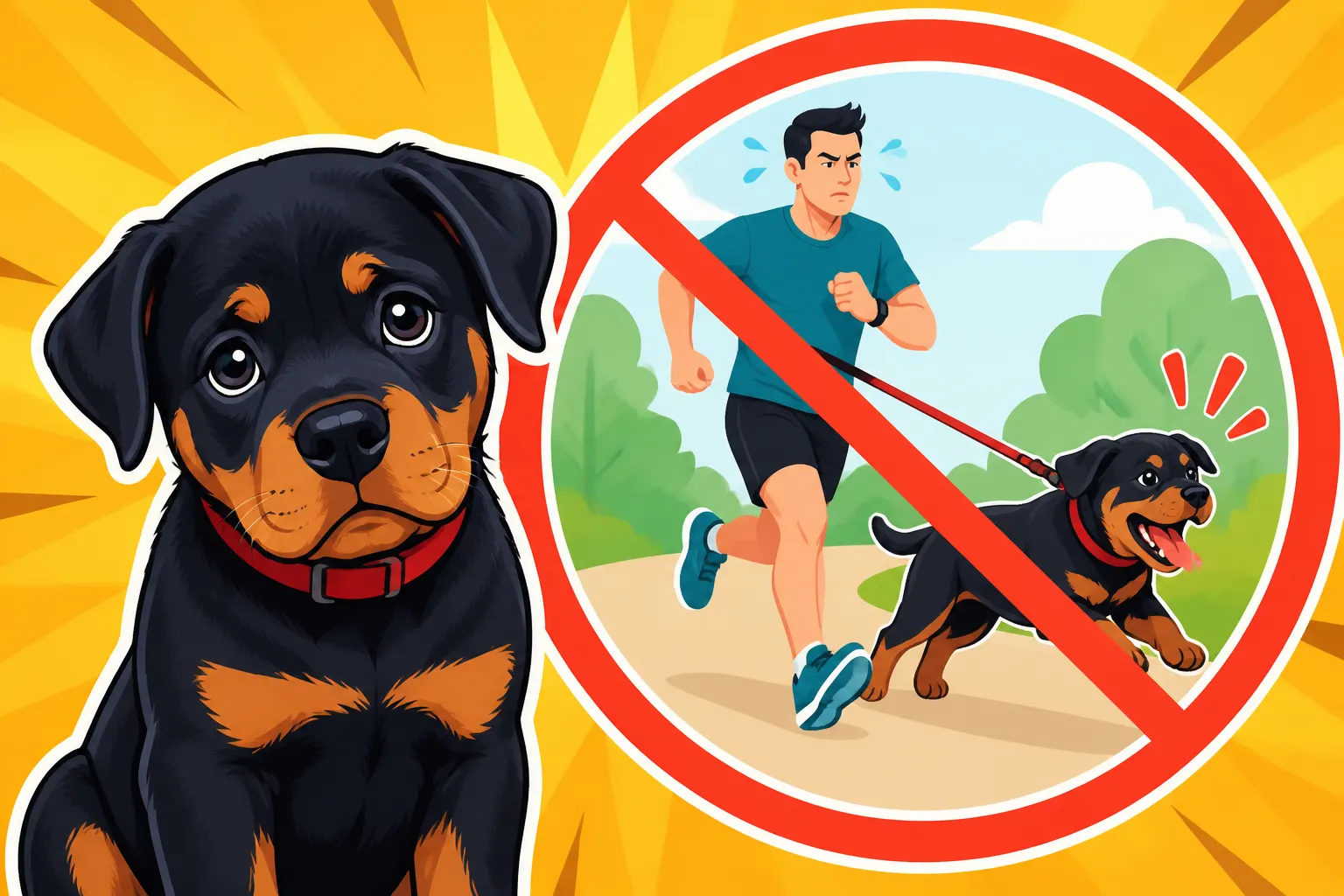
It’s incredibly tempting when you bring home that adorable, clumsy Rottweiler puppy to imagine all the adventures you'll have together – including those invigorating morning jogs. You see that boundless energy, that eagerness to please, and you naturally think, "My pup needs to burn this off!" But here’s the tough truth that many eager owners grapple with: taking your Rottweiler puppy for a jog, even a short one, can do far more harm than good to their developing body. This guide will walk you through precisely why those long, repetitive exercise sessions are detrimental and what truly safe, appropriate exercise looks like for your growing giant.
The Delicate Nature of a Growing Rottweiler's Joints
When you look at your Rottweiler puppy, you see a sturdy, solid little tank, right? But beneath that robust exterior lies a skeletal system that is very much a work in progress, far more fragile than it appears. It’s a bit like building a house – you wouldn't pour the foundation and immediately start jumping on the roof. Your puppy's bones, joints, and ligaments are still in their crucial formative stages, and demanding too much of them too soon can lead to lifelong problems.
Unclosed Growth Plates and Why They Matter
One of the most critical reasons why repetitive, high-impact exercise like jogging is a no-go for Rottweiler puppies is the presence of unclosed growth plates. These aren't just little lines you see on an X-ray; they are areas of soft, rapidly multiplying cartilage located near the ends of long bones. This cartilage is what allows the bones to lengthen as your puppy grows from a tiny fluffball into a magnificent adult. Imagine these growth plates as vital, vulnerable construction zones. They're still open, meaning they're soft, porous, and much weaker than the solid bone that will eventually form.
For a large breed like a Rottweiler, these growth plates stay open for a surprisingly long time. Unlike smaller breeds that might have theirs fuse by 6-8 months, Rottweilers often have active growth plates well into their second year, sometimes even closer to 24 months. Think about it – your puppy is gaining a significant amount of weight and size during this period, and all that growth is happening at these delicate sites. High-impact activities, the kind that involve repeated pounding or jarring, can easily damage these soft areas. A seemingly innocuous jog can cause micro-traumas or even fractures that might not be immediately obvious but can lead to abnormal bone development and joint issues down the line. It's truly a silent threat many owners don't realize. For more on this, check out Rottweiler Growth Plates and Why They Close So Late.
The Risk of Overstressing Developing Bones
Beyond the growth plates themselves, the entire musculoskeletal system – bones, ligaments, tendons, and muscles – is developing. When your Rottweiler puppy runs alongside you on a jog, their immature structure is subjected to repeated stress, impact, and torsion. This isn't just about the occasional stumble; it's the cumulative effect of miles logged on hard surfaces. Picture a child running a marathon – their bodies simply aren't ready for that kind of endurance and impact.
A Rottweiler puppy’s bones are not yet fully dense, and their ligaments and tendons, which hold joints together, are still somewhat elastic and not as strong as they will be in adulthood. Pushing them to endure prolonged, repetitive motion can cause inflammation, micro-tears, or structural changes that alter the way their joints will eventually form. This isn't about preventing all movement – puppies need exercise! But there's a huge difference between free-play in a soft yard and a structured, forced jog on concrete. The latter imposes a repetitive strain that the puppy cannot self-regulate and is simply not equipped to handle, potentially leading to pain and chronic conditions. It's a key reason why understanding A Growing Rottweiler's Joints and Overexercise is so crucial.
Understanding the Long-Term Consequences of Early Impact
The decisions you make about your Rottweiler puppy’s exercise regime today can have profound effects on their health and mobility years down the line. It’s not just about avoiding immediate injury, but preventing the development or exacerbation of serious orthopedic conditions that can severely impact their quality of life. For a breed already predisposed to certain joint issues, vigilance during growth is paramount.
Hip and Elbow Dysplasia Exacerbation
Hip and elbow dysplasia are unfortunately common concerns in large breeds like Rottweilers. While genetics play a significant role – which is why reputable breeders perform clearances like those discussed in The Five Clearances a Rottweiler Breeder Must Have – environmental factors, especially during the crucial growth phase, can heavily influence the severity of these conditions. Forcing a puppy to jog or engage in other high-impact, repetitive exercises puts undue stress on these developing joints.
For a puppy genetically predisposed to hip dysplasia, excessive early impact can worsen joint laxity (looseness) and lead to the abnormal development of the hip socket and femoral head. Similarly, for elbow dysplasia, the repetitive pounding from jogging can aggravate cartilage lesions or bone abnormalities within the elbow joint, making a mild genetic predisposition turn into a debilitating condition. You might not see the symptoms until much later, but the damage is often done in those early months. It's a silent progression where well-intentioned exercise contributes to a lifetime of pain and limited mobility. Understanding Rottweiler Hip Dysplasia and the OFA Grade and Rottweiler Elbow Dysplasia and Front Leg Lameness helps shed more light on these challenges.
Other Orthopedic Issues to Avoid
Beyond hip and elbow dysplasia, there are other orthopedic concerns that can arise from inappropriate exercise in a growing Rottweiler. Conditions like osteochondritis dissecans (OCD), where cartilage fails to develop properly and separates from the underlying bone, can be triggered or worsened by trauma and excessive joint stress during growth. Panosteitis, often called "growing pains," is another common condition in large breed puppies, characterized by shifting lameness. While often self-limiting, intense exercise can certainly exacerbate the pain and inflammation associated with it.
Even seemingly minor issues, like strains or sprains in ligaments and tendons that are still maturing, can lead to chronic instability in a joint. Think about the cumulative impact of microscopic damage over time. It weakens the structural integrity, predisposing the dog to arthritis and pain much earlier in life. When you're dreaming of future adventures with your adult Rottweiler, remember that preserving their youthful joints is the best investment you can make in their long-term health and comfort. Early preventive care is far easier and less costly than managing chronic pain in a large dog.
Appropriate Exercise for a Rottweiler Puppy
So, if jogging is out, what can your Rottweiler puppy do to burn off all that puppy energy? The key is to focus on controlled, low-impact activities that allow your puppy to move naturally, building muscle and coordination without stressing their still-developing skeletal system. It's about quality over quantity, and careful supervision to ensure they don't overdo it.
Structured Play and Short Walks
Structured play is your best friend when it comes to exercising a young Rottweiler. Think about activities like short games of fetch on a soft surface like grass, where they can sprint and stop, but not for prolonged periods. Tug-of-war is another excellent option, as it builds strength and helps with impulse control, but always be mindful of their neck and spine – keep it low and controlled. Chase games where you do most of the running while they follow, or hide-and-seek with treats, can be fantastic ways to engage their minds and bodies without excessive impact. Just be aware of Roughhousing That Damages a Rottweiler Puppy and ensure play stays constructive.
Short, leisurely walks are also perfect. The general rule of thumb for puppy walks is the "five-minute rule": five minutes of walking per month of age, twice a day. So, a four-month-old puppy would get two 20-minute walks. These walks should be on varied, soft terrain if possible, like grass or dirt trails, and allow the puppy to sniff, explore, and move at their own pace. The goal isn't to cover distance or set a brisk pace; it's to provide gentle exercise, mental stimulation, and exposure to the world in a low-stress way. A good, comfortable harness that distributes pressure evenly, rather than pulling on their neck, can be found readily on sites like Chewy or Amazon and is ideal for these early strolls.
Mental Stimulation as a Safer Alternative
Often, what we perceive as boundless physical energy in a puppy is actually a need for mental engagement. A bored Rottweiler puppy can be a destructive Rottweiler puppy, and simply running them until they drop isn't the solution, nor is it safe. Mental stimulation is incredibly important for this intelligent breed and provides an excellent, low-impact way to tire them out.
Puzzle toys, for instance, where your puppy has to figure out how to get treats, can be incredibly engaging. Licking mats, snuffle mats, or KONG toys stuffed with kibble or safe treats can keep them occupied and mentally fatigued for a good stretch of time. Training sessions, even short 5-10 minute bursts, where you work on basic obedience cues like "sit," "stay," "down," and "come," are fantastic. These build their brainpower, strengthen your bond, and provide a sense of accomplishment without putting stress on their joints. You can even use small, healthy training treats from brands found on Ollie or other specialized pet food retailers to make these sessions extra rewarding. Teaching them new tricks or playing scent games in the house also offers a wonderful outlet for their natural drives.
When Can Your Rottweiler Join Your Jog?
The waiting can feel long, especially when you're an active person keen to share your hobbies with your canine companion. But patience truly is a virtue when it comes to the long-term health of your Rottweiler. Understanding the timeline for their physical development is key to knowing when it's finally safe to introduce higher-impact activities.
Waiting Until Full Skeletal Maturity
The most important benchmark for introducing activities like jogging is full skeletal maturity. As we discussed, Rottweilers are slow to mature, and their growth plates often don't close until they are around 18 to 24 months old. This means that for nearly two years, your Rottweiler's skeleton is still in a vulnerable state. Pushing them into repetitive, high-impact activities before these growth plates have fully fused carries a significant risk of damage that can lead to lifelong orthopedic issues.
How do you know for sure when your dog is skeletally mature? Your veterinarian is your best resource. During regular check-ups, especially around the 18-month mark, you can discuss your plans to increase their activity level. In some cases, your vet might recommend X-rays to confirm growth plate closure, particularly if you have concerns or if your dog is going to participate in more demanding sports. It’s also crucial to remember that while skeletal maturity is a major hurdle, overall physical conditioning is also vital. A dog might be skeletally mature but still lack the muscle tone and endurance for prolonged jogging if they haven't been gradually conditioned. This is where Rottweiler Growth Plates Closing at Eighteen to Twenty-Four Months provides further insight into the process.
Gradual Introduction and Conditioning
Once your veterinarian gives the green light and your Rottweiler is fully grown and conditioned, you can begin the process of introducing jogging, but it must be done gradually. Don't jump from leisurely walks to a five-mile run overnight. Just like a human athlete, your Rottweiler needs a proper conditioning program to build stamina, strengthen supporting muscles, and adapt their cardiovascular system.
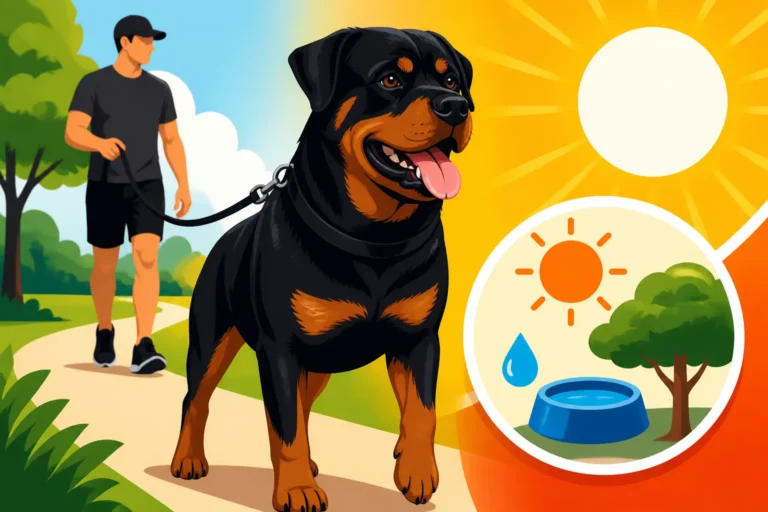
Start with very short intervals of jogging interspersed with walking – perhaps one minute of jogging followed by five minutes of walking, repeated a few times. Slowly increase the jogging intervals and decrease the walking time over several weeks and months. Pay close attention to your dog's cues: are they lagging? Is their gait uneven? Are they panting excessively? Any sign of discomfort means it's time to slow down or stop. Always jog on softer surfaces when possible, like dirt trails, to minimize impact, and avoid hard pavements or asphalt. Keep an eye on the weather, too; Rottweilers with their black coats can overheat easily. Always bring water for both of you, and ensure they have adequate rest and recovery time. Remember that Building Adult Rottweiler Fitness Safely is a marathon, not a sprint, and should be approached with careful consideration for your dog's unique needs and capabilities.
| Age of Rottweiler Puppy | Recommended Exercise Type | Duration/Intensity | Notes |
|---|---|---|---|
| 8 weeks – 4 months | Short, leash walks; supervised free-play in secure area | 5 minutes per month of age, 2-3 times/day | Focus on socialization, exploring new textures, minimal impact |
| 4 months – 8 months | Longer leash walks; structured play (fetch, tug) | Upto 5 minutes per month of age, 2-3 times/day | Continue socialization, basic obedience, avoid forced running, jumping |
| 8 months – 18 months | Moderate leash walks; introduction to swimming (gentle) | Gradually increasing duration/intensity, still no sustained jogging | Focus on muscle development, endurance, still protecting growth plates |
| 18 months – 24 months | Advanced walks, hiking, light dog sports | Can start very gentle, short jogging intervals, only with vet approval | Continue building stamina, monitor for any lameness or discomfort |
| 24 months + | Full adult activity, including jogging/running | Gradually increase duration and speed as conditioned | Vet confirmation of closed growth plates is ideal before high impact |
Disclaimer
This article is for general informational purposes only and does not constitute professional advice. Laws, prices and regulations vary by location and change over time. Consult a qualified professional for guidance on your specific situation.