Slow Feeders and Rottweiler Gulping
It's a sight many Rottweiler owners know well: your big, beautiful dog finishes their meal in what feels like mere seconds, inhaling kibble faster than you can say "slow down!" This isn't just a quirky habit; this rapid eating, often called "gulping," can lead to some truly terrifying health emergencies, particularly gastric dilatation-volvulus, or bloat, which is a life-threatening condition for our big-chested friends. This guide is all about tackling that lightning-fast eating, exploring why it's so dangerous, and introducing practical, effective ways—especially slow feeder bowls—to help your Rottweiler enjoy their meals safely and at a more reasonable pace.
The Dangers of Rapid Eating in Rottweilers
Watching your Rottweiler vacuum up their dinner in under a minute might seem impressive, a testament to their enthusiasm for food. But for a deep-chested breed like a Rottweiler, that speed is actually a huge red flag. Gulping isn't just about messy eating; it's a direct route to several serious health concerns that can turn mealtime into a medical emergency.
Understanding Bloat Gastric Dilatation-Volvulus
Let's talk about bloat, or Gastric Dilatation-Volvulus (GDV). This is the big one, the fear that keeps many Rottweiler owners up at night. When a dog eats too fast, they don't just swallow food; they swallow a lot of air right along with it. This swallowed air, combined with food and fluids, can cause their stomach to expand like a balloon. That's the "dilatation" part. In a worst-case scenario, this distended stomach can then twist on its axis, cutting off blood supply to the stomach and often the spleen, and trapping gas and food inside. That's the "volvulus."
This twisting is excruciatingly painful and incredibly dangerous. It can lead to shock, organ damage, and if not treated immediately, death. Rottweilers are particularly susceptible due to their deep chests, which allow more room for the stomach to shift and twist. Every minute counts when bloat sets in. You might see your dog retching without bringing anything up, pacing, drooling, or their abdomen becoming visibly distended and hard. Recognizing these signs and getting to an emergency vet within that critical first hour or two can literally mean the difference between life and death. You can learn more about Recognizing Bloat in a Rottweiler to be prepared.
Other Health Risks from Fast Eating
Beyond the terrifying specter of bloat, rapid eating carries a host of other, albeit less immediately life-threatening, risks. When your Rottweiler gulps their food, they're not really chewing it properly. This means larger chunks of kibble are making their way down, increasing the chances of choking. Imagine a large piece getting stuck in their throat – it's a scary thought.
Then there's the digestive upset. Food that isn't properly chewed and is mixed with a lot of swallowed air is much harder for their digestive system to process. This can lead to indigestion, gas, stomach upset, and even vomiting soon after eating. Over time, poor digestion can mean your dog isn't absorbing nutrients as efficiently as they should, even if they're eating a high-quality diet. It's a bit like trying to run a complex machine with unrefined fuel – things just don't work as smoothly.
Why Rottweilers Are Prone to Gulping
So, why are Rottweilers, in particular, such speed eaters? Part of it can be attributed to their ancestral instincts. Rottweilers originally worked as drovers and guard dogs, and in many working dog contexts, competition for food would have been a factor. In a litter or a pack, getting your share quickly can be a survival mechanism, even if that instinct is now largely unnecessary in our modern homes.
Their sheer size and impressive appetites also play a role. A Rottweiler needs a significant amount of food to fuel their large bodies, and for many, that drive to eat is powerful. If you have multiple dogs in the household, there might be an unconscious competition, where each dog feels the need to eat quickly before another dog might get a chance at their bowl, even if you feed them separately. It's a combination of genetics, learned behavior, and sometimes, just plain enthusiasm for dinner that contributes to this fast-eating habit.
What Are Slow Feeder Bowls and How Do They Work?
When we talk about mitigating the risks of fast eating, especially for a breed like the Rottweiler, slow feeder bowls are often the first line of defense. These aren't just fancy dog bowls; they're cleverly designed tools specifically engineered to make mealtime a more measured, thoughtful process.
The Design and Mechanics of Slow Feeders
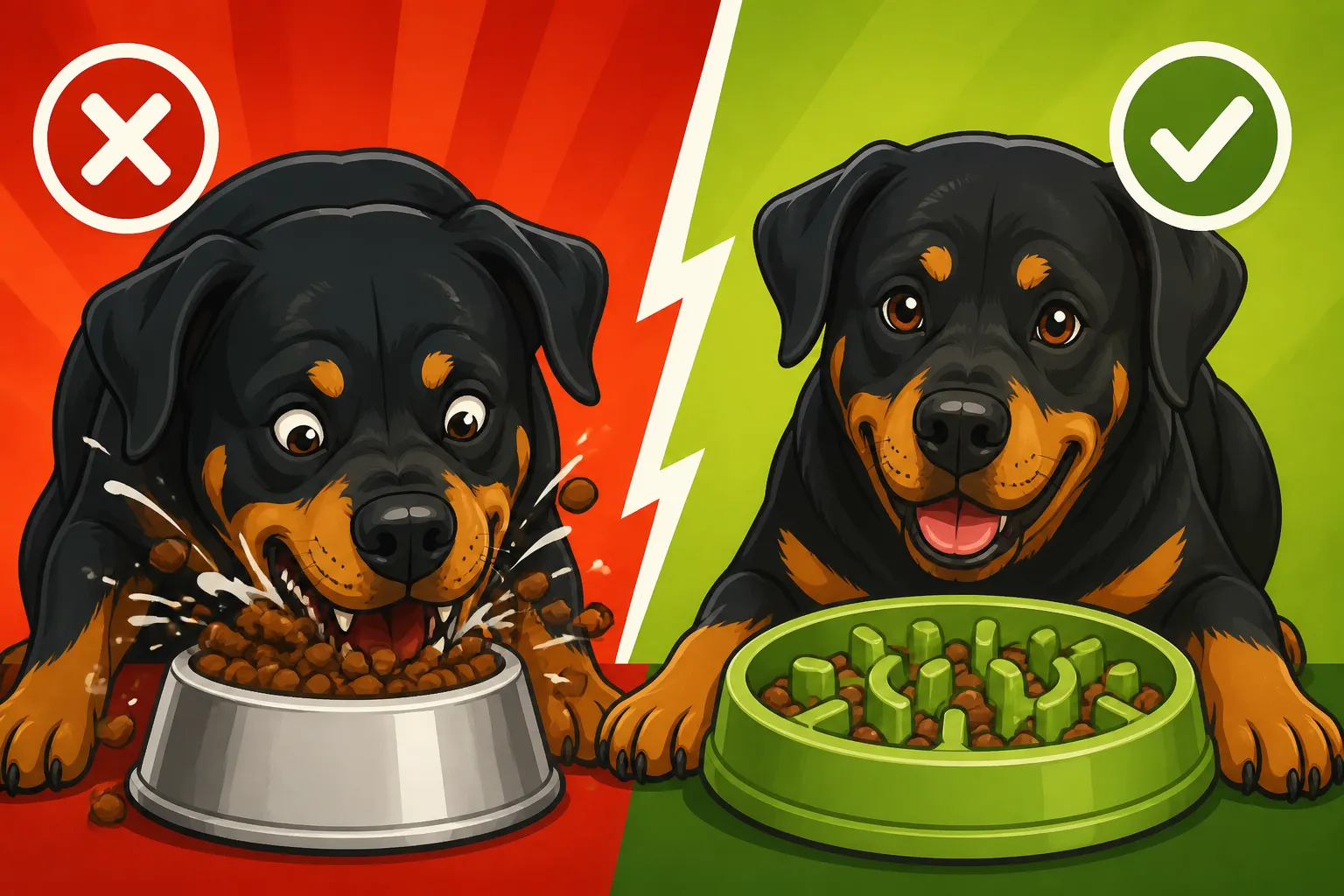
Slow feeder bowls come in a dazzling array of shapes and designs, but their core principle is always the same: they create physical barriers that prevent a dog from taking large mouthfuls of food at once. Instead of a wide-open surface where a Rottweiler can shovel down an entire scoop of kibble, these bowls feature ridges, mazes, spirals, or raised sections that break up the eating area.
Imagine a puzzle where your dog has to navigate their snout or tongue around obstacles to get to each piece of kibble. Some bowls have gentle, undulating waves, while others boast intricate patterns that look almost artistic. There are also silicone inserts you can place into an existing bowl, turning it into a slow feeder without needing to buy a whole new dish. The genius lies in forcing the dog to slow down, pick up individual pieces or smaller portions of food, and work a little harder for their meal.
How Slow Feeder Bowls Modify Eating Behavior
The mechanical barriers in slow feeders directly impact how your Rottweiler eats. By making it impossible to scoop up massive gulps, they force your dog to use their tongue and nose more precisely to access the food. This simple change has a profound effect on their eating pace. Instead of ten seconds, a meal might now take five to ten minutes, or even longer depending on the complexity of the bowl and your dog's determination.
This extended mealtime means less air is swallowed with each bite, significantly reducing the risk of bloat. It also encourages better chewing, which aids digestion. Furthermore, there's a cognitive benefit: your dog has to engage their brain to figure out how to get the food, turning mealtime into a mini-puzzle. This mental stimulation can be a great way to enrich their day, especially for a smart breed like a Rottweiler. It turns a race against the clock into a more engaging and beneficial experience.
Choosing the Right Slow Feeder for Your Rottweiler
Selecting a slow feeder for a Rottweiler isn't quite the same as picking one out for a smaller dog. You're dealing with a powerful jaw, a substantial appetite, and a large body that needs a stable feeding platform. Careful consideration of material, design, and size is key to finding a slow feeder that will be both effective and durable for your big friend.
Material Considerations and Durability
The first thing to think about is the material. Rottweilers are strong dogs, and some are enthusiastic chewers, even of their bowls! You want something that can stand up to their size and potential enthusiasm.
- Stainless Steel: Often a top choice for durability and hygiene. Stainless steel slow feeders are robust, easy to clean, and resistant to chewing. The downside might be a more limited range of complex designs compared to plastic.
- Ceramic: A heavy, stable option that looks nice and is easy to clean. However, ceramic can chip or break if dropped or if your Rottweiler is particularly boisterous and knocks it around. While unlikely to be chewed, a determined dog could potentially crack it.
- Heavy-Duty Plastic (BPA-free): Many slow feeders are made from plastic. Look for high-quality, food-grade, BPA-free plastic that feels solid and sturdy. Avoid flimsy plastics that could be chewed or cracked, creating sharp edges. Quality plastic options are often where you'll find the most intricate and challenging designs.
- Silicone: Primarily used for inserts or lick mats, not typically for the main bowl itself for a large dog. While great for spreading out wet food or treats, a strong Rottweiler might easily lift or chew a standalone silicone bowl. If using a silicone insert in an existing bowl, ensure it's thick and secured well.
Consider your own dog's habits. Is your Rottweiler a gentle eater once they slow down, or do they still try to pick up and move the bowl? Is chewing bowls a known behavior? If so, investing in a robust stainless steel or very heavy-duty plastic option is paramount. When it comes to finding durable options, trusted pet retailers like Chewy often have a good selection of materials and brands. You might also find solid, no-nonsense options for heavy chewers on Amazon. A good slow feeder should be as robust as some of the Rottweiler Chew Toys That Survive the Jaw you might pick up.
Design and Challenge Level
The next step is to look at the internal design of the slow feeder. This is where the "slow" part truly comes into play.
- Simple Ridges: These bowls have basic raised sections or lines. They're good for dogs that are new to slow feeders or just need a slight reduction in speed. They offer a mild challenge.
- Maze or Spiral Designs: These are more intricate, requiring your Rottweiler to navigate around curves and through channels. They offer a moderate challenge and are usually very effective for true gulpers.
- Complex Puzzles/Interactive Feeders: Some slow feeders are almost like puzzle toys, with compartments or moving parts. These offer the highest challenge and can be great for mental stimulation, but you need to ensure they aren't too frustrating for your dog. If a bowl is too difficult, your Rottweiler might give up or knock it over in exasperation, defeating the purpose.
Think about your Rottweiler's personality. Is your dog easily frustrated, or do they enjoy a good brain teaser? Start with a moderate challenge and observe how they react. You can always move to a more complex design later if they master it too quickly, or simplify if they get fed up. The goal is to slow them down, not to turn mealtime into a stressful test.
Size and Stability for a Large Breed
This is a non-negotiable for a Rottweiler. The slow feeder must be large enough to comfortably hold their entire meal portion without overflowing. Many slow feeders are designed for smaller or medium dogs, and their capacity simply won't be adequate for a Rottweiler's daily food intake. You don't want to have to refill the bowl multiple times per meal, as that defeats the purpose of the continuous challenge.
Additionally, the bowl needs to be stable. A lightweight, easily pushed-around slow feeder will just frustrate your Rottweiler. They'll either flip it, push it across the kitchen, or end up chasing it around, which won't encourage calm eating. Look for bowls with a wide base, non-slip feet, or a substantial weight that prevents it from skittering. Some heavy ceramic or stainless steel bowls naturally offer this stability, as do some of the sturdier plastic designs. Remember, a Rottweiler pushing a bowl around is adding more vigorous movement right after eating, which is exactly what we're trying to avoid when it comes to bloat prevention.
Integrating a Slow Feeder into Your Rottweiler's Routine
Bringing a new slow feeder into your Rottweiler's meal routine should be a smooth transition, not a sudden, jarring change. The goal is to make it a positive experience that benefits their health, so a thoughtful introduction is key.
Gradual Introduction and Positive Reinforcement
When you first introduce a slow feeder, your Rottweiler might be confused, or even a little annoyed, by the new challenge. Don't just dump their regular meal into it and expect instant success. Start by making it easy. For the very first few meals, you might put a smaller amount of food in the slow feeder, or even sprinkle some high-value treats in it alongside their regular meal in a traditional bowl. This helps them associate the new bowl with positive rewards and tasty discoveries.
As they get used to it, you can gradually increase the portion of food exclusively in the slow feeder. If your Rottweiler seems frustrated, offer gentle encouragement. Praise them when they successfully get food out, even if they're still eating a bit fast. The key is never to make the slow feeder feel like a punishment or an obstacle to their food. It's about retraining a habit, and positive reinforcement—praise, gentle rubs, and a calm demeanor—goes a long way. Some dogs take to it immediately, while others need a few days or even a week to fully adapt. Patience is truly a virtue here.
Cleaning and Maintenance
Just like any dog bowl, slow feeders need to be kept meticulously clean. The intricate designs that make them so effective at slowing down eating can also make them a bit more challenging to clean than a smooth-surfaced bowl. Food particles can get stuck in crevices, and if left, can harbor bacteria.
For most plastic or ceramic slow feeders, warm soapy water and a bottle brush or sponge with bristles will do the trick. Many are also dishwasher safe on the top rack, which is a huge convenience. For stainless steel, a good scrub with soap and water is usually sufficient. If you're using silicone inserts or lick mats, these are generally very flexible and easy to wash by hand or in the dishwasher. Regular daily cleaning is crucial to prevent bacterial buildup and ensure your Rottweiler's bowls are always fresh and sanitary. Don't forget that a clean bowl is part of overall good hygiene, which contributes to your dog's long-term health.
Combining with Other Bloat Prevention Strategies
While slow feeders are a powerful tool, they're best used as part of a multi-faceted approach to bloat prevention, especially for a high-risk breed like the Rottweiler. There are several other practices that can significantly reduce the chances of this life-threatening condition.
First, consider meal timing. Instead of one large meal, splitting your Rottweiler's daily ration into two or even three smaller meals spread throughout the day can prevent the stomach from being overfilled at any one time. This lessens the pressure and potential for twisting. You can find more detail on Splitting a Rottweiler's Food Into Two Meals. Secondly, managing activity around meal times is critical. Avoid vigorous exercise for at least an hour before and, more importantly, an hour or two after your Rottweiler eats. This means no running, jumping, or rough play immediately following dinner. Let their meal settle in peace. This is a crucial point, and you can delve deeper into How Long to Wait After a Rottweiler Meal Before Exercise. Thirdly, ensure constant access to fresh water, but be mindful of large gulps of water right after eating. Some owners choose to offer smaller amounts of water more frequently during the critical post-meal window, or even slightly elevate the water bowl to encourage more measured drinking. Finally, discuss preventive gastropexy with your veterinarian. This surgical procedure permanently attaches the stomach to the abdominal wall, preventing it from twisting. While it doesn't stop the stomach from dilating, it eliminates the dangerous volvulus component of bloat. This is a significant decision, and information on Whether Preventive Gastropexy Is Worth It or Gastropexy to Prevent Rottweiler Bloat can help you weigh the options.
Beyond the Bowl: Other Tools and Techniques for Slowing Eating
While slow feeder bowls are fantastic, they're not the only way to encourage a more leisurely mealtime for your Rottweiler. Sometimes, a combination of tools and techniques works best, or you might find certain alternatives suit your dog's unique eating style even better.
Puzzle Toys and Dispensing Balls
Think of puzzle toys and dispensing balls as interactive slow feeders. Instead of stationary obstacles in a bowl, these toys require your Rottweiler to actively manipulate them to release food. They might have to roll the ball, nudge a lever, or solve a simple puzzle to get their kibble.
These are excellent for both slowing down eating and providing mental enrichment. For a smart breed like a Rottweiler, the challenge can be highly engaging. You can use them for full meals, though you'll need to ensure the capacity is large enough and the difficulty level appropriate. Start with simpler designs and gradually introduce more complex ones. Using them for just a portion of their meal, or for special treats, is also a great way to introduce them to the concept without overwhelming them. They turn mealtime into a rewarding "hunt" for food, which taps into their natural instincts.
Spreading Food Out (Cookie Sheets or Muffin Tins)
Sometimes, the simplest solutions are the most effective. If you don't have a slow feeder bowl, or if your Rottweiler is particularly adept at defeating them, just spreading their kibble out on a wide, flat surface can work wonders. A large baking sheet or a clean cookie sheet forces your dog to take smaller bites and move their head around to gather the food, rather than gulping from a central pile.
Similarly, a muffin tin can be a fantastic, low-cost slow feeder. Simply place a few pieces of kibble in each cup. Your Rottweiler will have to carefully nose or tongue the food out of each individual cup, which slows them down considerably. These methods are particularly great for dry kibble and can be easily cleaned after use. They also prevent your dog from swallowing large amounts of air, as they can't effectively 'hoover' the food.
Wet Food and DIY Options
If your Rottweiler eats wet food, or if you incorporate wet food into their diet, you have even more options for slowing them down. Spreading wet food thinly on a lick mat (those silicone mats with textured surfaces, readily available on Amazon or Chewy) can make a meal last significantly longer. Your dog has to lick and scrape the food off the surface, which is a calming, self-soothing activity as well as a slow-feeding method.
You can also dilute kibble with a little water or low-sodium broth, turning it into a soggy, slower-to-eat mixture. Some owners find that fresh food delivery services like Ollie provide meals with a different texture that naturally encourages slower eating compared to dry kibble. Just remember that any additions to their diet should be cleared with your vet to ensure they remain nutritionally balanced for your specific Rottweiler, especially if you're dealing with a growing Rottweiler Puppy Calories From Fourteen Hundred Up or an adult Daily Calories for a Hundred Twenty Pound Rottweiler. For DIY, always ensure the ingredients are dog-safe and in appropriate proportions.
Here's a quick comparison of popular slow feeder types:
| Slow Feeder Type | Material Examples | Challenge Level | Pros | Cons |
|---|---|---|---|---|
| Traditional Maze Bowl | Hard plastic, Ceramic, Stainless steel | Moderate | Widely available, effective, easy to clean | Can be defeated by very determined dogs, limited designs |
| Silicone Insert/Mat | Silicone | Low-Moderate | Flexible, fits existing bowls, good for wet food | Less durable for chewers, may shift in bowl |
| Puzzle Feeder Toy | Hard plastic | High | Highly engaging, mental stimulation | Can be noisy, slower to fill, some dogs get frustrated |
| Muffin Tin | Metal, Silicone | Low | Cheap, simple, easy to clean | Low capacity for large meals, less stable |
| Lick Mat | Silicone | Low | Calming, good for wet food/spreads | Only suitable for spreadable foods, low capacity |
Common Challenges and Troubleshooting
Even with the best intentions and the right slow feeder, you might encounter a few bumps in the road. Rottweilers are smart, and sometimes, they find clever ways around our well-laid plans. Knowing how to troubleshoot these common challenges can help you stay consistent and ensure your dog gets the full benefit of a slower mealtime.
Frustration and Resistance
One of the most common issues owners face is a Rottweiler getting frustrated or outright refusing to use the slow feeder. After all, they're used to easy access to their food, and suddenly they have to work for it. Signs of frustration might include pawing at the bowl, knocking it over, trying to flip it, or simply walking away from their food.
If your Rottweiler is showing resistance, don't give up! First, check the challenge level. Is the bowl too difficult? Maybe switch to a simpler design for a few days to build confidence. Second, try sprinkling some extra high-value treats into the slow feeder initially, making the "work" more rewarding. Third, ensure the bowl is stable and large enough; a wobbly, small bowl will only increase frustration. Finally, maintain a calm, positive attitude. Avoid scolding them for not using it correctly. Praise them for any attempt to eat from it. You might even feed a small portion in their old bowl first, and then the rest in the slow feeder, gradually transitioning them. Remember, patience and consistency are key to turning a new behavior into a habit.
Durability Issues with Powerful Chewers
Rottweilers have powerful jaws, and some can be quite destructive with their belongings, including their bowls. If your Rottweiler views the slow feeder as an obstacle to be conquered by force rather than by finesse, you might find it quickly showing signs of wear and tear, or even outright destruction. This is especially true if you started with a less robust plastic model.
If you have a known chewer, or if you notice your Rottweiler trying to chew on the slow feeder, it's time to upgrade to a more durable material. Stainless steel or heavy-duty, reinforced plastic options are generally the best bet. Look for bowls specifically marketed as "tough" or "chew-resistant." While no bowl is truly indestructible against a determined Rottweiler jaw, these materials will certainly last longer and be safer than thinner plastics that can break, creating sharp edges. Always supervise initial meals with a new slow feeder if you have concerns about chewing. If the bowl itself is still being chewed, consider alternatives like spreading food on a cookie sheet or using puzzle toys that are designed to be more robust. The right Rottweiler Chew Toys That Survive the Jaw can sometimes offer clues about what materials your dog can and cannot destroy.
Still Gulping? When to Seek Vet Advice
You've tried different slow feeders, varied your approach, and your Rottweiler is still gulping or showing other concerning signs. While slow feeders are excellent tools, sometimes underlying issues can contribute to rapid eating or other health problems. If your Rottweiler continues to eat excessively fast despite your best efforts, or if you're seeing persistent signs of indigestion, excessive gas, or changes in appetite, it's always a good idea to consult your veterinarian.
Rapid eating can sometimes be a symptom of conditions like hyperthyroidism or malabsorption issues, where the dog might feel excessively hungry even after eating. Your vet can rule out any medical causes for their rapid food consumption or digestive upset. More importantly, if you ever suspect bloat, even if it's just a gut feeling, do not hesitate. Bloat is an emergency that requires immediate veterinary attention. Don't wait to see if it improves; get to the nearest emergency vet immediately. Recognizing The Emergency Signs That Send a Rottweiler In could save their life.
Disclaimer
This article is for general informational purposes only and does not constitute professional advice. Laws, prices and regulations vary by location and change over time. Consult a qualified professional for guidance on your specific situation.