Counter-Conditioning a Reactive Rottweiler
Counter-conditioning helps reactive Rottweilers change emotional responses to fear and anxiety triggers like strangers and dogs.
Work with the temperament you have.
House-training and crate work, recall, leash manners, separation anxiety, and the behaviors this breed is wired for.
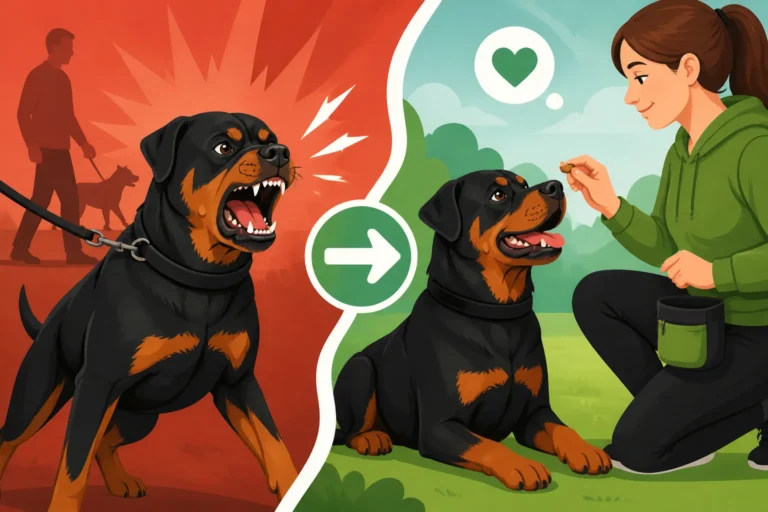
Counter-conditioning helps reactive Rottweilers change emotional responses to fear and anxiety triggers like strangers and dogs.

Rottweiler leash reactivity stems from fear, frustration, and over-excitement, explaining why strong dogs lunge at other canines.

Rottweiler reactivity on walks stems from fear, anxiety, or frustration, explaining why leashed dogs bark, lunge, and pull at triggers.

Rottweiler neutering age explains how surgical timing affects hormone-driven behaviors like roaming, marking, and humping.

Ten-month-old Rottweiler selective hearing and adolescent brain changes explain why training temporarily fails during this developmental stage.

Rottweiler adolescence starts at six to eight months, bringing boundary testing, hormonal surges, and selective listening to commands.
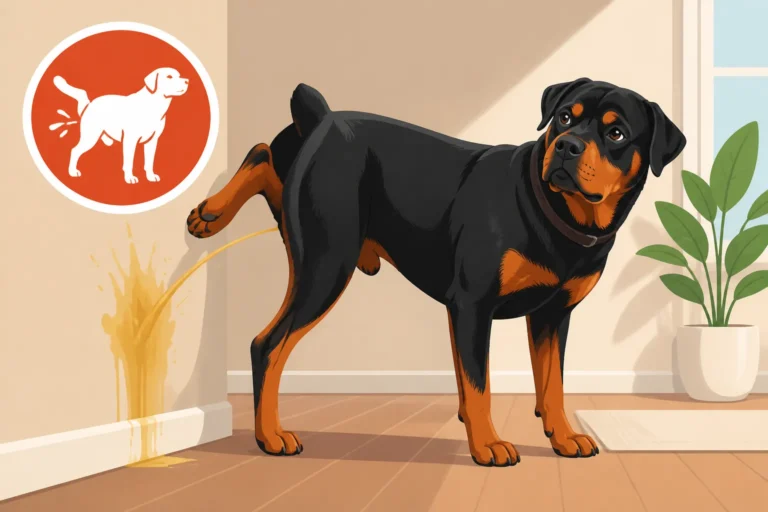
Male Rottweiler indoor marking behavior, hormonal triggers, and territorial instincts explained for frustrated dog owners.

Medical issues and developmental changes causing house training regression in six-month Rottweiler puppies are explained.

Rottweiler puppy house training strategies and a weekly schedule help owners establish potty routines and prevent accidents.

Rottweiler puppy night crying solutions explain bladder limits, loneliness, separation anxiety, and physical discomfort strategies for owners.