Quieting a Rottweiler That Barks at the Property Line
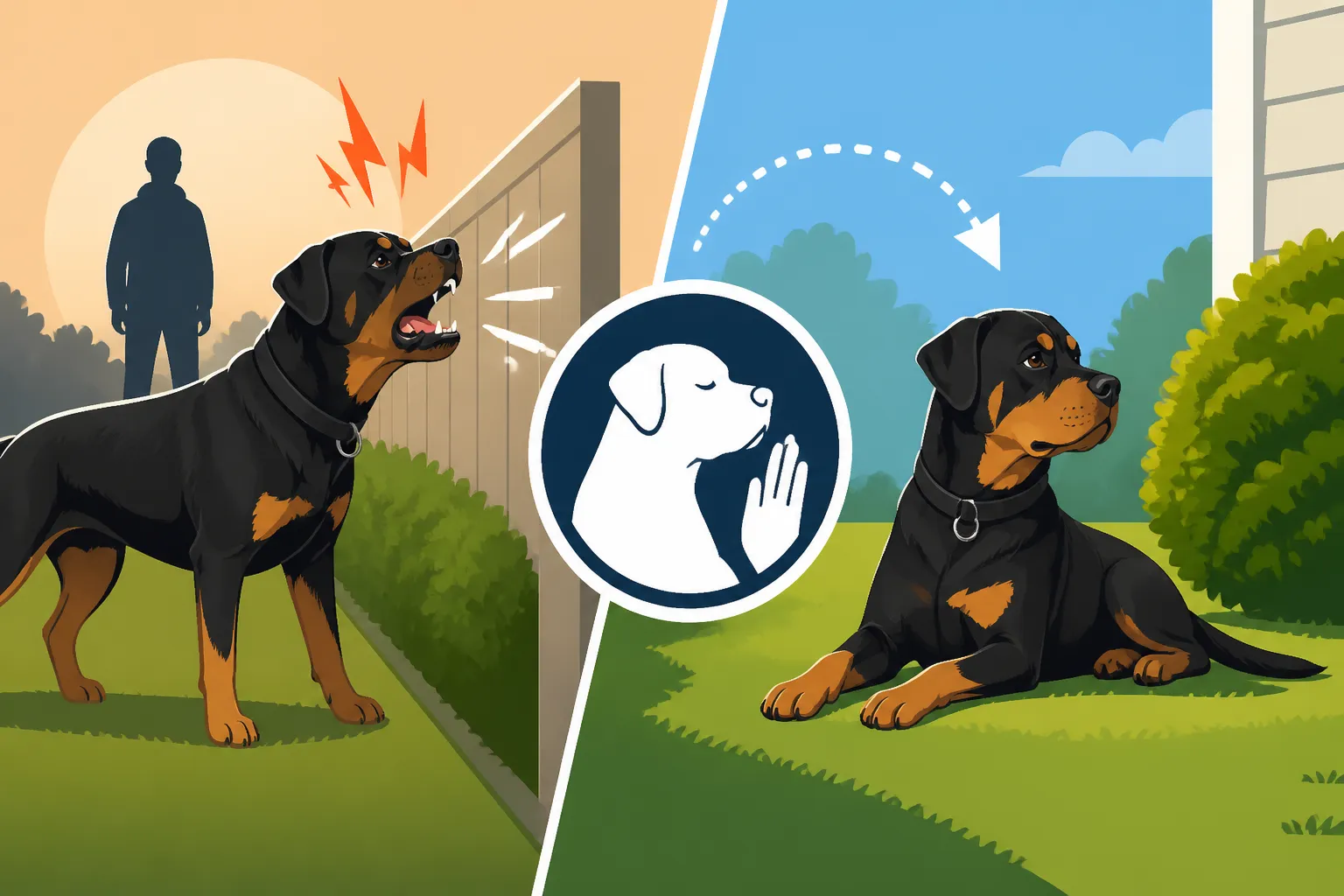
It’s a scenario many Rottweiler owners know all too well: you’re enjoying a quiet morning, and suddenly, the furious barking starts. Your magnificent Rottweiler, usually so calm and self-assured, is patrolling the property line, sending a booming warning to anything that dares to pass – a leaf, a person walking a block away, or even the wind. This isn't just annoying; it can strain neighborly relations and leave you feeling utterly frustrated, wondering if you'll ever have peace. This guide is here to help you understand why your Rottweiler acts as a property line sentinel and, more importantly, what actionable steps you can take to quiet that powerful bark.
Decoding the Bark: Why Your Rottweiler Becomes a Property Line Sentinel
When your Rottweiler unleashes a torrent of barks at the fence line, it's rarely just for the sake of making noise. There's almost always a reason, rooted deep in their breed's history and individual needs. Understanding these motivations is the first, crucial step toward addressing the behavior effectively. Think of it as listening to what your dog is trying to communicate, even if the delivery is a bit…loud.
Territorial Imperative and Guarding Instincts
Rottweilers were, for centuries, the ultimate working dogs, bred to drive and guard cattle, protect property, and serve as companions to butchers and merchants. This history has ingrained a powerful territorial instinct. When they bark at the property line, they are often fulfilling this ancient role, warning off perceived intruders from their domain. It's not aggression in many cases, but rather a strong sense of duty.
Imagine your Rottweiler, standing tall at the fence, watching the world go by. To them, a jogger on the sidewalk isn't just a jogger; it's a moving object near their territory. A delivery truck isn't just a delivery truck; it's a large, noisy presence. Their instinct kicks in, prompting them to alert you and, more importantly, to deter the "threat." This can be particularly pronounced in dogs that haven't been adequately socialized to differentiate between genuine threats and everyday occurrences. You can dive deeper into shaping these instincts by reading The Rottweiler Guarding Instinct and How to Shape It. It’s about channeling that natural drive, not suppressing it entirely.
Boredom and Underexercise
A bored Rottweiler is a creative Rottweiler, and often, that creativity manifests as undesirable behaviors – including excessive barking. These are highly intelligent, energetic dogs that need both physical exercise and mental stimulation to thrive. If they're left in a yard for extended periods with nothing to do, the fence line becomes their primary source of entertainment. Every passerby, every rustling bush, becomes an event worthy of commentary.
Consider a Rottweiler with pent-up energy, perhaps from a day spent mostly indoors or a walk that was too short for their needs. They go outside, and suddenly, the world offers a parade of stimuli. Barking provides a release for that energy, a mental engagement, and even a surge of adrenaline. It becomes a self-reinforcing cycle: they bark, something (eventually) moves away, and they perceive their barking as effective. This isn't laziness on their part; it's a desperate attempt to fulfill their innate need for engagement. Without adequate outlets, the property line becomes their personal reality TV show, and they're the loudest commentator.
Reactivity and Alert Barking
Reactivity is another common culprit behind property line barking. This isn't necessarily about guarding or boredom, but rather an overreaction to stimuli. Your Rottweiler might be genuinely startled, fearful, or simply overstimulated by sights and sounds. A sudden loud noise, a child running past, or even another dog barking from a few houses down can trigger a strong vocal response. For some Rottweilers, it's a way to create distance or express discomfort.
This type of barking often escalates quickly. Your dog sees something, barks, gets more agitated, and then barks even more intensely. It can be a very frustrating loop for owners because it feels so automatic and difficult to interrupt. Sometimes, what starts as a mild "alert bark" quickly spirals into a full-blown reactive display. It’s important to distinguish this from pure territoriality, as the training approach might differ. Understanding Rottweiler Barking and When It Means Something can help you discern the nuances in your dog's vocalizations.
Immediate Management: Reducing the Noise Right Now
While training takes time, there are immediate steps you can take to manage and reduce the barking at the property line. These are about altering the environment and your interactions to prevent the behavior from even starting or to interrupt it quickly. Think of these as your "first-aid" solutions while you work on the deeper training.
Limiting Access and Visual Barriers
One of the most straightforward ways to reduce barking is to remove the triggers. If your Rottweiler is barking at things they see beyond the fence, then limiting their visual access is key. This might mean supervised yard time only, or creating physical barriers that block their view.
For example, you could install privacy screens on a chain-link fence, or plant a dense hedge along the property line. Even temporary solutions like tarps or reed fencing can make a big difference while you consider more permanent options. Some owners find success with using their dog's kennel run or a dedicated, visually enclosed potty area for unsupervised outdoor time, rather than giving them free rein of the entire yard where triggers abound. Another option could be to move their outdoor resting or play area further from the fence line. If you're looking for solutions, a quick search on Amazon for "privacy fence screen" will yield numerous options that can be easily attached to existing fencing. This isn't a permanent fix for the underlying behavior, but it buys you precious peace and quiet while you work on long-term training.
Noise Cancellation and Distraction Techniques
Sometimes, it's not just what they see, but what they hear. For dogs reactive to sounds, creating a "white noise" environment in the yard can help. This could be as simple as turning on a radio or playing calming music at a moderate volume to mask external sounds. For dogs who react to every little sound, even the rustling leaves, this can provide a much-needed buffer.
Beyond noise, distraction is your friend. When you're outside with your Rottweiler, be proactive. If you anticipate a trigger (e.g., mail carrier approaching, neighbor walking their dog), engage your Rottweiler before they start barking. Toss a ball, practice a "sit-stay," or offer a high-value treat. The goal is to redirect their attention to you and a desirable activity, breaking their focus on the external trigger. Keep a pouch of irresistible treats readily accessible. This is about changing their focus from "guarding the line" to "engaging with me."
Proactive Supervision and Intervention
Leaving a Rottweiler unsupervised in the yard is often an open invitation for barking, especially if they are prone to it. Proactive supervision means you are out there with them, actively observing and ready to intervene the moment a potential trigger appears. This allows you to address the behavior before it escalates into a full-blown barking fit.
When you see a trigger, don't wait for the bark. Call your dog's name, use a "come" cue, or lure them away with a treat. Reward them heavily for disengaging from the fence and focusing on you. If they do start to bark, a sharp, consistent "Quiet!" command followed by luring them away from the fence can work. Once they are quiet and looking at you, reward them. The key is consistency and ensuring that you are the most interesting thing in their environment. This also means understanding their body language – sometimes a stiff posture or a focused stare is a precursor to barking, giving you a valuable head start.
Training for a Quieter Boundary: Long-Term Solutions
Managing the environment helps, but true peace comes from dedicated training that changes your Rottweiler's response to property line stimuli. This requires patience, consistency, and a positive reinforcement approach to build new, calmer habits.
Teaching "Quiet" and "Look at Me"
These two commands are fundamental for controlling barking. "Quiet" teaches your dog to stop barking on cue, and "Look at Me" (or "Watch Me") teaches them to focus their attention on you, even when distracted.
Start training these indoors, in a low-distraction environment.
- "Quiet": Get your dog to bark (e.g., ring the doorbell, make a strange noise). As soon as they start, say "Quiet!" and put a high-value treat right under their nose. The moment they stop barking to sniff the treat, praise them and give them the treat. Repeat this many times. Gradually, increase the duration they have to be quiet before getting the treat.
- "Look at Me": Hold a treat near your eye. When your dog makes eye contact, say "Yes!" or "Good!" and give them the treat. Gradually move the treat further away from your eye, so they have to look at your face to get the reward. Practice this frequently in various locations.
Once mastered indoors, move these exercises to the yard. Start with minimal distractions and slowly increase the challenge. Use a long line for control, especially if they tend to ignore you when excited. For a structured approach to obedience, platforms like BAXTER & Bella offer comprehensive online courses that can guide you through these and other essential commands, providing step-by-step instructions and video demonstrations.
Desensitization and Counter-Conditioning
This technique aims to change your Rottweiler's emotional response to triggers from negative (barking, fear, excitement) to positive (calmness, anticipation of a treat). It's a gradual process.
- Identify Triggers: What exactly makes your Rottweiler bark at the property line? Joggers? Other dogs? Cars?
- Start at a Distance: Begin working with your dog at a distance where they notice the trigger but don't react with barking. This might be across the street, down the block, or with visual barriers still in place.
- Positive Association: The moment the trigger appears, immediately give your Rottweiler a highly desirable treat or engage them in a favorite game. The goal is for them to associate the appearance of the trigger with good things happening. For example, if a jogger passes, say "Good jogger!" and offer a piece of chicken.
- Gradual Reduction of Distance: Over many sessions, slowly decrease the distance to the trigger, always ensuring your dog remains calm and focused on you for the reward. If they start to react, you've moved too quickly; increase the distance again.
This process takes time and consistency. It’s about repeatedly creating a positive experience so that the sight of a passing person or dog no longer signals "threat" but "treat!"
Increasing Mental and Physical Stimulation
As mentioned earlier, a well-exercised and mentally engaged Rottweiler is a happier, quieter Rottweiler. Addressing their needs for physical and mental stimulation can significantly reduce problem barking.
Physical Exercise: Rottweilers need more than just a quick walk around the block. They are powerful dogs with stamina. Aim for at least 60-90 minutes of vigorous exercise daily, split into multiple sessions. This could include long, brisk walks, hiking, swimming, or active play in a secure area. Be mindful of their joint health, especially when they are young; A Growing Rottweiler's Joints and Overexercise is a good read. For an adult, consider how How Far an Adult Rottweiler Should Walk can contribute to their overall well-being.
Mental Stimulation: This is just as, if not more, important than physical exercise.
- Puzzle Toys: Stuff KONGs with peanut butter, yogurt, or wet food and freeze them. Provide puzzle feeders that make your dog work for their kibble. These can keep a Rottweiler occupied for a significant period.
- Training Sessions: Short, frequent training sessions throughout the day (5-10 minutes each) can be incredibly mentally stimulating. Work on new tricks, refresh old commands, or practice advanced obedience.
- Scent Work: Hide treats around the house or yard and encourage your Rottweiler to find them. Their noses are powerful, and engaging this sense is very tiring for them.
- Chews: Provide safe, durable chew toys. Chewing is a natural, calming activity for dogs and can help alleviate boredom and stress.
Explore Rottweiler Mental Work on a Rainy Day for more ideas on keeping your Rottweiler's mind active when outdoor play isn't an option.
| Barking Trigger | Potential Cause | Immediate Management | Long-Term Training Strategy |
|---|---|---|---|
| People/dogs passing fence | Territoriality, Reactivity, Boredom | Visual barriers, proactive supervision, distraction | "Quiet," "Look at Me," desensitization |
| Unfamiliar sounds | Alert barking, Anxiety, Reactivity | White noise, indoor confinement during peak noise | Counter-conditioning to specific sounds |
| No apparent trigger | Boredom, Seeking attention, Anxiety | Increased exercise/mental stimulation, redirection | Scheduled enrichment, 'Place' command |
| Mail carrier/delivery | Territoriality, Predictable trigger | Bring dog inside, desensitize with "fake" deliveries | "Quiet," "Look at Me," positive association |
When Professional Help is Needed: Beyond DIY Solutions
Sometimes, despite your best efforts, the barking persists or escalates. This isn't a failure on your part; some behaviors are deeply ingrained or linked to underlying issues that require the expertise of a professional. Knowing when to call in the cavalry is a sign of a responsible and caring owner.
Identifying Red Flags
While occasional barking is normal, certain signs indicate that your Rottweiler's property line behavior might be more serious and warrant professional intervention.
- Aggression: If the barking is accompanied by snarling, lunging, biting the fence, or truly aggressive posturing towards people or other dogs, it's a major red flag. This isn't just noise; it's a potential safety concern.
- Inability to Interrupt: You've tried all the commands, distractions, and management techniques, but your Rottweiler remains locked onto the trigger, ignoring you completely. This suggests a high level of arousal or a deeply ingrained habit.
- Self-Harm or Anxiety: Is your dog frantically pacing, drooling excessively, or showing other signs of extreme anxiety when barking? Are they injuring themselves trying to get to the fence or from stress? This indicates significant distress that needs attention.
- Changes in Overall Behavior: A sudden increase in barking, or new reactivity, might also point to an underlying medical issue, especially in older dogs. It's worth considering Rottweiler Behavior Changes That Mean Pain to rule out discomfort as a cause.
Consulting a Certified Professional
If you're seeing these red flags, or simply feel overwhelmed, it's time to seek a qualified professional. But not all "dog trainers" are created equal, especially when dealing with complex behavioral issues.
Look for:
- Certified Professional Dog Trainers (CPDT-KA): These individuals have passed a rigorous exam and have demonstrated knowledge and experience in dog training using humane methods.
- Certified Applied Animal Behaviorists (CAAB) or Veterinary Behaviorists (DACVB): These are the top tier of professionals, often with advanced degrees in animal behavior or veterinary medicine. They specialize in diagnosing and treating serious behavioral problems. A veterinary behaviorist can also prescribe medication if anxiety is a significant factor.
When seeking help, be specific about the challenges you're facing. A good professional will conduct a thorough assessment, observe your dog's behavior, and help you create a tailored plan. They can provide invaluable hands-on guidance, refine your training techniques, and offer insights you might not have considered. If you're wondering where to start, Finding a Rottweiler-Experienced Trainer Near You can help you locate suitable experts.
Medical Considerations
It's always a good idea to rule out any underlying medical issues when a dog's behavior changes dramatically or becomes problematic. Pain, discomfort, hormonal imbalances, or even declining senses can all contribute to increased reactivity and barking.
For instance, an older Rottweiler developing arthritis might become more irritable and less tolerant of perceived threats, leading to increased territorial barking. A dog experiencing changes in vision or hearing might be startled more easily, causing them to bark more frequently at things they can't quite identify. Before embarking on an intensive behavior modification program, schedule a full veterinary check-up. Your vet might recommend blood tests, joint assessments, or other diagnostics. For senior dogs, in particular, understanding Bloodwork Worth Running on a Senior Rottweiler can be crucial in identifying medical contributors to behavioral changes. Addressing any physical discomfort or health issues can sometimes significantly reduce or even eliminate problematic barking.
Disclaimer
This article is for general informational purposes only and does not constitute professional advice. Laws, prices and regulations vary by location and change over time. Consult a qualified professional for guidance on your specific situation.