Rottweiler Collars, Harnesses and Leads
Bringing home a Rottweiler puppy is an exciting journey, but anyone who's ever tried to walk a rapidly growing, powerful dog knows the frustration of constantly ill-fitting or easily broken gear. It feels like you're always buying new collars, harnesses, and leads, only for them to be outgrown or, worse, snap under the sheer strength of your companion. This guide is here to walk you through selecting the right, durable, and safe walking and control equipment for your Rottweiler, ensuring both your peace of mind and your dog's comfort from puppyhood through their formidable adult years.
The Unique Challenges of Outfitting a Rottweiler
Let's be honest, outfitting a Rottweiler isn't like buying accessories for a smaller dog. These are powerful, substantial animals, even as puppies, and their gear needs to stand up to some serious demands. Overlooking these unique challenges can lead to frustration, wasted money, and even dangerous situations.
Rapid Growth and Frequent Gear Changes
One of the first things you'll notice with a Rottweiler puppy is just how fast they grow. One day you have a little fuzzball, and the next, they've doubled in size, seemingly overnight. This rapid growth means that collars and harnesses bought just a few weeks ago might already be too snug, chafing your puppy or restricting their movement. This can be particularly true during the critical period when their Rottweiler Growth Plates and Why They Close So Late are still developing.
It’s a constant juggle, trying to anticipate their next growth spurt while not overspending on gear they'll quickly outgrow. Many owners find themselves buying several sizes of collars and harnesses in their Rottweiler's first year alone. It’s not just about the neck or chest measurement either; a puppy’s proportions change, meaning a harness that fit well structurally at three months might sit awkwardly at six months, even if the chest measurement is still technically within range. This is where patience and perhaps buying slightly adjustable gear with room to grow can save you some headaches.
The Sheer Strength and Size of an Adult Rottweiler
Once your Rottweiler reaches adulthood, usually around 18-24 months, you're dealing with a dog that can easily weigh 80 to 135 pounds or more, packed with muscle and determination. If your Rottweiler hasn't mastered Rottweiler Leash Pulling at Adult Weight, a sudden lunge after a squirrel or another dog can be genuinely dangerous for you, potentially causing you to lose your grip or even fall. I've heard countless stories of owners being pulled off their feet, or having a flimsy leash snap clean in half because the hardware wasn't designed for a dog of this magnitude.
This isn't to say Rottweilers are unruly; quite the opposite, with proper training, they can be wonderful to walk. But even a well-trained Rottweiler can have an unexpected moment of high prey drive or sudden alertness that requires robust equipment. Imagine a powerful dog like this spotting a rabbit and taking off – a cheap clip or thin nylon lead just won't cut it. The gear needs to be an extension of your control, not a point of failure.
Material Durability and Safety Concerns
The durability of the materials is paramount. We're talking about heavy-duty webbing, strong buckles, and robust metal D-rings and clips. Flimsy plastic buckles on harnesses or thin, easily frayed nylon leads might work for a terrier, but they pose a significant safety risk with a Rottweiler. Their powerful jaws can also make quick work of a lead if they decide to grab it during play or frustration.
Beyond just the strength of the material, consider the comfort and safety for your dog. Chafing, skin irritation, or restricted movement from poorly designed gear can lead to behavioral issues or even physical discomfort. A collar that's too tight can impact their breathing, while a poorly fitting harness can rub under their armpits or across their trachea. Ultimately, you want gear that provides maximum security and control without compromising your Rottweiler's well-being. Thinking ahead about costs like potential vet visits if a gear failure leads to injury is also wise, which is where something like Healthy Paws pet insurance might come into play for many owners.
Understanding Different Types of Gear
Navigating the world of dog collars, harnesses, and leads can feel overwhelming with all the options out there. For a Rottweiler owner, it's crucial to understand the pros and cons of each, especially regarding control, safety, and comfort.
Collars: When They Work and When They Don't
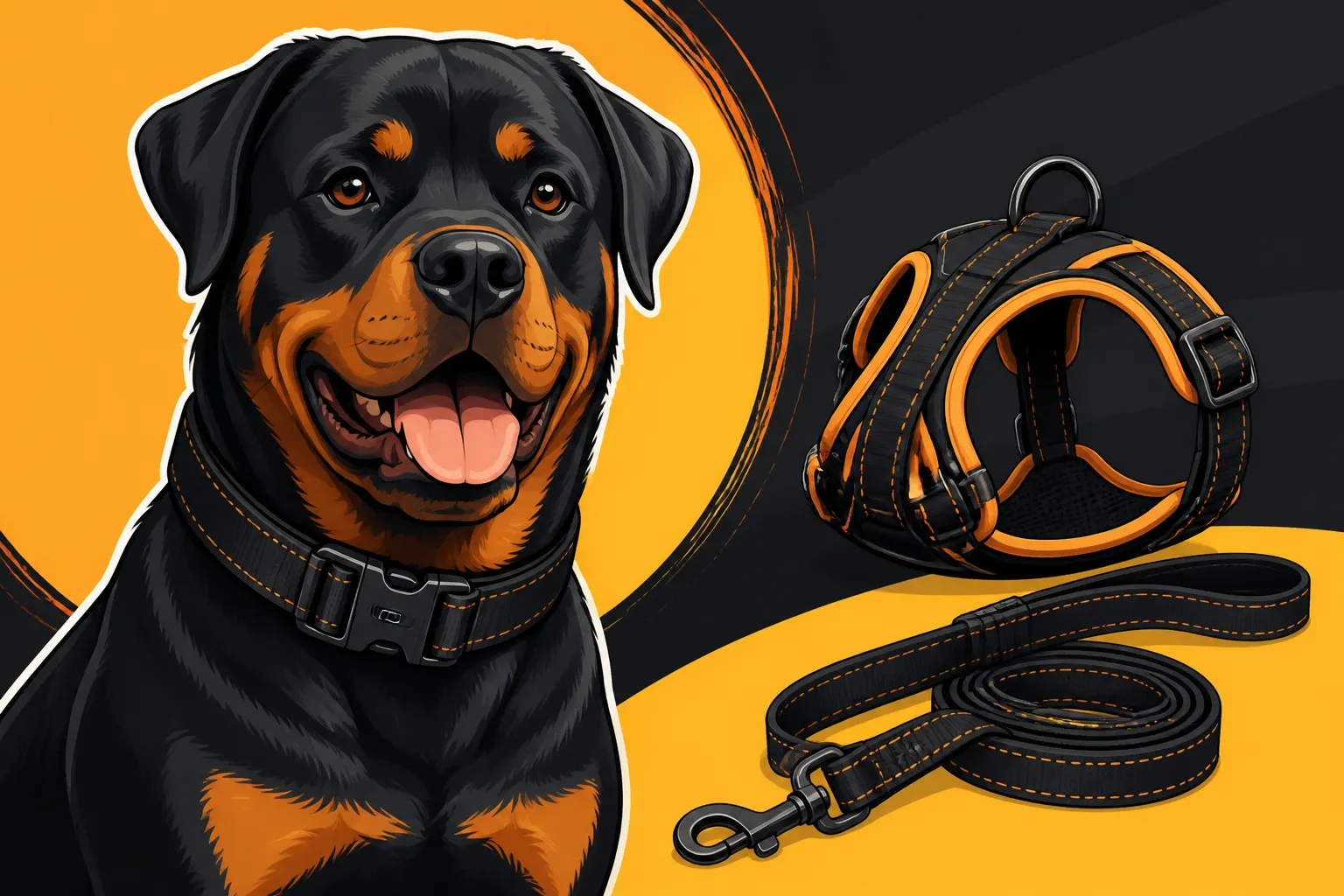
Collars are the most traditional piece of dog gear, primarily used for identification tags and attaching a leash. For a well-trained adult Rottweiler who walks politely on a loose leash, a flat buckle collar can be perfectly adequate. These are generally comfortable for the dog to wear all the time and come in various durable materials like heavy-duty nylon or leather. When choosing one, ensure it's wide enough to distribute pressure comfortably across their neck and has a strong, reliable buckle and D-ring.
However, for a Rottweiler that pulls, a flat collar can be problematic. The pressure concentrated on their trachea can lead to coughing, gagging, or even long-term damage. It can also make it difficult to maintain control over a large, strong dog, especially if they lunge. Choke chains or prong collars are often used for strong pullers, but these tools require very careful and educated handling to prevent injury and avoid creating a negative association with walks. Many modern trainers prefer positive reinforcement with other tools. For identification, even if you use a harness for walks, a flat collar with tags is still essential.
Harnesses: Front-Clip vs. Back-Clip for Control
Harnesses distribute pressure across your dog's chest and shoulders, rather than their neck, making them a generally safer and more comfortable option, especially for puppies or dogs prone to pulling. They are almost always recommended when your Rottweiler is still growing, protecting their delicate Rottweiler Growth Plates Closing at Eighteen to Twenty-Four Months from undue stress. The two main types you'll encounter are back-clip and front-clip harnesses.
-
Back-Clip Harnesses: These have the leash attachment point on the dog's back, usually between the shoulder blades. They are great for dogs that don't pull much, offering comfort and freedom of movement. For a Rottweiler, however, a back-clip harness can sometimes give a strong puller even more leverage to lean into, effectively becoming a "pulling harness." They are excellent for casual walks or for dogs with neck injuries, but if you're battling significant pulling, you might find yourself still struggling for control.
-
Front-Clip Harnesses (No-Pull Harnesses): These harnesses have the leash attachment point on the dog's chest. When your Rottweiler pulls, the leash pulls them gently to the side, redirecting their attention back to you. This makes it much harder for them to pull forward with their full strength. Many owners find these invaluable for gaining control over a strong dog during training, especially when working on Rottweiler Recall Training That Holds or just enjoying a calm walk. Look for brands known for strong Harness Hardware That Holds a Pulling Rottweiler when selecting one of these. Be sure the harness fits well to avoid rubbing, particularly in the armpit area.
Leads: The Importance of Length, Material, and Hardware
A lead is more than just a rope; it's your direct communication line with your Rottweiler. Its length, material, and hardware are critical for safety and effective training.
-
Length: A standard six-foot lead is a good all-around choice for daily walks, offering enough slack for your dog to explore a bit without getting too far ahead. For dedicated training sessions, especially working on recall in a safe, enclosed area, a longer line (15-30 feet) can be incredibly useful. Shorter leads, sometimes called "traffic leads," are great for keeping your Rottweiler close in crowded areas or when navigating tricky situations.
-
Material: For a Rottweiler, you need a lead made from durable material that's comfortable to hold. Heavy-duty nylon webbing is a popular choice, as it's strong, relatively weather-resistant, and often comes in widths suitable for large breeds. Leather leads are also excellent, offering a comfortable grip that improves with age, though they typically come with a higher price tag. Avoid thin, flimsy materials that can cut into your hands or snap under pressure. For heavier dogs, some owners even look for leads specifically rated for K9 work or similar high-tension applications.
-
Hardware: The clip (or snap) on your lead is often the weakest point. For a Rottweiler, always opt for solid metal hardware—never plastic. Spring-loaded clips or bolt snaps made of steel or brass are typically the strongest and most reliable. Make sure the swivel mechanism works smoothly to prevent the lead from twisting. Double-check that the clip itself is large enough and robust enough to handle the force a Rottweiler can exert without bending or breaking. A quick check of reviews on sites like Chewy can often highlight which brands have reliable hardware.
What to Look for in Rottweiler Gear
When you're shopping for collars, harnesses, and leads for your Rottweiler, it's not just about what looks good. It's about prioritizing function, safety, and longevity. Think of this gear as an investment in your dog's well-being and your peace of mind.
Prioritizing Durability and Secure Hardware
This cannot be stressed enough: for a Rottweiler, durability is king. You need gear that can withstand significant force, rough play, and daily wear and tear. Look for:
- Heavy-Duty Webbing/Material: Whether it's nylon, leather, or biothane, ensure the material is thick, robust, and designed for large, strong dogs. Thin, flimsy materials will fray, stretch, or snap. For example, a leash meant for a 20-pound dog won't last a week with a 100-pound Rottweiler.
- Solid Metal Hardware: This includes all D-rings, buckles, and leash clips. Plastic buckles can crack or break under pressure, especially in cold weather. Welded metal D-rings are superior to those that are merely crimped or formed. The leash clip, in particular, should be a strong, spring-loaded or bolt-snap type made of brass or steel. Double-check that the stitching on all stress points is reinforced and secure.
- Wide Straps: Wider straps distribute pressure better, making them more comfortable and less likely to chafe your Rottweiler. This applies to both collars and harnesses. A wider collar also provides a larger surface area for better control if you need to quickly grab your dog.
Ergonomics and Comfort for Your Rottweiler
While durability is essential, your Rottweiler's comfort is equally important. Ill-fitting or uncomfortable gear can lead to skin irritation, hot spots, or even change their gait and posture, which is especially critical when considering their joint health and conditions like Rottweiler Hip Dysplasia and the OFA Grade.
- Proper Fit: This is paramount. For collars, you should be able to comfortably fit two fingers between the collar and your dog's neck. For harnesses, ensure it doesn't rub behind their armpits, restrict shoulder movement, or press on their throat. The chest strap should sit low enough that it doesn't interfere with their breathing or choke them. Many brands offer adjustable straps to achieve a custom-like fit. Always measure your dog accurately and refer to sizing charts.
- Padding: Some harnesses come with padding in key areas, like the chest plate or underarm straps. This can significantly increase comfort, especially for dogs with sensitive skin or those who tend to pull. Neoprene or fleece lining are common choices.
- Breathability: While Rottweilers have a short coat, some harnesses can trap heat, especially in warmer climates. Look for materials that allow for some airflow to prevent overheating, particularly if your dog is active or has a dense undercoat that sheds, as discussed in Rottweiler Undercoat Shedding Twice a Year.
Budgeting for Quality and Longevity
It’s tempting to go for the cheapest option, especially when your Rottweiler is growing at an incredible rate. However, skimping on quality often means buying replacements more frequently, which ends up costing more in the long run.
Think of quality gear as an investment. A well-made harness or lead might cost more upfront, but it's less likely to break, requiring fewer replacements, and more importantly, it offers better safety and control. Consider the potential costs of a vet visit if your dog slips its lead and gets into an accident, or the liability if they run off and cause an incident. These potential costs far outweigh the savings of buying cheap gear.
Many owners find good value in brands that specialize in large breed or working dog equipment. While you might splurge on a premium harness, you could opt for a more budget-friendly but still durable flat collar for everyday tag-wearing. Sites like Chewy offer a wide range of options across different price points, allowing you to compare features and read reviews from other large dog owners. Prioritizing durable and safe equipment will contribute to a happier, safer experience for both you and your Yearly Cost of Feeding and Keeping a Rottweiler.
Here's a quick comparison of common gear types:
| Gear Type | Pros for a Rottweiler | Cons for a Rottweiler | Best Use Case |
|---|---|---|---|
| Flat Collar | Identification, comfortable for well-trained dogs | Poor control for pullers, neck pressure, easy to slip | ID tags, casual walks for polite walkers |
| Front-Clip Harness | Excellent no-pull control, redirects pulling, safe for neck | Can sometimes rub armpits if ill-fitting, can tangle | Training pullers, active walks, general safety |
| Back-Clip Harness | Comfortable, good for non-pullers, less restrictive | Offers leverage for pullers, harder to control | Well-trained dogs, specific mobility needs, short walks |
| Standard 6-ft Lead | Versatile, good for daily walks, ample slack for exploration | Can be too short for serious training, can get chewed | Everyday walks, basic obedience |
| Long Line (15-30ft) | Great for recall training, safe exploration in open areas | Can tangle easily, requires more handling skill | Recall practice, sniff walks in safe areas |
| Leather Lead | Durable, comfortable grip, ages well | Higher cost, requires maintenance, heavy | Premium choice for daily walks and training |
| Biothane Lead | Waterproof, odor-proof, strong, easy to clean | Can be stiff initially, sometimes slick in hand | Wet conditions, heavy chewers, outdoor adventures |
Choosing the right gear for your Rottweiler is an ongoing process, evolving as they grow and their training progresses. Just like you'd meticulously select high-quality nutrition from a brand like Ollie for their health, investing in robust and appropriate collars, harnesses, and leads is a fundamental part of responsible Rottweiler ownership. It's about ensuring their safety, comfort, and your ability to maintain control, fostering a strong bond built on trust and clear communication.
Disclaimer
This article is for general informational purposes only and does not constitute professional advice. Laws, prices and regulations vary by location and change over time. Consult a qualified professional for guidance on your specific situation.