Rottweiler Training and What the Classes Cost
Bringing a Rottweiler into your life is an incredible joy, but anyone who’s welcomed one of these powerful, intelligent dogs into their home knows that their sheer size and inherent guarding instincts mean training isn't just a suggestion—it's an absolute necessity. Many new owners, however, often underestimate the financial commitment involved in securing the right kind of training to help their Rottweiler become a well-adjusted, confident, and polite member of society. This comprehensive guide is here to help you navigate the various costs associated with training your Rottweiler, from puppyhood through adulthood, so you can plan effectively and invest wisely in your companion's future.
The Critical Importance of Early Rottweiler Training
You know the drill: your adorable Rottweiler puppy arrives, all soft fur and clumsy paws. It’s easy to get caught up in the cuteness, but those tiny paws will soon be massive, and that gentle nibble will become a powerful jaw. The window for effective, foundational training is surprisingly short, and missing it can lead to far greater challenges down the road—both in terms of behavior and your wallet.
Why Training Cannot Wait for Your Rottweiler Puppy
Rottweiler puppies grow at an astonishing rate. What starts as a 15-pound bundle of joy can quickly become a 60-pound adolescent with the strength of a small pony and a mind of its own. If you wait until your Rottweiler is already testing boundaries as a large, strong teenager, you're trying to re-teach habits that are already deeply ingrained, which is significantly harder and often more expensive. This early period, typically before 16 weeks, is crucial for socialization and basic manners.
Think about it: teaching a 20-pound puppy to sit politely for a treat is manageable. Trying to physically guide a 100-pound dog that's decided it doesn't want to sit is an entirely different battle, and one you probably don't want to fight in public. Establishing good habits when they are small and impressionable sets the stage for a lifetime of positive interactions. The earlier you start, the easier it is to shape their behavior into what you want, rather than having to correct deeply rooted patterns. It's often said that Why Rottweiler Training Cannot Wait Until Six Months, and for good reason: their strength develops faster than their judgment.
Laying a Strong Foundation for Lifelong Behavior
Early training isn't just about obedience commands; it's about teaching your Rottweiler how to exist calmly and confidently in your world. This means mastering fundamental skills like house-training, crate training, learning to walk politely on a leash, and having solid recall. These aren't just tricks; they are essential life skills that ensure your dog's safety and your peace of mind.
A well-socialized and well-trained Rottweiler is a joy to be around, both at home and in public. They understand boundaries, respond reliably to commands, and are less likely to develop fear-based or frustration-based aggression. This foundational work also includes exposure to various sights, sounds, people, and other well-behaved dogs, which is critical for their development into confident adults. Rottweiler Socialization Before Sixteen Weeks is a golden window that, if missed, can lead to lifelong anxiety or reactivity, requiring much more intensive (and costly) intervention later.
The Financial Toll of Untrained Behavior
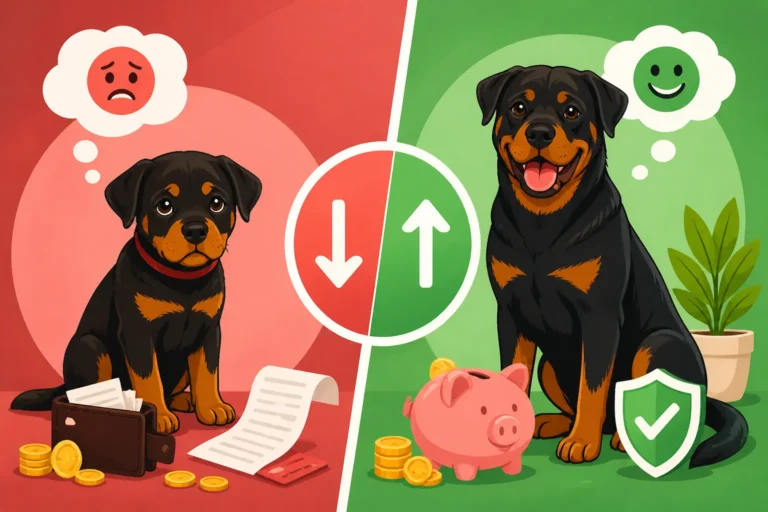
Ignoring early training doesn't save you money; it almost guarantees you'll spend more later, often much more. An untrained Rottweiler can be a liability. Imagine the cost of replacing chewed furniture, repairing damaged doors from separation anxiety, or covering vet bills if your dog gets into a fight because it lacked good social skills. Even worse, if a large, powerful Rottweiler acts out aggressively, the legal and emotional costs can be devastating.
Beyond property damage and potential legal fees, an untrained dog can lead to incredible stress for the family. Constant barking, jumping on guests, or pulling on the leash can make everyday life a challenge. In severe cases, behavioral problems can even lead to the heartbreaking decision to rehome a dog, which no one wants. Investing in training early is a proactive step that safeguards your investment in your Rottweiler and your family's peace of mind, ultimately reducing the likelihood of facing Rottweiler Behavior Problems That Start Small that escalate into major crises.
Exploring Different Training Class Structures and Their Expenses
When it comes to actually getting your Rottweiler trained, you've got options. These options range widely in price, intensity, and the level of personalization they offer. Understanding these different structures will help you decide what fits your budget, your schedule, and your Rottweiler's specific needs.
Group Puppy and Basic Obedience Classes
Group classes are often the first step for many new puppy owners. These classes are typically held at local pet stores like Petco or Petsmart, community centers, or dedicated dog training facilities. They focus on teaching basic commands such as sit, stay, come, down, and polite leash walking in a distracting environment. A huge benefit is the structured socialization with other puppies and people, which is invaluable for a young Rottweiler.
Costs for group classes usually range from $150 to $300 for a 6- to 8-week course. Each session typically lasts about an hour. While they are the most budget-friendly option, remember that you and your dog are one of several in the class. This means less individual attention from the trainer, and the curriculum is standardized. You, the owner, are expected to be an active participant, practicing daily at home to reinforce what's learned in class. For many Rottweiler puppies, these classes are an excellent starting point for learning Rottweiler Bite Inhibition and the Adult Mouth and basic manners in a controlled setting.
Personalized Private Training Sessions
If group classes don't fit your schedule, or if your Rottweiler has specific behavioral challenges that need targeted attention, private training sessions might be a better fit. With private training, a certified professional dog trainer (CPDT-KA or similar credential) works one-on-one with you and your dog, often in your home or at a quiet location like a park. This allows for a highly customized training plan that addresses your unique goals and your dog's specific issues.
Private sessions are more expensive, typically costing anywhere from $100 to $250 per hour-long session, with packages often offering a slight discount. A common package might be 4-6 sessions for $400-$1000. While the upfront cost is higher, the personalized attention means you can often see quicker progress on specific problems like excessive barking, house-training regression, or dealing with strong leash pulling. For a powerful breed like the Rottweiler, addressing Rottweiler Leash Pulling at Adult Weight early with private coaching can be a game-changer for your daily walks.
Intensive Board and Train Programs
For owners with very busy schedules, or for dogs with deeply ingrained behavioral issues that require intensive, consistent work, a board and train program can be an attractive option. In these programs, your Rottweiler lives at the trainer's facility for a period, usually two to four weeks, receiving daily training sessions, socialization, and structured exercise. The idea is that the dog learns new behaviors and habits in a highly controlled environment, and then the trainer teaches you how to maintain those behaviors once your dog returns home.
These programs are the most expensive option, with costs ranging from $2,000 to $6,000 or more for a multi-week stay. The price reflects the round-the-clock care, multiple daily training sessions, and the expertise of the trainers. While effective for many dogs, it's absolutely crucial to thoroughly research and vet any board and train facility. Ask for references, visit the facility, understand their training methods, and ensure they are transparent about their approach. You want to make sure your Rottweiler is in the hands of compassionate, knowledgeable professionals who use force-free or minimally aversive methods. After all, you're entrusting them with your family member.
Understanding the Scope of Training Programs
Training isn't a one-and-done deal. There are different levels and specializations, each designed to meet varying needs and goals for your Rottweiler. As your dog progresses, or if you have specific aspirations for your companion, the scope and cost of training will naturally increase.
Basic Obedience Beyond Sit and Stay
Basic obedience classes cover the fundamentals, but for a Rottweiler, you'll want to ensure these basic commands are rock-solid under various distractions. This means going beyond just "sit" in your living room. A truly well-trained Rottweiler needs to reliably "come" when called at the dog park, "stay" when the doorbell rings, and "leave it" when encountering something tempting (or dangerous) on a walk.
Many basic obedience courses will introduce these concepts, but it's the owner's consistent practice that solidifies them. Fees for follow-up basic classes or intermediate levels are similar to the initial group classes, usually in the $150-$300 range for another 6-8 week session. These classes often focus on refining commands, increasing duration and distance for stays, and proofing behaviors in more challenging environments. This is where you really build the foundation for a confident, responsive Rottweiler, ensuring they don't develop Rottweiler Behavior Problems That Start Small that can become harder to manage as they get older and stronger.
Advanced Obedience and Canine Good Citizen
Once your Rottweiler has a solid grasp of basic obedience, you might consider advanced classes or pursuing certifications like the American Kennel Club's (AKC) Canine Good Citizen (CGC) program. The CGC program tests your dog's manners and obedience in real-world scenarios, covering things like accepting a friendly stranger, walking through a crowd, reacting to distractions, and supervised separation.
Advanced obedience classes or specific CGC preparation courses typically cost between $200 and $400 for a 6- to 8-week program. The CGC test itself usually has a separate, smaller fee, often around $20-$30, if taken through a local club. Achieving a CGC title is not only a great accomplishment that demonstrates your Rottweiler's excellent manners, but it can also sometimes help with things like Homeowners Insurance When You Own a Rottweiler or Renting With a Rottweiler and the Breed Clause, as it shows responsible ownership. It’s a wonderful way to showcase your dog's temperament and your dedication to their training.
Specialized Training: Agility, Protection, Therapy
For Rottweiler owners looking to tap into their dog's specific drives or abilities, there are many specialized training avenues. These include dog sports like agility, scent work, obedience and rally competition, carting, or even more serious work like protection training or becoming a certified therapy dog.
The costs for specialized training vary widely depending on the discipline and the instructor's expertise.
- Dog Sports (Agility, Scent Work, Rally): Introductory classes might be similar to advanced obedience ($150-$300 for a short course), but ongoing training, private coaching, and competition fees can add up. You might spend $50-$100 per month for regular classes, plus travel and entry fees for trials.
- Protection Training: This is a highly specialized field, and finding reputable, ethical trainers is paramount. Costs can be significant, potentially $50-$150 per session or even more for advanced work, and it's a long-term commitment. This isn't about creating an aggressive dog, but rather channeling their natural guarding instincts into a controlled, sport-like activity. It's crucial to understand the nuances if you're considering Rottweiler Protection Sport and Whether to Do It.
- Therapy Dog Training: This focuses on preparing your dog for visits to hospitals, nursing homes, or schools. While the core skills are advanced obedience, there are typically certification requirements and evaluations by organizations like Alliance of Therapy Dogs or Pet Partners. Preparation courses might cost $200-$500, plus a fee for the evaluation and annual membership. Rottweiler Jobs From Police Work to Therapy Visits highlight the incredible versatility of this breed when properly trained.
Hidden and Ongoing Training Expenses
Just like owning a car, the initial purchase price isn't the whole story. Training your Rottweiler also comes with hidden costs and ongoing expenses that are crucial to budget for if you want a truly successful and lasting impact on your dog's behavior.
Training Gear and Supplies
You can't train a Rottweiler with just good intentions. You'll need the right tools, and given their size and strength, these tools need to be durable. This isn't just about a basic collar and leash.
- Collars and Leashes: You'll likely go through a few. A strong, well-fitting collar (flat buckle, Martingale, or even a slip lead for training moments) and a sturdy 6-foot leash are essential. Many Rottweiler owners also find Harnesses and Head Halters Sized for a Rottweiler incredibly helpful for managing their strength on walks. These can range from $20-$60 each.
- High-Value Treats: Motivation is key, especially for a smart, sometimes stubborn Rottweiler. Small, soft, smelly treats work best. Think hot dogs, cheese, cooked chicken, or specialized training treats. You'll go through a lot of these, so factor in a consistent $15-$30 per month for quality treats. For high-value options, some owners even use fresh food from services like Ollie for training purposes because their dogs find it irresistible.
- Clickers and Treat Pouches: These small investments (often less than $20 total) make a big difference in clear communication and quick reward delivery during training sessions.
- Long Lines: For recall practice in a safe, open area, a 20- to 30-foot long line is invaluable, costing $20-$40.
These seemingly small purchases add up, and having the right gear can make training much more effective and enjoyable for both you and your dog. A reliable pet supply retailer like Chewy can be a great resource for finding durable, well-reviewed training equipment and treats designed for large breeds.
Behavior Consultations for Specific Issues
Sometimes, despite your best efforts in basic and even advanced classes, specific behavioral issues can crop up. This is particularly true during adolescence or if your Rottweiler has a sensitive temperament. Issues like Rottweiler Reactivity Toward Other Dogs, separation anxiety, or severe resource guarding often require the expertise of a certified professional dog behaviorist or a veterinary behaviorist. These are specialists who delve deeper than a typical trainer, addressing the underlying emotional and psychological components of a behavior.
A full behavioral consultation with a veterinary behaviorist can be quite expensive, often starting at $300-$500 for an initial assessment, with follow-up sessions costing $150-$250 each. These professionals can diagnose complex issues, prescribe medication if necessary, and create a comprehensive modification plan. While a significant investment, for serious problems, this is often the only path to meaningful improvement and can prevent the issue from worsening. It's an essential resource for those times when you feel you've exhausted all other avenues.
Continued Education and Refreshers
Training is not a set-it-and-forget-it endeavor, especially with a breed as intelligent and driven as a Rottweiler. Just like humans, dogs can forget commands or revert to old habits if not consistently reinforced. Many owners find it beneficial to enroll in refresher courses every year or two, or to explore new activities to keep their Rottweiler mentally stimulated.
These might be themed workshops, new sport introductory classes, or even just drop-in obedience practice sessions. Budgeting $50-$150 annually for these kinds of refresher opportunities can be a wise investment. It keeps your dog sharp, strengthens your bond, and provides ongoing mental enrichment, preventing boredom that can often lead to destructive behaviors. Think of it as continuing education for your best friend.
Geographic and Trainer Experience Impact on Cost
The price tag on Rottweiler training isn't static across the board. Where you live and the qualifications of the person you hire can significantly influence how much you'll ultimately pay. Understanding these variables is key to setting realistic expectations and making informed decisions.
Regional Cost Variations
Just like real estate or groceries, the cost of dog training varies dramatically by geographic location. What you pay in a bustling metropolitan area on the East or West Coast will likely be substantially higher than in a rural community in the Midwest or South. This is due to factors like the cost of living, demand for services, and the number of qualified trainers available.
For instance, a private training session in Los Angeles or New York City might easily run $200-$300 per hour, while a similar session in a smaller town in Oklahoma could be $75-$125. Group classes follow a similar pattern, with urban areas seeing prices at the higher end of the $250-$350 range for a series, compared to $100-$200 in less expensive regions. Always research local trainers and get quotes from a few different options to understand the market rate in your specific area.
The Value of Certified and Experienced Trainers
You wouldn't trust your health to an unqualified doctor, and you shouldn't trust your powerful Rottweiler's training to just anyone. The experience, education, and certifications of a trainer directly correlate with their fees, and for good reason. Certified Professional Dog Trainers (CPDT-KA), Certified Behavior Consultants Canine (CBCC-KA), or those with advanced degrees in animal behavior or veterinary behaviorists (DACVB) have invested heavily in their education and expertise.
These qualifications mean they understand canine learning theory, behavior modification, and how to safely and effectively work with a variety of dog temperaments, including the nuances of a strong, intelligent breed like a Rottweiler. While an uncertified "dog whisperer" might offer cheaper rates, the risk of ineffective or even harmful training methods is much higher. Paying for a highly qualified trainer, even if it means a higher upfront cost, is an investment in quality, safety, and ultimately, success. They can identify underlying issues and implement solutions that generic training might miss, saving you headaches and more money in the long run.
Avoiding "Bargain" Training That Costs More Later
It's tempting to opt for the cheapest training available, especially when faced with What a Health-Tested Rottweiler Puppy Costs and The First Month With a Rottweiler Puppy and Its Bills already. However, bargain hunting for dog training can be a classic example of "you get what you pay for," or worse, "you pay for it twice." Inexperienced or poorly qualified trainers might use outdated, punishment-based methods that can actually damage your Rottweiler's confidence, create fear, or exacerbate behavioral problems, leading to more expensive rehabilitation later.
For example, using harsh corrections or aversive tools on a sensitive Rottweiler could turn a shy dog into a fear-aggressive one, or make a confident dog shut down. This would then require a behaviorist and a much longer, more costly road to recovery. Always prioritize a trainer's philosophy, methods, and credentials over their price tag. Look for trainers who emphasize positive reinforcement, force-free methods, and clear communication. A slightly higher investment now can prevent major behavioral issues and the much larger financial and emotional costs associated with them in the future.
Budgeting for a Well-Trained Rottweiler
Bringing a Rottweiler into your home means preparing for a significant financial commitment beyond just food and vet visits. Proper training is an investment, not an expense, and factoring it into your budget from the very beginning is crucial for a harmonious relationship with your powerful companion.
Creating a Realistic Training Budget
To truly get a handle on the costs, it's helpful to visualize the potential outlay for different stages of your Rottweiler's life. Here’s a breakdown of what you might expect to pay, keeping in mind that these are general ranges and can vary significantly by location and trainer.
| Training Type | Typical Cost Range (per course/session) | Duration/Frequency | Key Benefits |
|---|---|---|---|
| Puppy Group Class | $150 – $300 | 6-8 weeks | Basic manners, vital socialization |
| Basic Obedience Group Class | $150 – $300 | 6-8 weeks | Foundational commands, public manners |
| Private Session (basic issues) | $100 – $250 / hour | As needed (often 4-6 sessions) | Personalized attention for specific challenges, flexibility |
| Advanced Obedience/CGC Prep | $200 – $400 | 6-8 weeks | Refined commands, real-world application, certification prep |
| Behavior Consultation (Specialist) | $300 – $500 (initial) + $150-250 (follow-up) | As needed | Addresses complex behavioral issues (e.g., aggression, severe anxiety) |
| Board and Train Program | $2,000 – $6,000+ | 2-4 weeks (intensive) | Rapid progress for ingrained issues, hands-off for busy owners |
| Ongoing Sport/Activity Class | $50 – $150 / month | Ongoing | Mental stimulation, advanced skills, bonding through activity |
| Training Gear (yearly est.) | $100 – $300 | Ongoing | Collars, leashes, harnesses, treats, toys |
A realistic budget for a well-trained Rottweiler, over its first two to three years, could easily range from $1,000 to $3,000 for basic and intermediate training, plus ongoing costs for treats and gear. If you factor in a behavioral specialist or board and train, these figures can increase significantly. Considering The Lifetime Cost of One Rottweiler, training is a foundational piece of that overall financial puzzle.
How Pet Insurance Might Help (or Not)
When looking at the potential costs, especially for behavioral consultations, you might wonder if pet insurance can offer some relief. The answer is often "it depends," and usually, "not directly for training." Most standard pet insurance policies, such as those offered by Healthy Paws or similar providers, are designed to cover unexpected veterinary expenses due to accidents, illnesses, and emergencies. This generally includes diagnostic tests, surgeries, medications, and sometimes even alternative therapies prescribed by a vet.
However, pet insurance typically does not cover routine obedience training, puppy classes, or general behavioral training fees. Where it might come into play is if your Rottweiler develops a medical condition that manifests as a behavioral problem (e.g., pain causing aggression) or if a certified veterinary behaviorist (a DVM with specialized training) recommends certain behavioral modification therapies or medications as part of a medical treatment plan. Even then, you’d need to check your specific policy details very carefully to see what's covered. Don't rely on pet insurance to pay for your basic training classes; budget for those separately, but know that it could be a lifesaver if your dog needs Budgeting for Rottweiler Cancer Treatment or other major medical interventions.
Long-Term Investment in Your Dog's Well-being
It’s easy to look at the numbers and feel overwhelmed, but remember that investing in your Rottweiler's training is one of the most crucial investments you can make. It's not just about teaching commands; it's about building a trusting relationship, ensuring their safety, and integrating them fully into your family and community. A well-trained Rottweiler is a happier, more confident dog, and a less stressed owner.
Think of it this way: a few hundred dollars now for a solid obedience course could prevent thousands of dollars in property damage, vet bills from an uncontrolled incident, or the profound heartbreak of having to rehome a beloved pet due to behavioral issues. The mental stimulation and structure provided by training also contribute significantly to your Rottweiler's overall well-being and can even indirectly contribute to their physical health. A well-trained dog that gets proper exercise and mental enrichment is less likely to develop anxiety or destructive habits born of boredom. Ultimately, it’s an investment in the long, happy, and safe life you share with your Rottweiler.
Disclaimer
The information provided in this article is for general informational purposes only and does not constitute professional veterinary or behavioral advice. Always consult with a qualified veterinarian or certified professional dog trainer/behaviorist for any concerns regarding your Rottweiler's health or behavior. Training costs are estimates and can vary widely based on location, trainer experience, and specific program offerings.