Why a Rottweiler Leans on the People It Trusts
Anyone who has spent time around a Rottweiler knows that distinct feeling: that gentle, yet incredibly solid, lean. It's not just a casual bump; it's a deliberate, full-body press against your leg or hip, a silent conversation initiated by a dog who could easily knock you over if they chose to. If you've wondered what exactly your powerful, self-assured Rottweiler is trying to tell you when they plant themselves firmly against your side, you're in the right place. This guide delves into the fascinating reasons behind this quintessential Rottweiler behavior, exploring its historical roots, psychological underpinnings, and how you can best respond to this unique expression of trust.
Understanding the Rottweiler Lean: More Than Just a Cuddle
That familiar "Rottie lean" is one of the most endearing and characteristic behaviors of the breed, a subtle yet profound interaction that speaks volumes about the relationship between a Rottweiler and its trusted human. It's far more than just a dog seeking comfort; it's a multi-layered communication that harks back to their ancestry and reinforces their deep bonds.
The Historical Roots of a Trusting Lean
To truly understand why your Rottweiler leans, we need to take a quick trip back in time, to the bustling cattle markets of Rottweil, Germany. These powerful dogs, known as "Metzgerhund" or "butcher's dogs," were indispensable. Their jobs included herding cattle over long distances, guarding the butcher's money pouches tied around their necks on the way home, and protecting their owners and property. This wasn't a job for a dog that kept its distance; it required a deep, unwavering connection and trust with their handler.
Imagine a Rottweiler moving a stubborn bull or standing guard over a valuable sum of money in a chaotic market square. They needed to be close, to be physically connected to their human for subtle cues and mutual reassurance. This constant, close contact built an innate need for physical proximity and a reliance on their human for direction and security. The lean, in many ways, is a modern echo of that ancient working relationship, a physical manifestation of their desire to be "at your side" and aligned with your presence. It's a protective instinct, but also one born of deep companionship.
Communication Through Contact
Dogs, as we know, are masters of non-verbal communication. They speak volumes with their tails, ears, eyes, and, yes, their entire bodies. For a Rottweiler, the lean is a prime example of this body language in action. It’s not a random act; it’s a deliberate choice to engage with you physically.
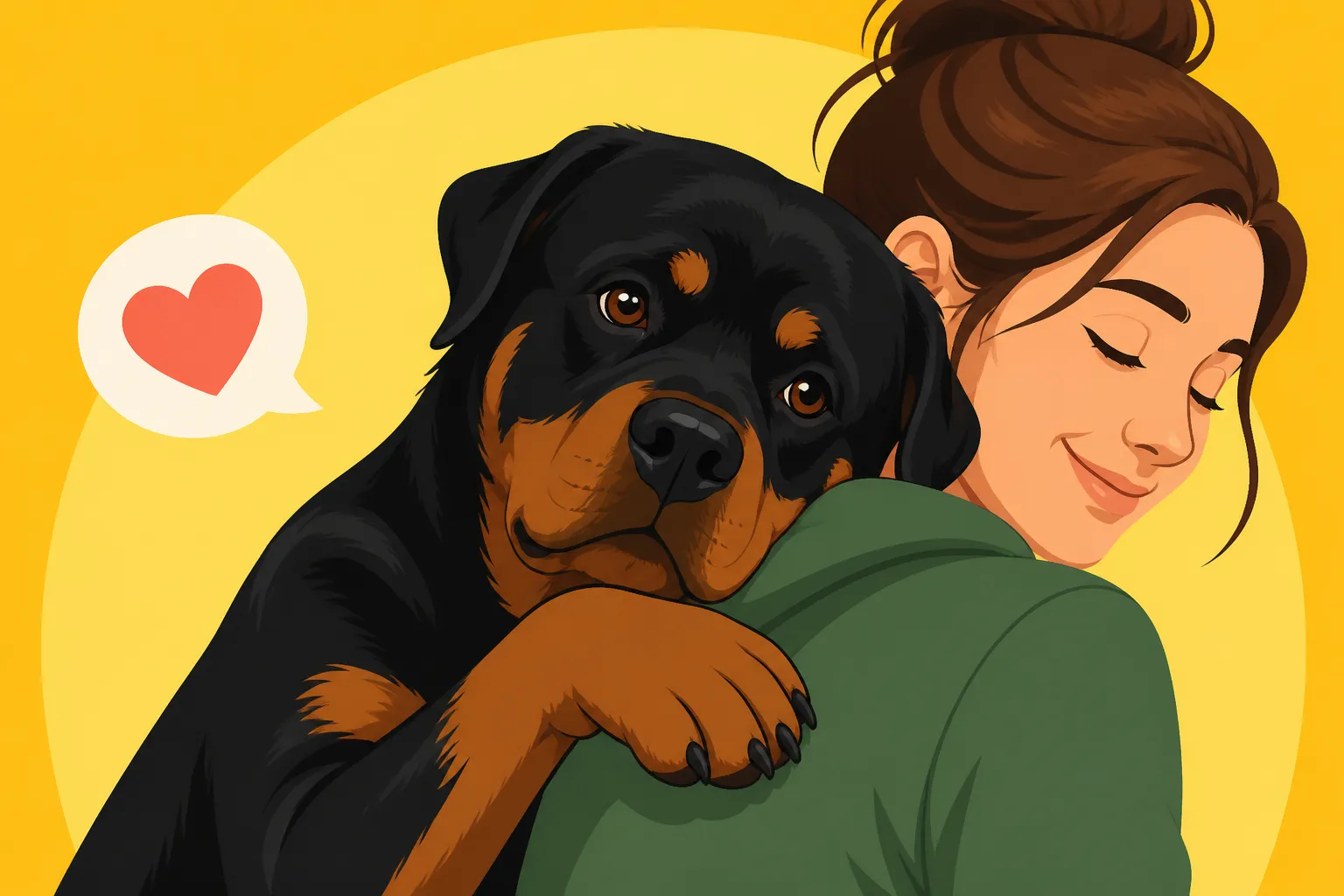
When a Rottweiler leans, they might be telling you any number of things. It could be a simple request for affection, a quiet "I love you" without a sound. They might be seeking reassurance, especially in a new or slightly overwhelming environment, finding comfort in your solid presence. It can also be a way for them to 'check in' with you, affirming their connection and feeling your response. Unlike a smaller dog that might jump into your lap, a Rottweiler expresses this desire for closeness by pressing their considerable weight into you, a powerful statement of their desire for contact and connection without being overbearing.
The Physical Comfort and Security It Offers
Think about how good it feels to lean on a sturdy wall or press into a supportive chair after a long day. For a Rottweiler, leaning offers a similar sense of physical comfort and profound security. Their large, muscular bodies are designed for strength and stability, and by leaning into you, they are essentially grounding themselves in your presence.
This physical contact offers a feeling of safety, especially when they are with the person they consider their primary guardian. It’s a reassurance that you are there, present, and providing a stable anchor in their world. Around strangers, a Rottweiler might maintain a more aloof posture, observing from a slight distance. But with their trusted family, they relax into that lean, knowing they are in a safe space. It’s a moment of shared peace and mutual understanding, a quiet acknowledgement of the strong bond you share.
The Psychology Behind the Rottweiler's Affectionate Weight
The Rottweiler lean is deeply rooted in their psychological makeup, reflecting their innate desire for connection, their protective instincts, and their unique way of expressing devotion. It's a behavior that truly encapsulates the essence of this magnificent breed.
Building and Reinforcing the Bond
One of the most profound reasons a Rottweiler leans on you is to build and reinforce the incredible bond you share. Dogs thrive on connection, and for a Rottweiler, this often manifests as physical proximity. When they lean, they are actively engaging in a behavior that deepens their relationship with you.
Think of it as a continuous feedback loop. Your Rottweiler leans, you respond with a gentle pet, a soft word, or simply by accepting their weight. This positive interaction tells them that their overture of affection is welcome and appreciated, strengthening their trust and encouraging the behavior. Over time, this leaning becomes a cherished ritual, a silent pact of companionship. It’s a subtle way they say, "You are my person," and you, in turn, affirm that sentiment. This mutual reinforcement is vital for their emotional well-being and helps cement their place as a cherished member of your family.
A Sign of Trust and Protection
Rottweilers are renowned for their guarding instincts. They are naturally watchful, observing their surroundings with a calm, self-assured demeanor. But their protective nature isn't just about warding off threats; it's also about drawing close to those they pledge to protect. The lean is a beautiful example of this duality.
When your Rottweiler leans, it's a powerful declaration of trust in you. They are placing their full weight, their vulnerability, against your body. This shows they feel completely safe and secure in your presence. Simultaneously, it can also be an expression of their protective drive for you. By physically aligning themselves with you, they are subtly asserting their role as your guardian, ready to stand with you. It's a quiet declaration: "I am here, and I am with you." Understanding The Rottweiler Guarding Instinct and How to Shape It can help you appreciate the depth of this subtle protective gesture. They're not just leaning; they're safeguarding.
Leaning as an Attention-Seeking Behavior
While many leans are expressions of deep connection, sometimes, let's be honest, your Rottweiler just wants some love! A lean can be a very effective, and very charming, way for them to solicit attention, pets, or even a treat. It's hard to ignore a hundred-pound dog pressing into your leg, right?
You'll notice differences in these attention-seeking leans. A gentle, sustained lean might be a quiet request for a head scratch. A firmer, perhaps slightly nudging lean could mean, "Hey, my bowl is empty!" or "I'm bored, let's play!" They've learned that this action often elicits a positive response from you. It's not manipulative; it's simply a learned communication strategy. Your Rottweiler is intelligent, and they know what works to get your focus. As long as it's not overly pushy or demanding, it's a perfectly normal and endearing way for them to remind you they're there and available for interaction.
Managing and Encouraging the Rottweiler Lean Positively
The Rottweiler lean is a beautiful behavior, but like all interactions with a large, powerful dog, it benefits from thoughtful management and clear communication. Knowing how to respond appropriately ensures it remains a positive expression of affection.
Responding to Your Rottweiler's Lean
When your Rottweiler leans into you, your response can either reinforce or subtly modify the behavior. If you want to encourage this expression of affection, a calm, positive acknowledgement is key. A gentle stroke, a quiet word, or simply accepting their presence can go a long way. This tells them that their lean is a welcome gesture and strengthens your bond.
However, if the lean becomes overly pushy, or if it happens at an inopportune moment (like when you're carrying hot coffee!), you'll want to gently redirect. Instead of pushing them away harshly, which could be confusing or upsetting, you can calmly step forward, creating a space that requires them to re-adjust. Or, you can offer an alternative behavior, like asking them to "sit" and then rewarding that. The goal is to encourage the lean as a loving interaction without allowing it to become demanding or intrusive. Consistency is your friend here, as with all aspects of Rottweiler Puppy Training Through the First Year.
Training and Socialization for a Confident Lean
A Rottweiler who leans confidently and appropriately is often one who has received excellent socialization and training from a young age. Early, positive exposure to various people, places, and sounds helps a Rottweiler develop into a secure and well-adjusted adult. A dog that feels safe in its environment and trusts its human is more likely to express affection through a relaxed lean, rather than leaning out of anxiety or insecurity.
Socializing a Rottweiler Puppy Properly means exposing them to a wide range of positive experiences before they are sixteen weeks old. This critical window helps them learn that the world is a generally safe place and that new experiences can be good. Good basic obedience training also teaches them boundaries and manners, ensuring they understand cues like "off" or "place," which can be useful if their lean becomes too intense or unwelcome in a particular moment. A well-trained Rottweiler understands how to manage their powerful body, even when expressing love.
What the Lean Isn't: Distinguishing From Anxiety or Pain
While the Rottweiler lean is usually a sweet gesture, it's crucial to be a discerning observer. Sometimes, a dog might lean more heavily or persistently not out of affection, but because they are feeling anxious, insecure, or even in pain. A subtle change in the nature of the lean can be a red flag.
If your Rottweiler suddenly starts leaning more often, more intensely, or seems unusually clingy, it’s worth investigating. Are there other signs of stress, such as excessive panting, lip-licking, yawning, or a tucked tail? Are they stiff or reluctant to move after leaning? Rottweiler Behavior Changes That Mean Pain can often manifest in subtle shifts in posture or interaction. For instance, a dog with hip or elbow discomfort might lean more heavily to stabilize themselves or to seek comfort. If you notice any accompanying behavioral changes, lameness, or a shift in their overall demeanor alongside an altered leaning behavior, a vet visit is always a good idea to rule out any underlying medical issues. Pay attention to how they lean: Is it a relaxed press, or a tense, almost desperate cling? Your attentiveness can make all the difference.
Beyond the Lean: Other Unique Rottweiler Affection Behaviors
The lean is iconic, but Rottweilers have a whole repertoire of unique ways to show their love and connection to their chosen people. These behaviors are just as charming and speak volumes about their personality.
The "Rottie Rumble" and Other Vocalizations
Many Rottweiler owners will tell you about the "Rottie rumble," a low, guttural sound that often gets mistaken for a growl by the uninitiated. This couldn't be further from the truth! This rumble is often a sound of deep contentment, a happy grumble when they're getting a good scratch, settling down for a nap, or just enjoying your company. It's their happy sigh, a vocal expression of pure bliss. Learning to recognize The Rottweiler Grumble That Is Not a Growl is key to understanding your dog's affectionate language.
Beyond the rumble, Rottweilers can be surprisingly vocal in other ways when expressing affection. They might let out soft "woofs" or "huffs" when they want attention, a playful bark inviting you to engage, or even a soft whine if they're particularly eager for a treat or a walk. Their vocalizations are rarely excessive but are always meaningful, adding another layer to their communicative charm.
Nudging, Bumping, and Body Blocking
Given their powerful builds, Rottweilers often use their entire bodies to interact with their humans. This can manifest as gentle nudges with their head or nose, a playful bump against your leg when they're excited, or even the classic "body block." Rottweiler Leaning and Body Blocking is a common strategy they employ, often to direct you where they want to go (like towards the treat jar or the back door for a walk), or simply to maintain close contact.
These behaviors are often rooted in their droving past. As cattle dogs, they learned to use their bodies to guide and move large animals. While you're not a cow, your Rottweiler might unconsciously apply these same instincts, albeit in a much softer, more affectionate way, to guide you or keep you close. It's their way of staying connected and subtly influencing their environment, all done with that characteristic Rottweiler confidence. Sometimes, these interactions can be a bit clumsy due to their size, but they are almost always well-intentioned and a sign of engagement.
The "Wait-and-See" Approach to Strangers
One trait that often gets misunderstood about Rottweilers is their initial aloofness with strangers. While they are incredibly affectionate and demonstrative with their family, they rarely extend that same immediate warmth to everyone they meet. This isn't rudeness; it's a characteristic of the breed, a cautious "wait-and-see" approach that ties back to their guarding nature. Your Rottweiler will observe new people, assess their demeanor, and only offer their trust (and perhaps a lean) once they deem them worthy. This is a topic explored more deeply in Rottweiler Aloofness and Why It Reads as Cold.
This reserved behavior highlights just how special their lean is for you. It's a gesture reserved for their inner circle, a testament to the deep bond and unwavering trust they place in their family. When a Rottweiler chooses to lean on you, it's not a generic act; it's a profound statement of belonging, affection, and loyalty that only you have earned.
Decoding the Rottweiler Lean
| Behavior Manifestation | Common Interpretation | What to Look For | When to Be Concerned |
|---|---|---|---|
| Gentle, sustained lean | Affection, comfort, seeking reassurance | Relaxed body, soft eyes, slow tail wag (if undocked) | If accompanied by stiffness or reluctance to move. |
| Nudging, pushing lean | Attention-seeking, requesting interaction | Looking at you, moving towards a desired object/door | If it becomes overly demanding or aggressive. |
| Heavy, clingy lean | Anxiety, insecurity, seeking protection | Panting, wide eyes, tucked tail, trembling | If persistent and uncharacteristic of your dog. |
| Lean with stiffness | Physical discomfort, pain | Reluctance to shift weight, lameness, licking affected area | Immediate veterinary check-up is recommended. |
| Lean then looking away | Submissive gesture, showing deference | Averting gaze, low posture, soft ears | Not usually concerning, but good to understand. |
| Lean while patrolling | Checking in, asserting presence, guarding you | Alert posture, scanning surroundings, subtle body shifts | If it precedes aggression towards others or dogs. |
This table offers a quick guide, but remember that every dog is an individual, and context is always key. Observing your dog's overall body language and behavior patterns will give you the most accurate understanding of their unique expressions of affection. Products available from retailers like Chewy, such as calming supplements or orthopedic beds, might be relevant if you suspect anxiety or discomfort is altering your dog's typical leaning behavior.
Disclaimer
This article is for general informational purposes only and does not constitute professional advice. Laws, prices and regulations vary by location and change over time. Consult a qualified professional for guidance on your specific situation.