Rottweilers and Toddlers Under the Same Roof
Bringing a magnificent Rottweiler into a home with a toddler can spark a lot of apprehension, and for good reason. People worry about the sheer size and strength of the breed, combined with the unpredictable nature of a young child. It’s a very real concern, and one that absolutely deserves a deep dive, because ensuring the safety and harmony of your family, both two-legged and four-legged, is paramount. This guide is here to help you navigate the complexities of managing a Rottweiler and a toddler under the same roof, offering practical advice and a realistic look at what it takes to make it work beautifully.
Understanding the Rottweiler Temperament Around Children
The image of a Rottweiler can be intimidating to many, often fueled by sensationalized media rather than the breed's true nature. However, for those who truly know them, Rottweilers are known to be devoted, loyal, and often quite playful with their families. But integrating them with a small, unpredictable human requires more than just good intentions; it demands a clear understanding of their inherent traits and how to manage them.
The Rottweiler's Natural Protective Instinct
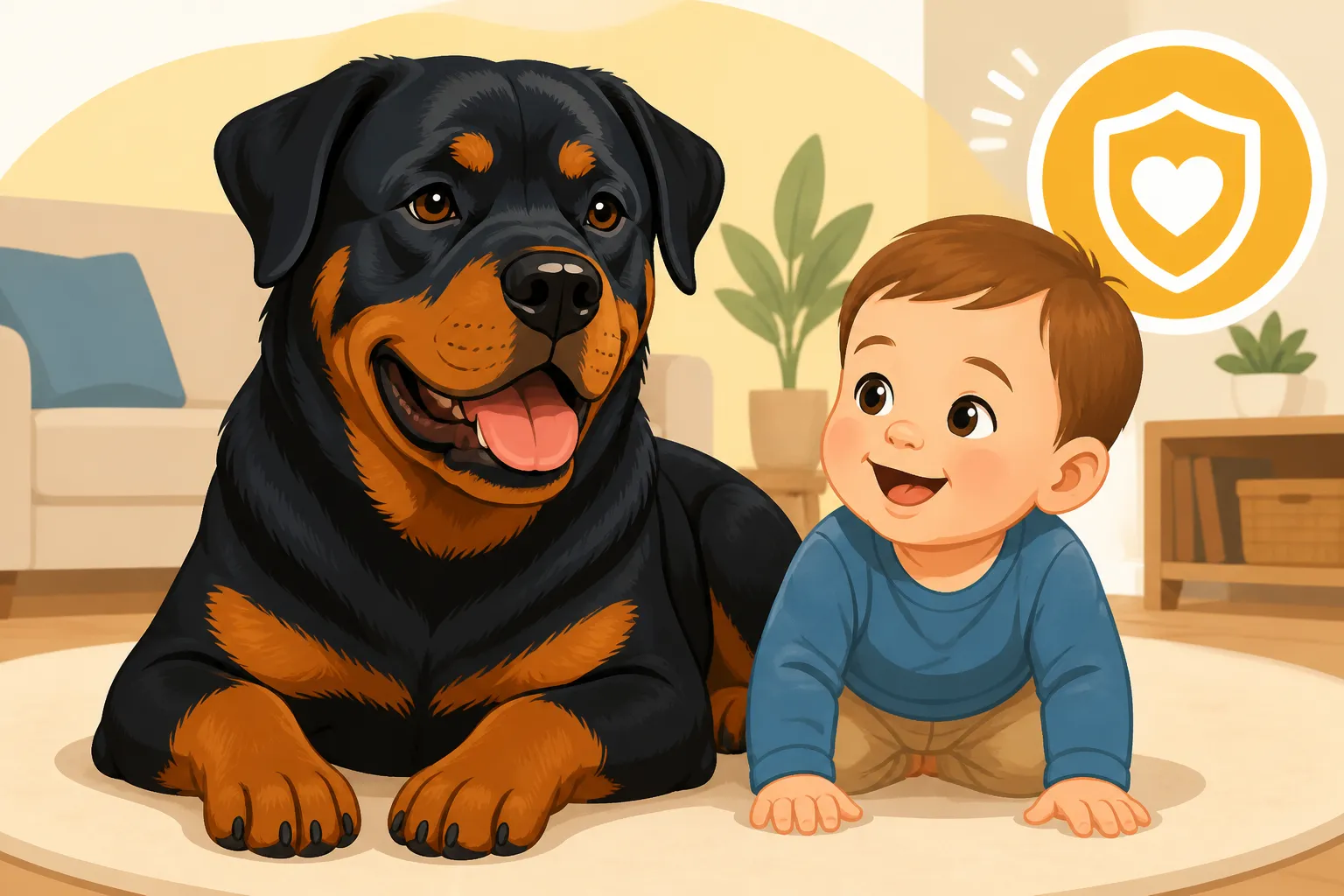
Rottweilers were originally bred to herd and guard livestock and butcher’s money in the town of Rottweil, Germany. This history has ingrained in them a strong protective instinct, a drive to watch over their family and territory. When properly channeled, this translates into a fierce loyalty and a natural inclination to be aware of their surroundings, including the smallest members of their human pack. They often form deep bonds with children in their family, viewing them as part of their inner circle to be safeguarded.
This protective nature, however, is a double-edged sword if not understood and managed. A Rottweiler’s calm, confident demeanor can sometimes be misinterpreted. They are not typically boisterous greeters; instead, they tend to observe new people or situations carefully before deciding how to react. This "wait-and-see" approach can be a good thing, as it means they're less likely to react impulsively. But it also means that if they perceive a threat to their tiny human, their protective instinct can kick in. This isn't about aggression, but about a deep-seated desire to keep their family safe. The key is to teach your Rottweiler that the toddler is your responsibility and that you are the primary protector. They need to trust your judgment in all situations, particularly when strangers approach your child. We explore this further in The Calm Confidence a Rottweiler Standard Asks For.
The Importance of Socialization and Early Exposure
Proper socialization is absolutely critical for any dog living with children, and it's especially vital for a powerful breed like the Rottweiler. A well-socialized Rottweiler puppy exposed positively to a variety of sights, sounds, people, and experiences during its critical developmental period is far more likely to be calm and adaptable around children. This means exposing them not just to quiet, well-behaved older children, but also to the joyful chaos of toddlers – the sudden squeals, the clumsy movements, the dropped toys, the running and stumbling.
The ideal time for this is during puppyhood, specifically before 16 weeks of age, a period often called the "fear imprint stage." If a Rottweiler puppy isn't gently and positively introduced to toddlers during this time, they might view them as strange, unpredictable, or even threatening creatures later on. Imagine a scenario where an unsocialized Rottweiler, used to quiet adult company, suddenly encounters a toddler who shrieks and runs towards them. The dog, not understanding the behavior, might react with fear or an inappropriate correction. Conversely, a Rottweiler who has learned that toddlers are part of the normal, safe world through positive experiences will be much more likely to ignore or tolerate typical toddler antics. For more on this crucial period, check out Rottweiler Socialization Before Sixteen Weeks.
Reading Rottweiler Body Language Around Toddlers
Understanding your Rottweiler's body language is arguably the most crucial skill you'll develop when they share a home with a toddler. Dogs communicate constantly, and their signals often tell us long before a growl or snap that they are uncomfortable, stressed, or nearing their limit. Rottweilers, with their naturally calm and often stoic expressions, can be particularly subtle in their signals. Ignoring these early warning signs is a recipe for disaster.
Learning to spot subtle cues like a stiffening body, a quick lip lick, a yawn when not tired, turning their head away, or a "whale eye" (where the whites of their eyes show) can give you precious seconds to intervene before a situation escalates. For instance, a Rottweiler might appear to tolerate a toddler's clumsy pat, but a slight lowering of the head, a flattened ear, or a slow blink could indicate discomfort. These aren't signs of aggression, but rather signals that your dog needs space or help. It's your job to be their advocate. Never punish a growl, as a growl is a warning; if you suppress it, you might lose your dog's clearest communication that they are distressed. Instead, remove the child or the dog from the situation and reassess. For a deeper dive into these often-missed signals, read Reading a Still Rottweiler That Is Not Relaxed.
Here's a quick reference table for some common Rottweiler body language cues around toddlers:
| Body Language Cue | Potential Meaning (Around Toddlers) | Action Needed |
|---|---|---|
| Lip Licking | Stress, anxiety, "I'm uncomfortable" | Create distance, intervene, observe closely. |
| Yawning (not tired) | Stress, attempting to calm itself | Remove the toddler or dog from the interaction. |
| Head Turn/Body Turn Away | "Please go away," seeking distance | Physically separate dog and child, redirect attention. |
| Stiff Body/Tail Wag (high & fast) | Heightened arousal, potential stress | Immediate, calm intervention; increase space. |
| "Whale Eye" | Anxiety, feeling cornered | Immediately create space between dog and child. |
| Soft Eyes/Relaxed Mouth | Comfortable, calm, happy | Continue supervised interaction, but remain vigilant. |
| Loose, Waving Tail | Happy, friendly (usually with loose body) | Positive interaction, but still supervise closely. |
| Leaning Against You | Affection, seeking comfort/security | Reassuring, but watch for signs of discomfort with others nearby. |
Setting Up Your Home for Success: Management and Training
Even with the best temperament and socialization, simply hoping for the best isn't enough when you have a Rottweiler and a toddler. You need a proactive strategy involving smart home management and consistent training for both your dog and your child. This isn't about stifling their relationship but building it on a foundation of safety and respect.
Creating Safe Spaces for Both Toddler and Dog
One of the most effective strategies for managing a Rottweiler and a toddler is establishing clear boundaries and safe zones. This means creating designated areas where the dog can retreat and be undisturbed, and similarly, areas where the toddler can play without encountering the dog. Baby gates are your absolute best friend here. Install them strategically throughout your home to block off rooms or sections where the dog or child might need alone time. For instance, the toddler's play area can be gated off, allowing them to explore without the Rottweiler inadvertently tripping them or stealing a toy.
Likewise, your Rottweiler needs their own sanctuary. This might be a sturdy crate – sized appropriately for a large breed (you can find excellent options on Chewy designed for larger dogs) – in a quiet room, or a designated bed area behind a gate. This "den" should be a place where they feel safe and secure, a place they can go to escape the noise and unpredictable movements of a toddler. When the dog is in their safe space, they should never be disturbed by the toddler. Teach your child from a very young age that when the dog is in its bed or crate, it's "sleeping" and must be left alone. This simple rule prevents so many potential issues, particularly resource guarding or a dog snapping because it was startled awake. For information on appropriate crating, consider Crating a Rottweiler That Will Triple in Size.
Training Your Rottweiler for Gentle Interactions
Training your Rottweiler isn't just about obedience; it's about building a relationship based on trust and clear communication. With a toddler in the house, specific commands and behaviors become even more critical. "Leave it" is invaluable for preventing your Rottweiler from taking a dropped toy or food from your toddler. "Stay" or "place" can keep your dog calmly on its bed while your toddler plays nearby under supervision. Teaching a gentle mouth is also crucial. Rottweiler puppies, like all puppies, explore with their mouths, and they can be quite mouthy. You need to teach them early on that human skin is sensitive and that all interactions must be gentle. Even if it's "just playing," a Rottweiler's playful nip can do serious damage to a toddler.
Positive reinforcement is the way to go. Reward your Rottweiler lavishly for calm, appropriate behavior around your toddler. If they lie quietly while the toddler plays, give them a high-value treat. If they gently sniff a dropped toy and then look to you for guidance, reward that. This builds positive associations between the toddler's presence and good things happening for the dog. Consistency is key, and every member of the household needs to be on board with the training rules. Start basic obedience early, as detailed in Rottweiler Puppy Training Through the First Year, and specifically reinforce good manners around children. You want to teach your Rottweiler to take treats gently from your hand, which is a good precursor to gentle interactions in general. Teaching a Rottweiler to Take Treats Gently offers some great tips for this.
Teaching Your Toddler How to Interact Safely
Dog-child safety is a two-way street. While we focus heavily on the dog's training and management, it's equally, if not more, important to teach your toddler how to interact appropriately with the Rottweiler. Toddlers are naturally curious, clumsy, and lack impulse control – they don't understand canine signals or boundaries. Therefore, you must be their guide and their protector from themselves.
Start teaching gentle hands from the very beginning. Instead of letting them pat the dog anywhere, guide their hand to a safe patting zone, like the shoulder, with "gentle pets." Teach them "no pulling" of ears or tail, "no climbing," and "no sudden loud noises." Emphasize that the dog is a living creature, not a toy. A fantastic mantra to adopt is "Be a tree." If a dog approaches too boisterously or overwhelms the child, teach the child to stand still, fold their arms, and look at their feet. This makes them less interesting to the dog and removes the "chase me" invitation. Never leave a toddler unsupervised with any dog, regardless of how trustworthy you believe your dog to be. This rule is non-negotiable and the cornerstone of safety.
Preventing Incidents and Managing Real-Life Challenges
Even with the best intentions and preparation, daily life with a Rottweiler and a toddler will present its unique challenges. The key is to anticipate potential problems, prevent them from escalating, and know how to react calmly and effectively when they do arise.
Supervision: The Non-Negotiable Rule
I cannot stress this enough: Never, ever leave a Rottweiler unsupervised with a toddler. This isn't a reflection on your specific dog, or the breed as a whole. It's a fundamental safety rule for any dog and any small child. Toddlers are unpredictable – they might pull an ear, step on a paw, or grab a chew toy right out of the dog's mouth. Even the most tolerant, gentle Rottweiler has a breaking point. A dog might react with a snap or a growl purely out of pain, fear, or being startled, not malice.
Supervision means active engagement. You need to be physically present, watching, and ready to intervene at a moment's notice. It doesn't mean being in the same room but absorbed in your phone or chores. It means being aware of the subtle dynamics, the shifting comfort levels, and the potential flashpoints. If you need to step away for even a minute – to answer the door, use the restroom, or grab something from another room – either the dog or the child must go into their safe space, behind a gate, or in a crate. This isn't about punishment; it's about prevention and ensuring everyone's safety. Remember, it only takes a second for an accident to happen, and with a dog the size and power of a Rottweiler, those seconds matter.
Managing Resource Guarding and Possessions
Resource guarding is a natural canine behavior where a dog protects items it values, such as food, toys, or even a favored sleeping spot. While perfectly normal for a dog to want to keep its possessions, it becomes a serious safety concern when a toddler is involved. A toddler doesn't understand "mine" in the same way a dog does, and reaching for a guarded item can provoke a dangerous reaction.
The best approach is proactive management. First, never allow your Rottweiler to have high-value chews or toys when the toddler is present and able to access them. Save those for when the dog is in its crate or a separate room. Second, feed your Rottweiler in a quiet, designated area where the toddler cannot disturb them. This could be in their crate, behind a closed door, or in a corner sectioned off by a baby gate. This prevents any tension around food bowls. Many a well-meaning child has reached for a dog's food, leading to a quick, unplanned bite. This is a crucial element for safe mealtimes, as discussed in Why a Rottweiler Freezes Over Its Bowl. Third, teach your Rottweiler a solid "drop it" and "leave it" command with positive reinforcement. Practice trading for items: offer a higher-value treat in exchange for a toy, then give the toy back. This teaches them that giving things up leads to good things. For general strategies on managing this behavior, consider Rottweiler Resource Guarding at Home.
Dealing with Unexpected Toddler Behavior
Toddlers are tiny agents of chaos, and their behavior is often unpredictable, sudden, and loud. They might suddenly shriek, run, stumble, fall, grab, or try to climb. Any of these actions can startle or overwhelm a Rottweiler, especially one that values its personal space and calm. A Rottweiler used to the calm of adults might be genuinely confused or startled by these erratic movements and sounds.
When faced with unexpected toddler behavior, your immediate reaction should be to calmly and quickly separate the two. Do not yell or punish the dog; this will only increase its stress and potentially worsen the situation. Instead, gently but firmly remove your toddler from the situation, or calmly call your dog away with a familiar command like "come" or "place." Once separated, assess the dog's reaction. Was it startled? Did it show signs of stress (lip licking, yawning)? Was it simply confused? Use these moments as learning opportunities. Perhaps the dog needs more gradual exposure to such sounds and movements, or perhaps the toddler needs a firmer reminder about gentle play. If your Rottweiler puppy is mouthy and playfully grabs at clothing or nips, this needs to be addressed immediately and consistently, especially with toddlers around, as discussed in Rottweiler Puppy Play Biting With Children. These early habits, if not corrected, can become serious issues as your Rottweiler grows.
Long-Term Harmony: Growing Up Together
The journey of having a Rottweiler and a toddler under one roof isn't just about managing the immediate risks; it's about fostering a lasting, harmonious relationship as both individuals grow and change. This requires ongoing effort, adaptability, and a willingness to seek support when needed.
Continued Training and Socialization as Both Grow
As your toddler grows into a child and then a teenager, their interactions with your Rottweiler will evolve. The dog, too, will age and change. What worked when your child was 18 months old might need adjustment when they are four, and again when they are ten. Continued training for your Rottweiler means reinforcing good manners, refreshing commands, and possibly even exploring new activities that strengthen your bond, like advanced obedience or therapy work. This mental stimulation keeps your Rottweiler engaged and well-behaved.
For your child, continued education is key. As they grow, they can take on more responsibility, learning to give appropriate commands to the dog, participating in training sessions, and understanding more complex canine body language. Encourage respectful play, teaching them games that are safe and enjoyable for both dog and child. This ongoing process helps solidify the bond between them, moving beyond mere tolerance to genuine affection and understanding. It's important to guide their interactions as your child enters adolescence, when rougher play might begin, as explored in Rottweilers With Teenagers and Rough Play.
Recognizing Changes in Behavior (Dog or Child)
Life is dynamic, and both your Rottweiler and your children will experience changes that can affect their interactions. Your Rottweiler might develop health issues, like arthritis or hearing loss, that make them less tolerant of being bumped or startled. An older dog might have a shorter fuse than a younger one, or simply need more rest and quiet time. Any unexplained change in your dog's behavior, especially a sudden increase in irritability or aggression, warrants a veterinary visit to rule out pain or underlying medical conditions. Rottweiler Behavior Changes That Mean Pain highlights the importance of this.
Similarly, your child's developmental stages bring new behaviors. A particularly boisterous phase, an increase in assertiveness, or simply a shift in their understanding of boundaries can impact the dog-child dynamic. Regularly observe their interactions. Are there new tensions? Is one avoiding the other? Has the dog started retreating more often? Being attuned to these subtle shifts allows you to intervene early, adjust management strategies, or seek advice before a minor issue becomes a major problem.
Seeking Professional Help When Needed
It's absolutely okay to admit when you need help. Raising a Rottweiler and a toddler simultaneously is a huge responsibility, and sometimes, despite your best efforts, challenges arise that feel overwhelming. If you notice persistent behavioral issues with your Rottweiler, such as resource guarding that isn't responding to management, increased reactivity towards your child, or general anxiety, don't hesitate to seek professional guidance.
A certified professional dog trainer (CPDT-KA) or, for more complex issues, a veterinary behaviorist (DACVB) can provide invaluable support. These professionals have the expertise to assess your specific situation, identify triggers, and develop a tailored plan to address the challenges. They can teach you effective training techniques, advise on environmental management, and help you understand the nuances of your Rottweiler's behavior. Investing in professional help is an investment in the safety and well-being of your entire family. Never feel ashamed to ask for help; it's a sign of a responsible and caring pet owner.
Disclaimer
This article is for general informational purposes only and does not constitute professional advice. Laws, prices and regulations vary by location and change over time. Consult a qualified professional for guidance on your specific situation.