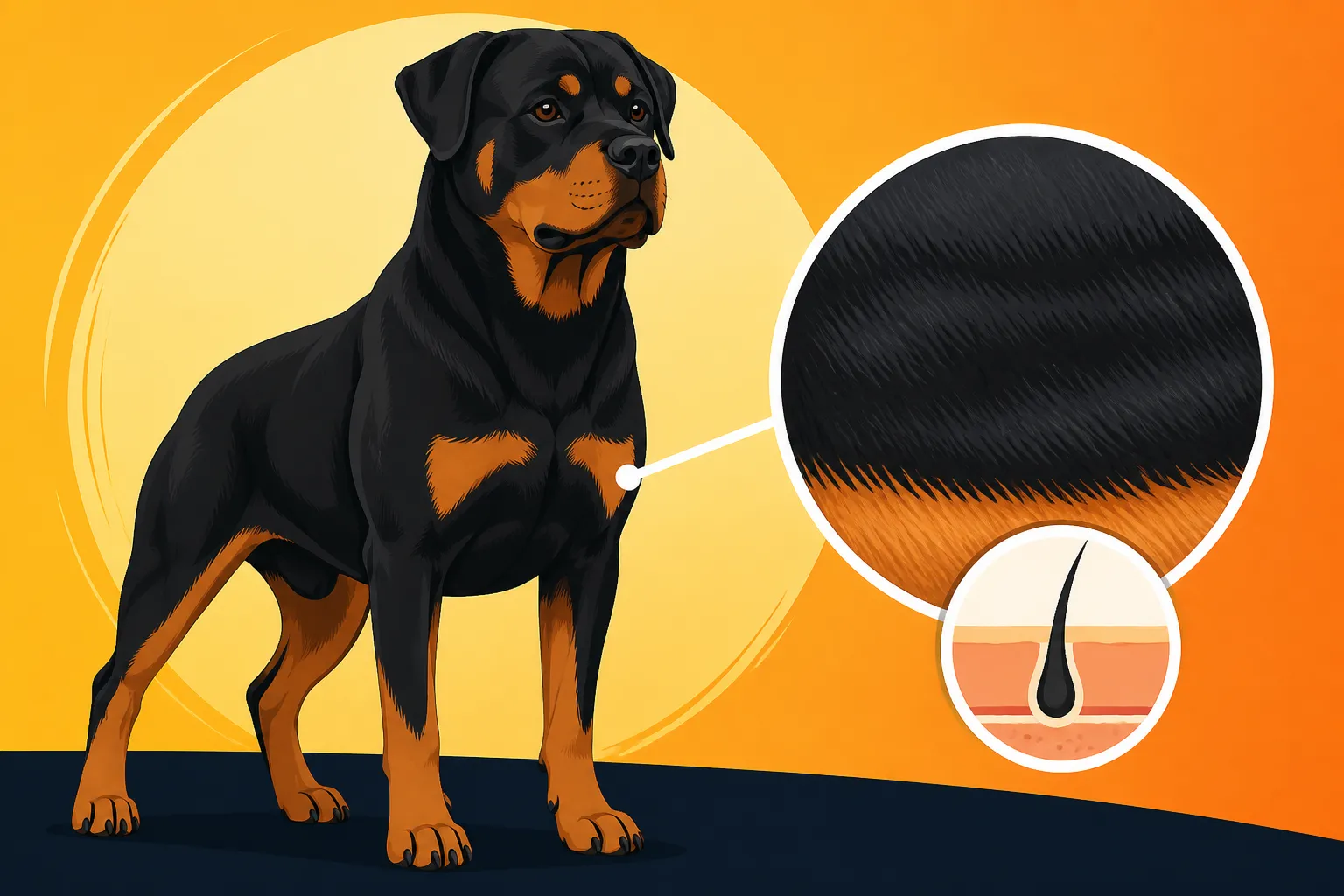
The Coat Length the Rottweiler Standard Requires
One of the first things that draws people to a Rottweiler is that sleek, powerful black and rust coat, but you might be surprised to learn there's a very specific ideal for its length and texture. If you've ever seen a Rottweiler with longer, fluffier hair and wondered if it was a "purebred," or if you're a prospective owner trying to understand the breed standard, you've come to the right place. This guide will dive deep into what the official Rottweiler coat length truly is, why it matters, and what those beautiful variations actually mean for the dogs we love.
Understanding the Official Rottweiler Coat Standard
The Rottweiler is a working breed, and every aspect of its physical makeup, including its coat, was developed with purpose. The breed standard, which describes the ideal Rottweiler, is very clear about what the coat should look and feel like. This isn't just about aesthetics; it's about functionality, protecting the dog as it performs its duties, whether that was historically herding cattle or, today, serving as a family guardian.
The Ideal: Short, Hard, and Coarse
When you read the Rottweiler breed standard from organizations like the American Kennel Club (AKC) or the Fédération Cynologique Internationale (FCI), the description of the coat is consistently precise: it should be a "double coat" that is "short, hard, and coarse." Let's break down what each of those terms really means in practice.
"Short" implies that the hair lies close to the body, without any significant length or feathering. You shouldn't see any long tufts around the ears, on the legs, or on the tail. Think of it as a low-maintenance haircut – neat and tidy, designed to shed water and dirt easily. This short length was crucial for a working dog; longer hair would pick up burrs and debris from fields, get matted, and offer less protection against rain or minor scrapes. It also dries much faster, which is a huge benefit if your dog is out in all kinds of weather.
"Hard" refers to the texture of the outer coat. It shouldn't feel soft or silky to the touch. Instead, it should have a somewhat stiff, wiry quality. Imagine running your hand over it; it has substance and resilience. This hardness contributes to the coat's protective qualities, making it more resistant to superficial cuts and scrapes when a dog is moving through brush or working in rough terrain.
"Coarse" is another descriptor for the texture, often used in conjunction with "hard." It implies a lack of fine, delicate strands. The hairs are robust and strong, designed to be durable rather than luxurious. This coarseness helps the coat shed water and provides a barrier against external elements, making the dog more comfortable in various weather conditions, from chilly mornings to light rain. It's a utilitarian coat, built for resilience and function above all else. Any deviation from this short, hard, coarse standard is considered a fault, meaning it's less than ideal according to the breed's established blueprint.
The Double Coat Explained
Beyond its length and texture, the Rottweiler's coat is specifically described as a "double coat." This means it has two distinct layers, each serving a vital purpose. Understanding this double-layered structure helps you appreciate the functional genius behind the Rottweiler's coat.
The outer coat, often called the "guard coat," is what you primarily see and touch. As we discussed, this layer is short, hard, and coarse. Its main job is to protect the dog from external elements: rain, snow, dirt, and minor physical abrasions. The stiffness of the individual hairs helps them stand slightly away from the body, creating a natural protective barrier. This outer coat is relatively waterproof and helps dirt slide off, keeping the dog cleaner and drier in working conditions. This outer coat is what gives the Rottweiler its characteristic sleek appearance and The Rottweiler Coat and Its Rust Markings are clearly defined against it.
Beneath this protective outer layer lies the undercoat. This layer is much softer, denser, and often a bit woolly in texture. Its primary function is insulation. The undercoat traps air close to the dog's body, helping to regulate its temperature. In cold weather, it keeps the dog warm, and surprisingly, in hot weather, it can help dissipate heat and protect against sunburn by providing an extra layer of defense. The density of the undercoat can vary quite a bit depending on the climate where the dog lives and the season. A Rottweiler living in a colder region or during winter will typically have a much thicker, more pronounced undercoat than one in a warmer climate or during the summer months. It's perfectly normal for a Rottweiler to "blow" its undercoat twice a year, resulting in quite a bit of shedding as it prepares for seasonal changes. Rottweiler Undercoat Shedding Twice a Year is a good read if you're seeing more hair than you expected!
Variations and "Faults" in Rottweiler Coat Length
While the breed standard paints a clear picture of the ideal Rottweiler coat, nature sometimes has other plans. You'll occasionally encounter Rottweilers whose coats deviate from this standard, and it's important to understand why and what these variations mean. These deviations are often referred to as "faults" within the context of showing or breeding, but they certainly don't diminish the dog's value as a beloved family member.
The "Long-Coated" or "Fluffy" Rottweiler
Perhaps the most noticeable and talked-about deviation from the standard is the "long-coated" or "fluffy" Rottweiler. Instead of the short, close-lying hair, these dogs possess a coat that can be medium to long in length, often with feathering on the legs, tail, and ears, giving them a much softer, almost plush appearance.
This longer coat is the result of a recessive gene. This means that both parent Rottweilers must carry this specific gene for a puppy to inherit the long coat. If only one parent carries it, or neither does, none of the puppies will have a long coat, although they might still be carriers themselves. Because it's a recessive trait, two perfectly standard-coated Rottweilers can produce a fluffy puppy if both happen to carry the gene.
While undeniably adorable to many, a long-coated Rottweiler is considered a disqualifying fault in the show ring. This means such a dog cannot compete in conformation events under official breed standards. From a breeding perspective, reputable breeders actively try to avoid producing long-coated puppies by DNA testing their breeding stock to ensure they don't unwittingly pair two carriers.
It's crucial to understand that a long coat doesn't make a Rottweiler any less "purebred" in terms of ancestry, nor does it affect their temperament or health in most cases. These dogs are just as intelligent, loyal, and loving as their standard-coated counterparts. They simply have a different "hairstyle." Owners of fluffy Rottweilers often find them to be wonderful companions, though they might require a bit more grooming attention than their short-coated relatives to prevent matting, particularly behind the ears and on the 'pants' on their hind legs. For more on this specific variation, check out Long-Coated Rottweilers and Whether They Register.
"Wavy" or "Soft" Coats
Beyond length, the texture of the coat can also be a point of deviation from the standard. While the ideal is a hard and coarse outer coat, some Rottweilers might have coats that are noticeably "wavy" or "soft" to the touch, sometimes even described as "woolly."
A "wavy" coat might have a slight ripple or curl, particularly over the back or rump. This isn't the tight curl you'd see on a Poodle, but a definite lack of the smooth, straight lie of the ideal coat. A "soft" or "woolly" coat, on the other hand, lacks the harshness and coarseness. It feels finer and more delicate, more akin to a sheep's fleece than a protective guard dog's outer layer. This can sometimes be due to an overly dense or prominent undercoat that overshadows the guard hairs.
These textural variations, like the long coat, are considered faults in the show ring because they deviate from the functional purpose of the coat. A soft or wavy coat may not shed water as effectively, might be more prone to collecting debris, and could offer less physical protection against the elements compared to the desired hard, coarse coat.
If your Rottweiler has a coat that leans towards wavy or soft, it usually doesn't impact their health or happiness. However, it might mean slightly different grooming needs. A softer coat can sometimes be more prone to matting, especially if the dog has a thick undercoat. Regular brushing becomes even more important to maintain coat health and prevent tangles. Regardless of these minor variations, the core of owning a Rottweiler remains the same: providing a loving home, consistent training, and good health care.
Practical Implications of Non-Standard Coats
Owning a Rottweiler with a non-standard coat, whether it's long, wavy, or soft, doesn't change the fundamental joy of having such a loyal and intelligent companion. However, it's realistic to acknowledge that these coat types can come with some practical differences, mostly related to grooming and maintenance.
For a "fluffy" or long-coated Rottweiler, the most immediate implication is often increased grooming time. While standard Rottweiler coats are relatively low-maintenance, a longer coat is more susceptible to matting, especially in high-friction areas like behind the ears, armpits, and under the tail. Owners might find themselves needing to brush their long-coated Rottweiler several times a week, or even daily during heavy shedding seasons, to prevent uncomfortable mats and tangles. You'll likely need specialized tools like a good pin brush and a slicker brush, perhaps even a dematting rake, which you can easily find on platforms like Chewy. This extra grooming isn't just for looks; matted fur can pull on the skin, cause irritation, and even hide skin infections if left untended.
Similarly, softer or woollier coats can also be more prone to collecting burrs and debris from the outdoors, and may not dry as quickly as a hard, coarse coat. This means if your dog loves to roll in the mud or swim, you might face a longer clean-up process. You might also notice that these coats shed a bit differently. While all Rottweilers shed, a longer or softer coat might seem to produce more visible hair in the home simply because the individual hairs are longer. Rottweiler Hair Everywhere and How to Manage It is a helpful resource for any Rottweiler owner dealing with shedding.
It’s important for owners to embrace their Rottweiler for who they are, coat and all. While a non-standard coat may preclude your dog from the show ring, it doesn't diminish their ability to be an excellent family pet or working dog in other capacities. The deep love and bond you share with your Rottweiler will always outweigh any cosmetic differences in their fur. Just be prepared to adjust your grooming routine accordingly, perhaps investing in a sturdy grooming table and a good selection of brushes and shampoos, many of which are readily available through retailers like Chewy, to keep your furry friend comfortable and looking their best.
Why Coat Length Matters for the Breed (and You!)
The breed standard isn't arbitrary; it reflects centuries of selective breeding aimed at producing a dog capable of specific tasks. For the Rottweiler, its coat is far more than just a pretty covering – it's a functional tool that served its ancestors well in their demanding roles. Understanding this historical context helps us appreciate why a particular coat type is considered ideal for the breed.
Historical Function and Protection
The Rottweiler's origins trace back to the Roman Empire, where their ancestors were drover dogs, accompanying legions across the Alps, guarding cattle and protecting valuable supplies. Later, in the German town of Rottweil, they became known as "Metzgerhunds," or butcher dogs, continuing their work driving cattle to market and guarding the butcher's takings. These were not pampered house pets; they were rugged, outdoor working dogs.
In such a role, the coat was vital for protection. The short, hard, coarse outer coat, combined with a dense undercoat, acted as a natural suit of armor. Imagine a dog out in varied weather conditions – from the chill and damp of the European mountains to dusty market towns. A coat that was too long would become waterlogged, heavy, and a magnet for burrs and mud. A short, hard coat, by contrast, sheds water efficiently, dries quickly, and is less likely to snag on thorns or brush. It offers a surprising degree of protection against minor nicks and scratches that a working dog might encounter daily. The density of the undercoat provided crucial insulation against both cold and heat, regulating the dog's body temperature as it moved or rested outdoors.
So, when the standard emphasizes a short, hard, coarse double coat, it's directly referencing this historical function. It's the coat that allowed the Rottweiler to thrive in its demanding working life, offering resilience and protection against the elements and the rigors of its duties. It's a testament to the breed's utilitarian heritage, where every physical trait had a purpose.
Grooming and Maintenance Expectations
One of the great advantages of the standard Rottweiler coat is its relatively low-maintenance nature. While no dog is truly "wash and wear," the short, hard coat definitely makes life easier for most owners compared to breeds with long, flowing, or curly coats that require professional grooming.
For a standard Rottweiler, regular brushing is essential, but it’s usually not an arduous task. A good rubber curry brush or a shedding blade, easily found on Chewy, works wonders to remove loose hair, especially during their seasonal shedding periods. You might find yourself needing to brush a couple of times a week, increasing to daily during the two major "blows" of their undercoat, usually in spring and fall. This helps manage the shedding (yes, they do shed, quite a bit actually!) and keeps their coat healthy and shiny. For more in-depth advice, consider reading Grooming a Rottweiler That Sheds More Than It Looks.
Bathing a Rottweiler is also less complicated than with a long-haired breed. Their short coat means less shampoo and conditioner are needed, and drying time is significantly reduced. A simple, good quality dog shampoo will suffice. Be sure to rinse thoroughly to avoid skin irritation. Bathing a Rottweiler Without Stripping the Coat Oil offers good tips on maintaining coat health.
Beyond brushing and bathing, regular nail trims and ear cleaning are the main other grooming tasks. Their drop ears can sometimes trap moisture, making regular checks and gentle cleaning important to prevent infections. You can find excellent ear cleaning solutions and nail trimmers on Chewy.
Compared to the potential matting issues of a long-coated Rottweiler or the intricate care of other breeds, the standard Rottweiler coat is quite practical. It's a coat designed for functionality and ease of care, fitting the breed's no-nonsense, working temperament. Knowing these expectations helps you budget your time and resources for your dog's care, ensuring they always look and feel their best.
What to Look For in a Puppy (and Reputable Breeders)
If you're considering bringing a Rottweiler puppy into your home, understanding the coat standard becomes crucial, especially if you have aspirations for conformation showing or responsible breeding in the future. Even if you're looking for a family pet, selecting a puppy from a reputable breeder who adheres to the standard can give you peace of mind regarding the dog's overall health and genetic background.
When you visit a breeder, observe the puppies' coats carefully. Even at a young age, you should be able to feel the difference between a truly short, hard coat and one that has a noticeable softness or longer length. Run your hand over the puppies' backs. Does the fur lie flat and feel a bit coarse, or is it plush and fluffy? The hair on their legs and tail should be short, with no signs of feathering. Sometimes, a "fluffy" gene can be tricky to spot in very young puppies, but a responsible breeder will be transparent about their breeding stock's genetic testing.
A truly reputable breeder will be well-versed in the breed standard and committed to upholding it. They won't intentionally breed dogs that produce long-coated or otherwise faulty coats, and they certainly won't try to pass off a non-standard coat as "rare" or "special" for an inflated price. Instead, they'll openly discuss coat genetics and should be able to show you genetic test results for their breeding dogs that indicate whether they carry the long-coat gene.
Here's what a good breeder will offer regarding coat and genetics:
- Transparency: They'll tell you if any of their lines carry the long-coat gene, even if the parents themselves have standard coats.
- Genetic Testing: They should be able to provide proof that their breeding dogs have been DNA tested for various genetic conditions relevant to Rottweilers, including the long-coat gene. This helps ensure that you’re getting a puppy that meets breed expectations and has minimized health risks.
- Health Clearances: Beyond coat genetics, reputable breeders will have all the necessary health clearances for the parents, such as OFA certifications for hips and elbows, cardiac clearances, and eye certifications. This commitment to health ensures you're bringing home a robust puppy. For more on what to look for, check out The Five Clearances a Rottweiler Breeder Must Have.
- Puppy Contracts: Their contracts will often specify that puppies with disqualifying faults (like a long coat) are sold as pet-only and not for breeding.
Don't be afraid to ask questions. A good breeder welcomes inquiries and is eager to educate prospective owners. Your goal is to find a healthy, well-socialized puppy from parents with excellent temperaments and conformation that aligns with the breed's functional standard, even if you just want a loving companion.
Living with a Rottweiler, Regardless of Coat
Ultimately, the depth of your bond with your Rottweiler will never be determined by the length or texture of their fur. Whether your dog perfectly matches the breed standard or boasts a unique, fluffier coat, their heart, loyalty, and personality are what truly make them a cherished member of your family. As a veteran blogger, I've seen countless Rottweilers of all coat types thrive in loving homes, proving that character outweighs aesthetics every single time.
Beyond the Standard: Love and Care
It's easy to get caught up in the specifics of breed standards, especially when researching a breed as majestic as the Rottweiler. However, it's vital to remember that these standards are blueprints for ideal specimens, primarily for the show ring and maintaining breed integrity. For the vast majority of Rottweiler owners, what matters most is the dog looking up at them with those intelligent, dark eyes, the soft lean into their leg, and the confident presence that fills their home.
A Rottweiler with a longer or softer coat is just as much a Rottweiler as one with a picture-perfect standard coat. They will still possess that inherent self-assured aloofness, that powerful build, and that deep devotion to their family. The core traits that define the breed – intelligence, loyalty, a strong guarding instinct, and a need for consistent training and socialization – remain unchanged. A "fluffy" Rottweiler will still require the same dedication to training before it outweighs you, the same careful socialization, and the same commitment to exercise as its standard-coated siblings.
So, if you find yourself with a Rottweiler whose coat isn't quite "textbook," please know that you haven't received a lesser dog. You've simply been blessed with a Rottweiler that expresses a recessive gene! Focus your energy on providing exceptional love, consistent training, and preventative healthcare. These are the pillars of a long, happy life for any Rottweiler, regardless of their fur length.
Practical Tips for All Rottweiler Coats
No matter what kind of coat your Rottweiler sports, a few universal care principles will ensure they stay healthy, comfortable, and looking their best. These aren't just for show dogs; they're for every beloved family companion.
1. Regular Brushing is Key: Even the shortest, coarsest coats benefit from regular brushing. It helps remove loose hair, distribute natural skin oils for a healthy shine, and allows you to check for any skin issues, lumps, or parasites. For a standard coat, a rubber curry brush or a shedding blade is excellent. For a longer or softer coat, you might need to add a slicker brush and a wide-toothed comb to your arsenal to prevent mats. Many of these tools are available from reputable retailers like Chewy.
2. Quality Nutrition: A healthy coat starts from within. Feed your Rottweiler a high-quality dog food appropriate for their life stage (puppy, adult, senior) and activity level. Look for ingredients that support skin and coat health, such as omega fatty acids. Sometimes, a dull coat can be a sign of underlying issues like Thyroid Disease Behind a Rottweiler's Dull Coat, so always consult your vet if you notice significant changes.
3. Routine Bathing: How often you bathe depends on your dog's lifestyle. A Rottweiler who spends a lot of time outdoors rolling in mud will need more frequent baths than a couch potato. Use a gentle, dog-specific shampoo to avoid stripping natural oils. For larger dogs, a dog wash station or even just a shower sprayer in a walk-in shower can make the process easier.
4. Check for Skin Issues: Rottweilers, with their dense coats, can sometimes develop skin irritations or hot spots, especially during warmer months or if they have allergies. During grooming, always perform a quick skin check, feeling for any bumps, redness, or tenderness. Pay special attention to areas like their armpits, groin, and under their ears. Rottweiler Allergies and Recurring Skin Infections is a common concern that proactive checks can help with.
5. Paw and Nail Care: Don't forget their paws! Trim nails regularly to prevent them from getting too long, which can cause discomfort and lead to orthopedic issues. Inspect paw pads for cracks, cuts, or foreign objects, especially if your dog walks on rough terrain. You can find robust clippers and paw balms made for large breeds at Chewy.
By consistently applying these practical care tips, you'll ensure your Rottweiler, regardless of their individual coat characteristics, remains a vibrant, happy, and well-groomed companion for many years to come.
Disclaimer
This article is for general informational purposes only and does not constitute professional advice. Laws, prices and regulations vary by location and change over time. Consult a qualified professional for guidance on your specific situation.