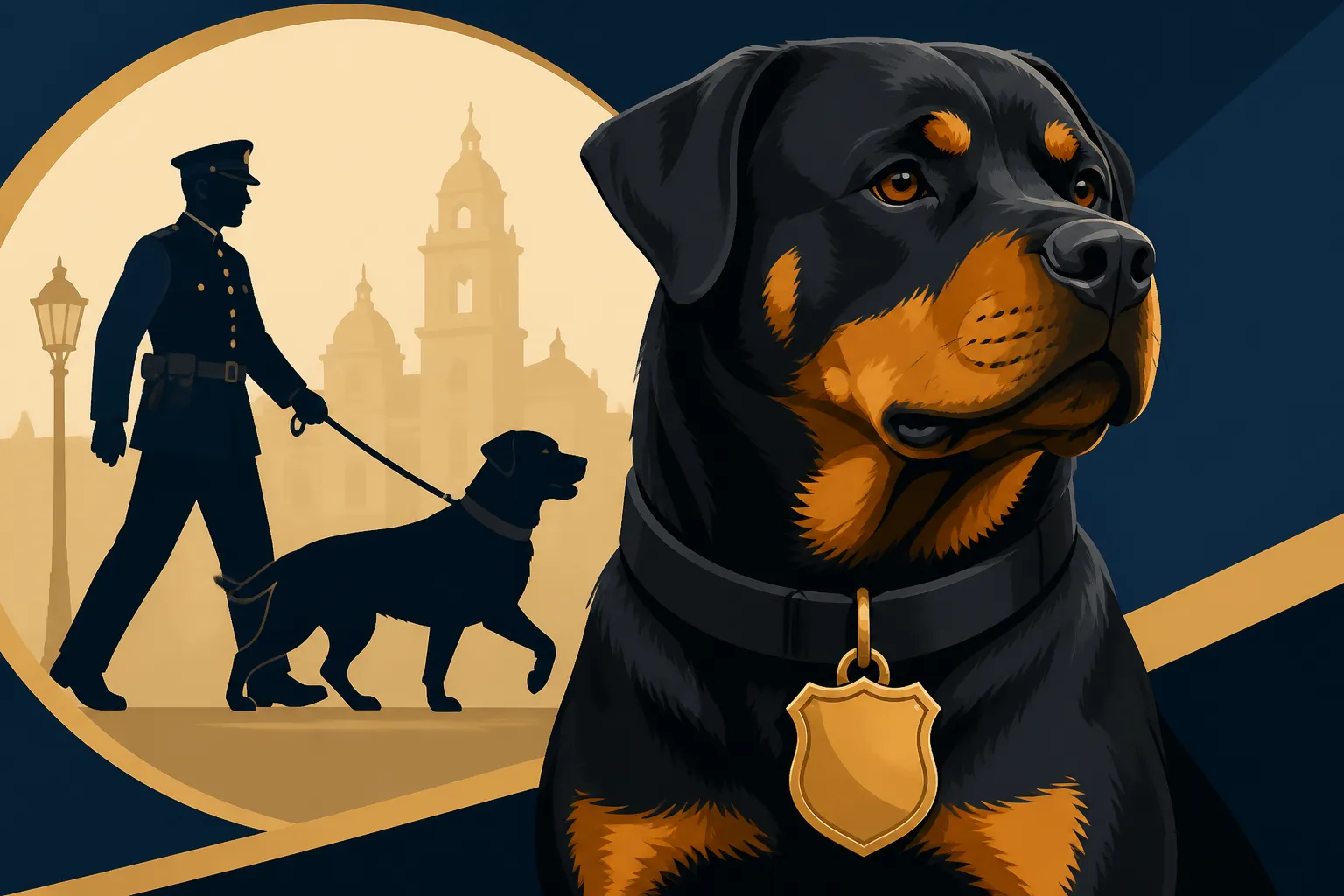
Rottweilers Among the Earliest Police Dogs
It's easy to look at a Rottweiler today and see a family companion, maybe even a bit of a couch potato once they're out of their rambunctious puppy phase. But for many years, these powerful, intelligent dogs were at the forefront of canine law enforcement, blazing a trail long before other breeds became commonplace. If you've ever wondered about the history behind their stoic presence and natural protective instincts, this guide will delve into the Rottweiler's remarkable legacy as one of the earliest and most effective police dogs.
The Rottweiler's Natural Aptitude for Police Work
The traits that make a Rottweiler such a devoted family member and impressive guard dog are precisely what made them invaluable to early police forces. Their physical prowess, combined with a keen mind and an inherent protective drive, created a canine partner capable of handling demanding situations.
The Guarding Instinct and How It Translates
From their earliest days as drover dogs in the town of Rottweil, these dogs were tasked with protecting livestock and money from thieves and predators. This history ingrained a deep-seated guarding instinct that manifests as a natural wariness of strangers and a strong desire to keep their people and property safe. In a police context, this translates directly into an animal that is alert, observant, and naturally inclined to deter threats. They don't need extensive training to want to guard; it's part of their genetic makeup. They possess a quiet confidence, often assessing a situation before acting, which is a hallmark of a good working dog. This "wait-and-see" approach, often described as Rottweiler Temperament and That Self-Assured Aloofness, allows them to distinguish between a casual passerby and a genuine threat.
Temperament Traits That Lend Themselves to Duty
Beyond their guarding instinct, Rottweilers possess a stable and confident temperament. They are intelligent and eager to please their handler, making them highly trainable. This isn't a breed that cracks under pressure; instead, they often thrive on having a job to do. Their loyalty is unwavering, forming a strong bond with their primary handler, which is crucial in a working partnership where lives can depend on mutual trust. This solid temperament also includes a certain level of fearlessness without being reckless. They are bold when necessary, but always with a controlled intensity. When you think about The Rottweiler Guarding Instinct and How to Shape It, you realize it's about channeling these inherent traits into constructive, disciplined behavior, rather than trying to create something that isn't already there.
Physical Attributes for Demanding Roles
Let's be honest, a Rottweiler is a formidable presence. Their strong, muscular build and powerful jaws are undeniable assets in police work. They were bred for endurance, capable of long days moving cattle, which translates to stamina needed for patrols, pursuits, and extended searches. Their dense, short coat, while shedding more than you'd expect, is relatively low maintenance and hardy, allowing them to work in various weather conditions. A well-conditioned Rottweiler is a picture of strength and agility, capable of immense bursts of speed and power when required, making them incredibly effective in apprehending suspects or providing a deterrent presence. Just consider their size; a male Rottweiler can easily weigh over a hundred pounds, providing substantial physical authority.
Early Adoption: Rottweilers on the Beat
The journey of the Rottweiler from a butcher's dog to a police dog is a fascinating testament to their adaptability and inherent working drive. They weren't just "given a job;" they excelled at it, demonstrating a versatility that few other breeds could match at the time.
From Drover to Defender: The Historical Shift
Before their police days, Rottweilers were primarily What Rottweil Made the Metzgerhund Do. They were known as "Rottweiler Metzgerhund" (Rottweil butcher's dogs) and were vital for herding cattle, guarding money from sales, and pulling carts of meat. The industrial revolution, with the advent of railways, diminished the need for drover dogs, almost leading to the breed's extinction, as explored in The 1800s Ban That Put Rottweilers Out of Work. However, their inherent protective instincts and strength didn't go unnoticed. As communities grew and the need for organized law enforcement emerged, these same qualities made the Rottweiler a natural choice for police work, shifting their role from protecting livestock and cash to safeguarding citizens and enforcing laws. This was a crucial turning point for the breed, giving them a new purpose and ensuring their survival.
Rottweilers in German Police Forces
It was in Germany, their homeland, where Rottweilers first truly shined as police dogs. Around the turn of the 20th century, police forces were experimenting with different breeds to find the ideal canine partner. The Rottweiler, with its combination of strength, intelligence, and unwavering loyalty, quickly proved its worth. They were officially recognized as police dogs in 1910. Imagine these powerful dogs patrolling the streets, providing a reassuring presence and a formidable deterrent. They were used for tracking, guarding, and apprehending suspects, often working alongside human officers in demanding urban and rural environments. Their quiet confidence and formidable presence were exactly what was needed for maintaining order and addressing crime in a rapidly changing society.
The Global Spread of Their Policing Role
Once Rottweilers proved their mettle in German police forces, word of their capabilities spread. Other European countries and eventually police departments across the globe began to take notice. As more law enforcement agencies sought out effective K9 partners, the Rottweiler became a popular choice, exported for their working ability. While breeds like the German Shepherd later gained immense popularity, Rottweilers had already laid significant groundwork, proving the value of a strong, intelligent, and dedicated canine in police work. Their adoption into police departments globally underscored a broader recognition of their potential beyond their traditional roles, establishing them as a serious contender in the burgeoning field of police dog training. Today, while not as prevalent in standard K9 units, their historical impact is undeniable, and you'll still find them in specialized roles, continuing their legacy.
Training and Shaping a Police Rottweiler
Turning a naturally protective and powerful Rottweiler into a disciplined police dog requires a unique blend of firm but fair training, extensive socialization, and specialized skill development. It's not about suppressing their instincts, but rather channeling them for the greater good.
Socialization and Desensitization for Public Service
For any dog destined for public service, especially one with a strong guarding instinct, early and thorough socialization is absolutely critical. A police Rottweiler needs to be confident and stable, not reactive or fearful. This means exposing them to a vast array of sights, sounds, people, and environments from a young age, well before they fully grow into their massive size. This isn't just about meeting other dogs in a park; it's about being comfortable with loud sirens, bustling crowds, sudden movements, and unfamiliar situations. The goal is to create a dog that is bomb-proof, focusing on their handler despite distractions, and making sound judgments. Think about the careful process described in Socializing a Rottweiler Puppy Properly – for a police dog, this process is even more intensive and specialized, involving simulated real-world scenarios to ensure they can perform under pressure.
Obedience and Control Under Pressure
A police dog's effectiveness hinges entirely on its obedience and control. Commands must be instant and absolute, regardless of distractions or high-stress situations. For a Rottweiler, known for their strong will and intelligence, this means meticulous, consistent training from day one. They must master commands like "stay," "come," "heel," and "down" to a degree far beyond what a pet needs. Crucially, they must be able to "out" or release a bite on command, which is a life-saving skill. This level of precision requires a highly skilled handler and methods that build immense trust and respect. While many owners might struggle with Rottweiler Leash Manners at a Hundred Pounds, police dog training elevates this to an art form, ensuring the dog remains a controlled asset. Durable training gear, like robust leashes and harnesses available from retailers like Chewy, are essential for handling these powerful animals during intensive training sessions.
Developing Specialized Skills
Beyond basic obedience, police Rottweilers were, and still are, trained in a variety of specialized skills. This includes tracking suspects by scent, searching for evidence or missing persons, and, of course, protection work. Developing these skills involves breaking down complex tasks into manageable steps, using positive reinforcement, and gradually increasing the difficulty. For tracking, they learn to ignore tempting environmental distractions and focus solely on the human scent. For protection, they are taught to identify a threat, engage, and release on command, all while maintaining absolute control. This sophisticated training ensures that their natural drives are harnessed for specific, job-related tasks, making them invaluable partners in law enforcement.
Why Some Police Forces Moved Away (and Why They're Still Valued)
While Rottweilers were pioneers in police work, their widespread use in standard K9 patrol units has seen a decline over the decades. However, this doesn't diminish their historical importance or their continued relevance in certain roles.
The Rise of Other Breeds in K9 Units
Over time, other breeds, most notably the German Shepherd and later the Belgian Malinois, gained prominence in police and military K9 units. These breeds often offered a slightly different package of traits, sometimes favoring extreme speed, agility, or a specific type of drive that became desirable for evolving police tactics. For instance, the German Shepherd's versatility and strong bite work made it a favorite, while the Malinois's intense drive and athleticism have made it a top choice for more dynamic, high-stakes operations. This shift wasn't a judgment on the Rottweiler's capabilities, but rather a reflection of changing preferences, breeding programs that focused specifically on police work, and the emergence of new candidates in the K9 field. It’s also worth noting that many K9 programs started to prioritize dogs that could be easily obtained from specialized working lines.
Misconceptions and Breed-Specific Legislation Challenges
Unfortunately, the Rottweiler's formidable appearance and protective instincts have, at times, led to misconceptions about their temperament, contributing to their reduced presence in some public-facing roles. Negative media portrayals and tragic incidents, often involving poorly bred or improperly socialized dogs, have sometimes cast a shadow over the breed's true nature. This led to an increase in How the Rottweiler Reputation Changed in the 1980s and subsequent breed-specific legislation in certain areas, which can make it logistically challenging for police departments to utilize them. Despite the efforts of responsible breeders and organizations to educate the public, these challenges have sometimes made it easier for police forces to opt for breeds less impacted by public perception or legislative restrictions, even though a well-bred and trained Rottweiler is an exceptional working dog.
Modern Roles and Enduring Utility
Despite these shifts, the Rottweiler's core strengths mean they are still valued in various working capacities, including some police and military applications. Their robust build and unwavering loyalty make them excellent candidates for personal protection roles, and their keen intelligence makes them suitable for detection work, such as sniffing out narcotics or explosives. You might not see them as frequently in patrol cars, but they continue to excel in more specialized K9 assignments where their strength, calm demeanor, and incredible scenting ability are paramount. Many still believe Whether Rottweilers Are Genuinely Good Guard Dogs, and for good reason—their innate protective drive, when properly channeled, remains unmatched. For owners of a Rottweiler, ensuring they have appropriate mental stimulation, perhaps with interactive toys or puzzle feeders from Chewy, helps keep their intelligent minds sharp and engaged, honoring their working heritage.
| Trait / Role | Rottweiler Contribution | Other K9 Breeds (e.g., German Shepherd, Malinois) |
|---|---|---|
| Physical Presence | Imposing, muscular, powerful, substantial weight | Athletic, agile, lighter frame, quick |
| Guard Instinct | High, natural, inherent desire to protect property and people | High, often trained for specific bite work |
| Temperament | Calm, confident, self-assured, discerning, intelligent, loyal | High drive, eager to please, intense, sometimes more overtly reactive |
| Endurance | High, historically bred for long days of herding and carting | High, bred for speed and stamina |
| Bite Work | Extremely powerful jaw, full-mouth grip | Strong, precise, often focused on specific targets |
| Tracking Ability | Excellent, methodical, focused scent work | Excellent, often faster, high-energy tracking |
| Socialization Needs | Critical and extensive for public roles, to ensure stability | Critical, to channel high drive and reduce reactivity |
| Historical Role | Among the earliest recognized police dogs (early 1900s) | Gained prominence later (mid-1900s onwards) |
Disclaimer
This article is for general informational purposes only and does not constitute professional advice. Laws, prices and regulations vary by location and change over time. Consult a qualified professional for guidance on your specific situation.