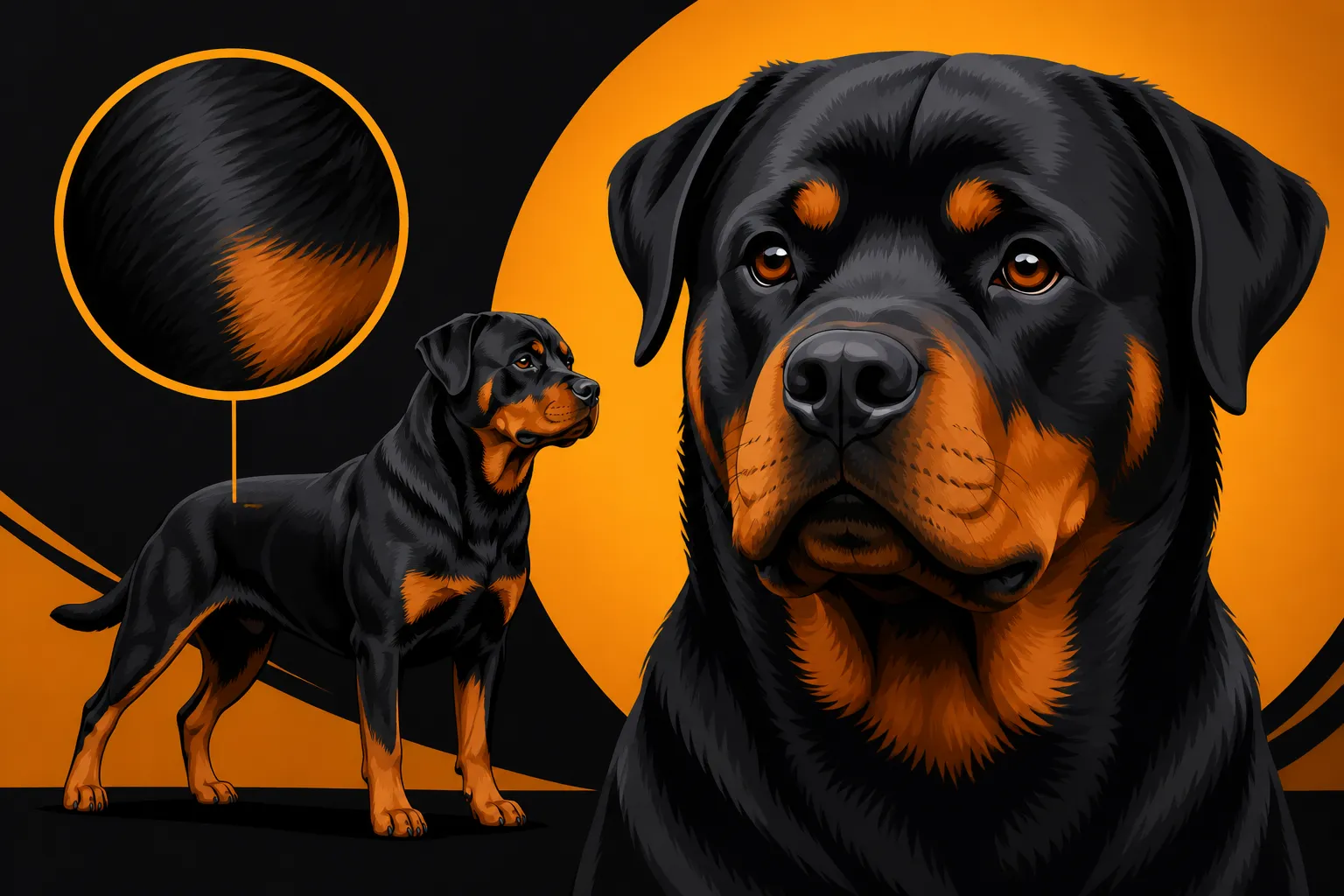
The Black and Rust Rottweiler Coat
When you picture a Rottweiler, a very specific image probably comes to mind: that striking black coat, deeply contrasted by rich rust-colored markings. It’s an iconic look, instantly recognizable, and it’s one of the defining features of the breed. But beyond just being beautiful, that coat tells a story of the breed's history, its genetics, and even its daily care. This guide will dive deep into everything you ever wanted to know about the Rottweiler's signature black and rust coat, exploring why it looks the way it does, what variations exist, and how to keep it in prime condition.
The Iconic Black and Rust Coat Standard
The Rottweiler's coat isn't just a matter of preference; it's a fundamental part of the breed standard, which is essentially the blueprint that guides responsible breeding and judging. For centuries, this specific coloration has been considered the hallmark of a true Rottweiler. It's not just about aesthetics, but about maintaining the breed's historical integrity and ensuring certain genetic traits are preserved.
What the Breed Standard Dictates
If you've ever looked at the official description of a Rottweiler, you'll see very precise language about its coat. The standard universally calls for a black coat with clearly defined rust or mahogany markings. It's not just "black and tan" – there's a richness, a depth, to the rust color that sets it apart. The coat itself should be short, coarse, and dense, lying flat to the body. Beneath that outer layer, there's often a soft undercoat, especially noticeable in cooler climates, which adds another layer of protection. This isn't a fluffy coat, nor should it be wavy or excessively long. The texture and color are integral to the breed's working heritage, offering protection from the elements and a distinct appearance. Any deviation from this, like a different base color or indistinct markings, is typically considered a fault in the show ring. The Rottweiler Name as It Appears in German Records carries some of this historical specificity.
Why This Coloration is More Than Just Aesthetic
The black and rust coloration of the Rottweiler isn't just about looking good; it serves a historical purpose tied to the breed's origins. Imagine the original "Metzgerhund" or "butcher's dog" in Rottweil, Germany. These dogs were pulling carts, driving cattle, and guarding livestock and money in all kinds of weather. A black coat is a fantastic solar absorber, helping them warm up quickly in the cool, often damp European climate. The dense undercoat provides insulation, keeping them comfortable. While the rust markings might seem purely decorative now, in low light or at a distance, these distinct points could have helped handlers identify their dogs. Beyond practicality, this consistent appearance solidified the breed's identity through generations. It was a visual shorthand for "Rottweiler" long before formal breed clubs existed, and maintaining it helps preserve the lineage.
Understanding the Genetics Behind the Rottweiler Coat
Ever wondered why Rottweilers almost always look the same, even though dogs come in a kaleidoscope of colors and patterns? It all comes down to genetics, a fascinating dance of dominant and recessive genes that determine everything from eye color to coat pattern. For the Rottweiler, a specific combination of genes results in that unmistakable black and rust pattern we all know and love.
The Dominant Black Gene
At the heart of the Rottweiler's coat color is the dominant black gene. In dog genetics, there's a gene locus called "K" (for dominant Black), and the variant that causes solid black is dominant. This means that if a dog inherits even one copy of this dominant K gene, it will display a solid black base coat, provided other genes don't override it. In Rottweilers, this K gene is essentially fixed, ensuring that deep, rich black that forms the canvas for their markings. It’s one of those genetic constants that breeders rely on to produce puppies that meet The Rottweiler Coat and Its Rust Markings standard. This solid black foundation is what gives the Rottweiler its powerful, imposing presence.
The Tan Point Gene (Agouti Series)
Now, here's where the rust comes in. While the Rottweiler has the dominant black gene, it also carries a specific pattern gene from the "A" (Agouti) locus, known as the "tan point" gene (at). This gene allows for the expression of tan, or in the Rottweiler's case, rust or mahogany markings, only in specific areas of the body. Think of it like a stencil on that black canvas. The 'at' gene dictates where the pigment should not be black, allowing the rust color to show through. Without this gene, a Rottweiler would be entirely black, lacking its distinctive points. It’s the specific interplay between the dominant black and the tan point genes that creates the classic Rottweiler pattern.
How Recessive Genes Can Cause "Faults"
While the black and rust pattern is dominant in Rottweilers, there are always recessive genes lurking in the background of any breed's genetic code. Sometimes, these recessive genes can pop up, leading to coat variations that are considered "faults" according to the breed standard. For instance, some Rottweilers might carry a recessive red gene, which, if inherited from both parents, can result in a red or mahogany-colored dog without the black. Other recessive genes might lead to white markings, or even a dilute color. These aren't necessarily health issues, but they do mean the dog doesn't conform to the accepted visual standard. Reputable breeders work diligently to understand and manage these genetic possibilities through careful pairing and health clearances, aiming to produce dogs that fully embody the breed's characteristics. Understanding this helps explain Rottweiler Markings That Fault in the Ring.
The Specific Placement and Characteristics of Rust Markings
The beauty of the Rottweiler's coat isn't just that it has rust markings, but where those markings are placed and their specific characteristics. The breed standard is quite particular about this, describing a very precise pattern that has been consistent for generations. These markings aren't random splashes of color; they're strategically located to enhance the dog's powerful and intelligent expression.
Markings on the Muzzle and Cheeks
One of the most defining features of the Rottweiler's rust markings is their presence on the muzzle and cheeks. You'll see two distinct rust spots above the eyes, often referred to as "pips," which give the dog an almost inquisitive or thoughtful look. These aren't huge patches but well-defined spots that stand out against the black. On the muzzle, the rust color typically extends from the nose, down the sides, and along the lower jaw, creating a distinctive mask-like effect. This coloration often includes a stripe on each cheek and under the lower jaw. The contrast here truly emphasizes the powerful structure of the Rottweiler's head and its intelligent, attentive gaze.
Spots Above the Eyes
Those striking rust spots above each eye are perhaps one of the most endearing and recognizable features of a Rottweiler's face. These are typically quite small, clear, and distinct, not bleeding into the black fur around them. They truly act like eyebrows, giving the dog a range of expressions that owners adore. When a Rottweiler looks at you, those rust "eyebrows" seem to convey curiosity, concern, or even a hint of mischief. Beyond their charm, these spots are a critical aspect of the breed standard, and their absence or improper placement can be considered a fault. They complete the picture of the Rottweiler's noble and self-assured expression, which is part of its Rottweiler Temperament and That Self-Assured Aloofness.
Chest, Legs, and Under the Tail
Moving beyond the face, the rust markings continue in a symmetrical pattern down the dog's body. On the chest, you'll find a triangular or crescent-shaped patch of rust. This marking should be well-defined and not extend too far up the neck or too far down the belly. On the legs, the rust color typically appears on the inside of the forelegs, extending down to the paws. The rear legs will have rust on the inner thighs, often continuing down the hocks and paws, giving the appearance of rust "stockings." Even the toes usually have distinct rust markings. Finally, a small patch of rust is present under the tail, which should be clearly delineated from the black. The totality of these markings creates a balanced, aesthetically pleasing pattern that has been carefully preserved in the breed for generations.
Common Coat Variations and "Faults"
While the breed standard clearly defines the Rottweiler's coat as black with rust markings, nature sometimes throws a curveball. These variations are important to understand, especially if you're interested in showing or breeding, but even for pet owners, knowing what's considered typical versus a "fault" can be helpful. It doesn't make a dog any less of a Rottweiler, but it does mean it might not meet the strict visual criteria for competition.
Red Rottweilers and Why They Aren't Standard
Occasionally, you might hear whispers of a "red Rottweiler" or see a dog that looks suspiciously like a Rottweiler but with a reddish-brown base coat instead of black. These dogs exist, but they are not recognized by any major breed club as true Rottweilers, and they cannot be registered or shown as such. The red coloration is typically the result of a recessive gene at the B (brown) locus being present in both parents. If a dog inherits two copies of this recessive gene, the black pigment is converted to brown or red. While genetically interesting, this color is a disqualifying fault in the breed standard because the black coat is so fundamental to the Rottweiler's identity. It's a prime example of Whether a Red Rottweiler Is Recognized at All – the answer is usually no, for good reason.
Too Much or Too Little Rust Markings
The placement and size of the rust markings are also carefully detailed in the breed standard. Problems arise when there's either too much or too little rust, or when the markings are blurred and indistinct rather than sharp. For example, if the rust markings are too extensive, covering large areas of the legs, chest, or face, it's considered a fault. Conversely, if the markings are very sparse, faded, or absent in key areas like the 'pips' above the eyes, that also deviates from the ideal. The richness of the rust color is also important; it should be a deep mahogany or tan, not a pale, washed-out yellow or cream. These variations, while not affecting the dog's health or personality, are noted in the show ring as they depart from the established ideal of the Rottweiler Markings That Are Too Large to Pass.
White Markings and Their Significance
Another common coat "fault" in Rottweilers is the presence of white markings. You might see a small patch of white on the chest, a few white hairs on the toes, or even a white blaze on the face. While a tiny patch on the chest might be tolerated in some contexts if it's minimal, any significant white marking is considered a serious fault and would disqualify a dog from conformation shows. Genetically, white markings often come from the S (spotting) locus, and while some breeds are celebrated for their white patches, for the Rottweiler, it's a deviation. It’s believed that the ideal working dog should have a solid, uniform protective coat, and white patches were seen as undesirable. These aren't common in well-bred lines, as breeders try to eliminate them from their breeding programs to maintain the standard.
Long-Coated Rottweilers
This is perhaps one of the most striking "faults" you might encounter: a long-coated Rottweiler. Instead of the short, dense coat specified by the standard, these dogs have medium-to-long, often wavy or fluffy hair. Like red coloration, long coats are caused by a recessive gene. If both parents carry this gene and pass it on, their puppy can have a long coat. While these dogs are still purebred Rottweilers and can make wonderful pets, they are completely disqualified from showing and breeding according to standard guidelines. The long coat changes the breed's silhouette and functional appearance, making it a significant departure from the original intention. It's a visual surprise for many, but a well-known genetic possibility. You can read more about it in Long-Coated Rottweilers and Whether They Register.
Caring for the Rottweiler's Double Coat
Even though the Rottweiler has a short coat, it's far from maintenance-free. That dense double coat, especially the undercoat, requires regular attention to stay healthy, clean, and manage shedding. A well-cared-for coat isn't just about looks; it's a reflection of your dog's overall health and comfort. Neglecting it can lead to skin issues, excessive shedding, and even discomfort for your big companion.
Managing Seasonal Shedding
Oh, the shedding! Many people assume a short-haired dog won't shed much, but Rottweiler owners quickly learn otherwise. Rottweilers are double-coated, meaning they have a coarser outer coat and a softer, insulating undercoat. They typically "blow" their undercoat twice a year, usually in spring and fall, in preparation for the changing seasons. During these periods, you'll find a significant amount of fur around your home. Regular brushing, at least a few times a week, is absolutely essential. Using a good deshedding tool, like a FURminator or an undercoat rake you can find on Chewy, can make a huge difference in removing loose hair before it ends up on your furniture. Consistent grooming during these shedding cycles will save you a lot of vacuuming and keep your dog's skin breathing freely. Undercoat Rakes for a Short Rottweiler Coat is a good resource here.
Bathing and Brushing Routine
Beyond seasonal shedding, a regular bathing and brushing routine is key to maintaining a healthy Rottweiler coat. While Rottweilers don't need daily brushing, a thorough brushing session 2-3 times a week is ideal, even outside of heavy shedding periods. This helps distribute natural oils, removes loose hair and dirt, and stimulates circulation to the skin. When it comes to bathing, over-bathing can strip essential oils, leading to dry, itchy skin. A good rule of thumb is to bathe your Rottweiler every 1-3 months, or when they're visibly dirty. Use a shampoo specifically formulated for dogs, as human shampoo can be too harsh. After bathing, make sure to dry them thoroughly, especially the dense undercoat, to prevent skin irritation. For more tips on this, check out Bathing a Rottweiler and How Often.
Protecting the Coat and Skin Health
A healthy coat starts from within. Good nutrition plays a huge role in the luster and condition of your Rottweiler's coat. Ensure they are on a high-quality dog food that provides essential fatty acids like Omega-3 and Omega-6, which are vital for skin and coat health. Some owners even add fish oil supplements to their dog's diet, after consulting with their vet. Beyond diet, regular parasite prevention is crucial. Fleas, ticks, and mites can wreak havoc on a dog's skin, leading to itching, irritation, and secondary infections that affect coat quality. Keep an eye out for any dry patches, excessive scratching, or dullness, as these can be early indicators of underlying health issues like Rottweiler Allergies and Recurring Skin Infections or even Thyroid Disease Behind a Rottweiler's Dull Coat.
The Rottweiler Coat and Its Role in Temperature Regulation
The Rottweiler's coat isn't just about looking good; it's a highly functional piece of equipment designed to help them regulate their body temperature in various climates. As a working breed, Rottweilers needed a coat that could offer protection whether they were herding cattle in the heat of the day or guarding property on a chilly night. Understanding how their black and rust coat, particularly its density, plays into this is vital for ensuring your Rottweiler's comfort and safety.
Heat Absorption in a Black Coat
It's a common observation: black cars get hotter in the sun than white cars. The same principle applies to your black-coated Rottweiler. Black fur absorbs more solar radiation than lighter colors, which means a Rottweiler can heat up quite quickly when exposed to direct sunlight, especially on a warm day. This is why vigilance is crucial during summer months or in warmer climates. They can be more prone to overheating than dogs with lighter coats. Providing ample shade, access to fresh, cool water, and limiting strenuous exercise during the hottest parts of the day are non-negotiable. Many owners find cooling mats or vests helpful to keep their black-coated friends comfortable. Pay close attention to signs of overheating, which can quickly become an emergency. Summer Heat and a Black Rottweiler Coat provides more detailed advice on this.
Winter Warmth from the Undercoat
While the black outer coat helps with heat absorption, the Rottweiler's dense undercoat is its secret weapon against the cold. This soft, woolly layer acts as an insulating barrier, trapping warm air close to the dog's body and keeping the cold out. This is particularly noticeable in Rottweilers living in regions with distinct seasons. As winter approaches, their undercoat often thickens, preparing them for colder temperatures. This natural insulation means that while they might not enjoy being out in extreme blizzards, they are generally quite tolerant of cooler weather, even snow, for reasonable periods of time. However, this doesn't mean they're impervious to the cold. In very harsh conditions or for prolonged outdoor exposure, even a Rottweiler will need shelter to prevent hypothermia. Always be mindful of your specific climate and your individual dog's tolerance.
Common Skin and Coat Issues in Rottweilers
Despite their robust appearance, Rottweilers can be susceptible to a range of skin and coat issues. Recognizing the signs early and understanding their potential causes is crucial for keeping your dog comfortable and healthy. These problems can range from simple irritations to indicators of more serious underlying health conditions, making regular checks during grooming an important part of their overall care.
Allergies and Skin Infections
Rottweilers, like many breeds, can suffer from allergies, which often manifest as skin problems. These can be environmental (pollen, dust mites), food-related, or contact allergies. Symptoms include excessive scratching, licking, chewing at paws, red skin, hot spots, or recurring ear infections. This constant irritation can break the skin barrier, leading to secondary bacterial or yeast infections, which cause more itching, odor, and hair loss. If you notice your Rottweiler constantly scratching or developing inflamed patches, a vet visit is essential to diagnose the allergy and establish a treatment plan. This might involve diet changes, medication, or environmental management. Don't underestimate the misery allergies can cause; they're a common reason for Rottweiler Allergies and Recurring Skin Infections.
Dry Skin and Dull Coat
A dull, dry, or flaky coat can be a sign that something isn't quite right with your Rottweiler. Sometimes, it's as simple as an inadequate diet lacking essential fatty acids. If your dog's food isn't providing the right nutrients, their skin and coat will often be the first to show it. Over-bathing with harsh shampoos can also strip natural oils, leading to dryness. However, dry skin can also point to underlying medical conditions like hypothyroidism or other metabolic imbalances. If dietary changes and proper bathing techniques don't resolve the issue, a veterinary check-up, including bloodwork, might be necessary to rule out health problems. A healthy, shiny coat is usually a good indicator of a healthy dog.
Hypothyroidism and Coat Changes
Hypothyroidism, an underactive thyroid gland, is a condition that Rottweilers can be predisposed to, and one of its hallmark signs often appears in the coat. Dogs with hypothyroidism might develop a dull, dry, brittle coat, experience hair loss (especially on the flanks or tail, often called a "rat tail"), and sometimes exhibit increased shedding. Their skin can become thickened and pigmented. Other symptoms can include weight gain (despite no change in diet), lethargy, and an intolerance to cold. If you notice these coat changes alongside other concerning symptoms, a vet visit for blood tests to check thyroid levels is highly recommended. The good news is that hypothyroidism is typically manageable with daily medication, and with treatment, you'll often see a remarkable improvement in both coat quality and overall vitality. This is a key reason for Rottweiler Hypothyroidism and Unexplained Weight Gain.
The Cultural Significance of the Rottweiler's Appearance
The Rottweiler's black and rust coat is more than just a genetic trait; it’s intrinsically linked to the breed's history, its working roles, and even the way it’s perceived by the public. From the fields of Rottweil to modern family homes, this distinctive appearance has played a significant role in shaping the breed's identity and reputation.
Historical Context and Function
To truly appreciate the Rottweiler's appearance, we have to go back to its roots. These dogs, known as "Metzgerhund" or "butcher dogs" in Rottweil, Germany, had serious work to do. They were cattle drovers, cart pullers, and guardians. Imagine a Rottweiler at the market, guarding the butcher's money bag tied around its neck. That imposing black and rust coat served several practical functions. The dark color provided camouflage in the twilight hours of guarding, and the dense, short coat offered protection from the elements, as well as from the occasional brush with cattle. This was not a delicate, ornamental breed; its appearance was shaped by its utility. The uniform coat pattern helped identify them quickly, an important trait for busy working dogs. The consistency of their appearance, as detailed in What Rottweil Made the Metzgerhund Do, speaks volumes about their focused breeding for function.
Public Perception and Misconceptions
Unfortunately, the Rottweiler's powerful build and striking black and rust appearance, combined with sometimes sensationalized media portrayals, have led to some public misconceptions. For many, the black and rust coat instantly signals a "guard dog," which can evoke both respect and fear. While Rottweilers do possess natural guarding instincts, their temperament is far more nuanced than many assume. They are intelligent, loyal, and often affectionate with their families. However, their imposing looks, including that intense gaze highlighted by the rust "eyebrows," can be misread by strangers. This makes responsible ownership and early socialization paramount. The public often sees the strong, serious dog, without understanding the loving, goofy personality that lies beneath that formidable coat. It’s a constant challenge for Rottweiler owners to educate others and help them see beyond the stereotype to the wonderful dogs they truly are.
A Comparative Look at Rottweiler Coat Standards
To truly appreciate the Rottweiler's black and rust coat, it's helpful to see it in context against what's considered ideal and what are recognized variations or faults. This table summarizes the key aspects of the standard coat versus common deviations, offering a quick reference for understanding what makes a Rottweiler's coat correct in the eyes of breed enthusiasts and judges.
| Feature | Ideal Rottweiler Coat (Standard) | Common Variations/Faults |
|---|---|---|
| Base Color | Solid, lustrous black | Red, brown, or diluted black (blue/isabella) |
| Marking Color | Rich rust or mahogany, clearly defined | Pale tan, yellow, cream, or faded rust |
| Marking Placement | Specific, symmetrical spots: muzzle, cheeks, eye pips, chest, legs, under tail | Blotchy, indistinct, too extensive, or missing in key areas |
| Coat Length | Short, coarse, dense, lying flat to the body | Long, wavy, fluffy (long coat gene) |
| Undercoat | Present, especially in cooler climates, not visible through outer coat | Absent, too sparse, or excessively thick and visible |
| White Markings | None, or minimal white hairs on chest (not acceptable for show) | Any significant white patch on chest, feet, or face |
| Texture | Coarse, hard to the touch | Soft, silky, woolly |
The Lifelong Journey with Your Rottweiler's Coat
Understanding your Rottweiler's coat is truly a lifelong journey. From the moment you bring home a fluffy little puppy with those distinct rust points, you're embarking on years of care, observation, and appreciation for this magnificent animal. Their coat will change slightly over time, perhaps thickening with age, or showing more pronounced shedding patterns as seasons turn.
As a Rottweiler owner, you become attuned to the subtle messages their coat sends. A dull coat might signal a dietary need, while excessive scratching could be an early warning of allergies or even internal issues. The beauty of their black and rust goes beyond mere aesthetics; it's a testament to centuries of careful breeding that focused on utility, resilience, and a distinctive identity.
Embracing the regular grooming, understanding the genetic nuances, and being mindful of how their coat impacts their comfort in different climates are all part of being a responsible Rottweiler parent. Whether you’re simply enjoying a snuggle on the couch with your dog, or you’re out on a walk where their impressive appearance turns heads, that iconic black and rust coat is a fundamental part of the Rottweiler experience. Keep them brushed, well-fed, and loved, and their coat will reflect the care and devotion you pour into them every single day.
Disclaimer
This article is for general informational purposes only and does not constitute professional advice. Laws, prices and regulations vary by location and change over time. Consult a qualified professional for guidance on your specific situation.