Slow Feeder Bowls That Hold a Rottweiler Ration
If you've ever watched your magnificent Rottweiler inhale their meal in what feels like mere seconds, leaving a clean, licked-dry bowl behind, you know that pang of worry. It's not just messy; it's a genuine health concern. This guide is here to walk you through why that fast eating habit is risky for large breeds like ours and, more importantly, how slow feeder bowls designed to hold a Rottweiler's generous ration can transform mealtime into a safer, more enriching experience.
The Alarming Reality of Fast Eating for Your Rottweiler
It's tempting to think a fast eater is a happy eater, but for a Rottweiler, speed at the food bowl can quickly turn from a minor nuisance into a critical emergency. Our big, deep-chested dogs are particularly susceptible to certain conditions that are directly exacerbated by gulping food and air. Understanding these risks is the first step toward creating a safer eating environment for your beloved companion.
Understanding Bloat and Its Connection to Rapid Ingestion
The biggest, scariest risk associated with a Rottweiler eating too fast is Gastric Dilatation-Volvulus, or GDV, more commonly known as bloat. This isn't just an upset tummy; it's a life-threatening condition where the stomach fills with gas, food, and fluid, and then twists upon itself. When the stomach twists, it cuts off blood supply and prevents gas from escaping, leading to rapid deterioration. The deep chest of a Rottweiler makes them predisposed to this terrifying event.
When a Rottweiler eats rapidly, they don't just consume food; they swallow a significant amount of air. This trapped air is a major contributing factor to the initial distension of the stomach. Imagine your dog finishing their meal in under a minute, then looking a bit uncomfortable, maybe trying to burp or retch without success. Those are classic signs. The urgency of bloat cannot be overstated; time is literally measured in minutes when this occurs. Early intervention is absolutely critical, but prevention is always the best approach. You'll want to be familiar with Recognizing Bloat in a Rottweiler so you can act fast if needed.
Other Digestive Issues Stemming from Speedy Eating
Beyond the looming threat of bloat, rapid eating can lead to a host of other unpleasant, though less immediately fatal, digestive problems for your Rottweiler. Think about it: when we rush our own meals, we often end up with indigestion. It's no different for our dogs, whose digestive systems are designed for a more measured pace.
One common issue is simple indigestion, leading to gas, burping, and sometimes even vomiting. If your Rottweiler frequently vomits undigested food shortly after eating, it's a clear sign they're eating too fast. This means their body isn't properly breaking down the food, which can lead to poor nutrient absorption over time. They might be getting all their Daily Calories for a Hundred Twenty Pound Rottweiler, but if those nutrients aren't absorbed, it's not doing them much good. Another concern is an increased risk of choking. A Rottweiler attempting to swallow large chunks of food without adequate chewing can easily aspirate food into their lungs, which can cause pneumonia. It's a chain reaction, where one seemingly small habit can have multiple, serious consequences for their health and well-being.
Selecting the Ideal Slow Feeder Bowl for Your Rottweiler
So, you're convinced. A slow feeder bowl is a must-have. But standing in the pet store aisle, or scrolling through pages on Chewy or Amazon, you might feel overwhelmed by the sheer number of options. For a robust breed like a Rottweiler, you can't just pick any pretty bowl. You need something durable, effective, and appropriately sized for their substantial appetite and powerful jaws.
Material Matters: Durability and Safety
When it comes to selecting a slow feeder, the material is crucial, especially for a large, strong dog like a Rottweiler. You need something that can withstand their enthusiastic eating habits and occasional rough play.
- Stainless Steel: Often considered the gold standard for dog bowls, stainless steel is durable, easy to clean, and resistant to bacteria. Many slow feeder designs now incorporate stainless steel inserts or entire bowls with maze-like patterns. They're heavy enough not to slide around easily (though non-slip bottoms are still a bonus), and they won't leach chemicals into your dog's food. They also hold up incredibly well to chewing, which is a consideration for some younger, more destructive Rottweilers.
- Ceramic: While aesthetically pleasing and heavy, ceramic bowls can be brittle. A dropped ceramic bowl or even one nudged too hard against a hard floor could chip or crack, creating sharp edges that pose a safety hazard. If you choose ceramic, ensure it's a high-quality, heavy-duty option, and inspect it regularly for damage.
- Heavy-Duty Plastic: Many slow feeders are made from plastic, but not all plastics are created equal. Look for BPA-free, food-grade plastic that is robust and thick. Cheaper, thin plastics can be easily chewed or cracked by a strong Rottweiler, potentially leading to ingestion of plastic pieces or making the bowl unusable. Brands often specify "heavy-duty" or "chew-resistant" for a reason – this is what you need.
- Silicone Inserts: Sometimes you'll find slow feeders with silicone inserts or mats. While silicone is generally safe and flexible, the challenge with a Rottweiler is ensuring the insert stays firmly in place within a larger bowl. If it can be easily pulled out and chewed, it's not going to be effective or safe. These are often best for moderate chewers or for adding to an existing, larger bowl.
Design and Challenge Level for Optimal Slowing
The effectiveness of a slow feeder bowl lies in its design. The goal is to make it harder for your Rottweiler to scoop up large mouthfuls of food, forcing them to work around obstacles.
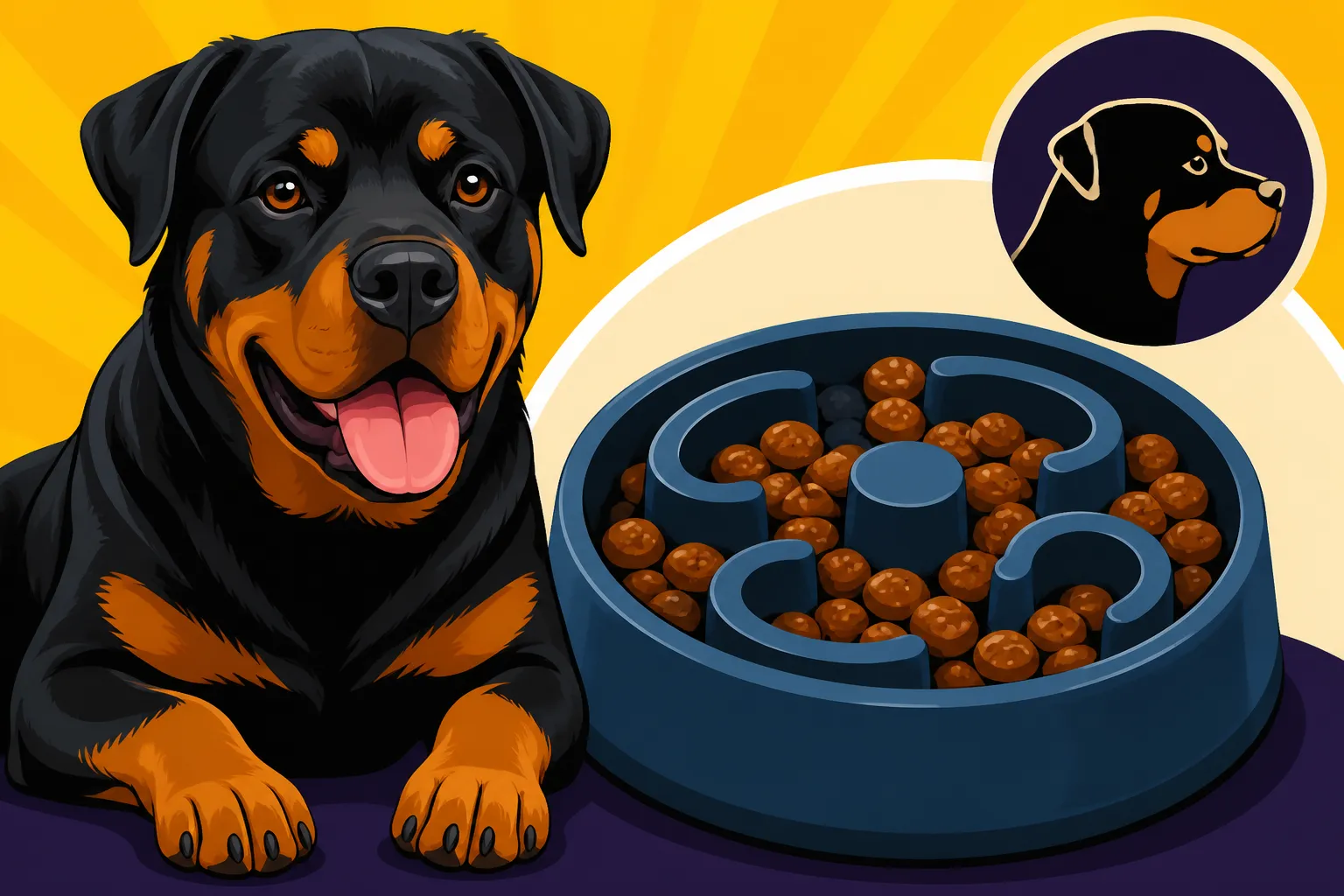
- Maze and Ridge Designs: These are the most common types. They feature various patterns of ridges, humps, or valleys that break up the feeding surface. Some are simple, with gentle curves, while others are complex, with deep, winding paths. For a Rottweiler, you generally want a design that offers a good level of challenge. A too-simple design might only slow them down for a few extra seconds, which isn't enough. Look for designs that truly force them to lick and nibble, rather than just scoop. Some bowls have designs specifically engineered for large snouts, making it accessible yet challenging.
- Interactive Pillars or Fins: A variation on the maze, some bowls feature small, upright pillars or soft, flexible fins. These force the dog to eat around each individual piece of food, increasing the time it takes. These can be particularly good for dogs who tend to push their food around with their nose before eating.
- Adjustable Difficulty: A few innovative designs allow you to adjust the difficulty, which can be great for puppies transitioning to adult eating or for senior dogs who might struggle with overly complex patterns. While not as common for the largest bowls, it's a feature worth noting if you find one.
When browsing on sites like Amazon, pay attention to reviews from other large dog owners. They can offer invaluable insights into whether a particular design truly slows down a determined eater.
Here's a quick comparison of common slow feeder types:
| Slow Feeder Type | Material Examples | Challenge Level | Cleaning Ease | Best For |
|---|---|---|---|---|
| Maze/Ridge Bowl | Stainless Steel, Hard Plastic | Medium to High | Moderate | Most Rottweilers, preventing bloat |
| Silicone Insert | Food-grade Silicone | Low to Medium | Easy | Adding to existing bowls, less aggressive eaters |
| Puzzle Feeder | Hard Plastic | High (requires more thought) | Moderate to Hard | Mental enrichment, very fast eaters |
Integrating a Slow Feeder into Your Rottweiler's Routine
Getting a slow feeder bowl is one thing; successfully integrating it into your Rottweiler's daily life is another. Rottweilers are smart, and some can be surprisingly adept at figuring out how to beat a new system. It takes a little patience and consistency, but the benefits for their health are well worth the effort.
Introducing the Bowl and Monitoring Progress
The first time you present the new slow feeder bowl, your Rottweiler might look at it with a mix of confusion and indignation. They're used to easy access! Don't be surprised if they paw at it, try to flip it, or stare at you as if to say, "Where's my real bowl?"
Start by using their regular kibble in the new bowl. For the very first few meals, you might even put a small, highly appealing treat in some of the harder-to-reach areas to encourage them to explore. Supervise them closely during these initial meals. You want to see if they adapt, if they get frustrated, or if they find a "cheat code" to still eat too fast. The goal is a noticeable increase in meal duration – from seconds to several minutes, ideally 10-15 minutes or more for a full meal. If they're still vacuuming it down, the bowl might not be challenging enough, or they might need more encouragement. You can also try Splitting a Rottweiler's Ration Across the Day into two smaller meals, each served in the slow feeder, to manage volume and aid digestion.
Consistency and Long-Term Success
Consistency is the absolute key to making a slow feeder a permanent, beneficial part of your Rottweiler's routine. Once you've introduced it, stick with it for every meal. Don't alternate between the slow feeder and a regular bowl, as this will only confuse your dog and reinforce their old habits.
Over time, your Rottweiler will learn that this is simply how they eat now. They'll adjust their technique, becoming more patient and methodical. It's not just about physical slowing; it's also about mental engagement. Eating from a slow feeder provides a form of Rottweiler Enrichment Beyond Walks, making mealtime a little puzzle to solve. This mental stimulation can be just as important as the physical benefits, especially for an intelligent breed like the Rottweiler. Make sure to also remember How Long to Wait After a Rottweiler Meal Before Exercise to further reduce bloat risk.
Beyond the Bowl: Complementary Strategies for Slower Eating
While a slow feeder bowl is a fantastic tool, it's not the only way to encourage slower eating habits in your Rottweiler. Combining a slow feeder with other strategies can provide an even more comprehensive approach to digestive health and mealtime enrichment.
Harnessing the Power of Puzzle Toys and Snuffle Mats
For an even higher level of mental engagement, or as an alternative for a portion of their meal, consider puzzle toys and snuffle mats. These can be particularly good for giving your Rottweiler a "job" during mealtime, tapping into their natural foraging instincts.
- Puzzle Toys: These come in various forms, from simple treat-dispensing balls to more complex contraptions requiring your dog to manipulate parts to release kibble. Many puzzle toys, especially those built for a Rottweiler's size and strength, are designed to hold an entire meal's worth of kibble. They force your dog to use their nose, paws, and brain to get their food piece by piece. This extends mealtime significantly and provides immense mental enrichment. A solid, durable puzzle toy can turn a five-minute meal into a twenty-minute activity.
- Snuffle Mats: These are fabric mats with dozens of folds and pockets where you can hide kibble. Your Rottweiler has to sniff and root around to find each piece, mimicking natural foraging behavior. Snuffle mats are excellent for slowing down eating, are generally easy to clean (many are machine washable), and offer a sensory experience. Just make sure the fabric is durable and doesn't shed easily, as you don't want your Rottweiler ingesting loose threads. Both Chewy and Amazon offer a fantastic selection of Puzzle Feeders Built for a Rottweiler and snuffle mats.
Hand Feeding and Scatter Feeding for Engagement
Sometimes, the simplest methods are also the most effective, and they offer a wonderful bonding opportunity. These methods might not be practical for every single meal, but they can be invaluable for training and occasional enrichment.
- Hand Feeding: This involves feeding your Rottweiler their meal, or a portion of it, piece by piece from your hand. It's incredibly slow, allows for gentle interaction, and reinforces your bond. You can use this time to practice basic obedience cues – "sit," "stay," "down" – making mealtime a training session. This is particularly useful for puppies, helping them learn bite inhibition and patience.
- Scatter Feeding: If you have a clean, safe outdoor space or a designated indoor area (like a tile floor or a large, washable mat), you can scatter your Rottweiler's kibble across the surface. This forces them to walk around, sniff, and pick up individual pieces, dramatically slowing down their eating and engaging their natural scenting abilities. It's a low-effort, high-reward method for mental and physical stimulation. Just ensure the area is free of anything they shouldn't ingest, like toxic plants or small objects. Even if your Rottweiler eats a premium fresh food like those from Ollie, the delivery method can always be enhanced for better health outcomes.
Regardless of the method you choose, the goal remains the same: to slow down your Rottweiler's eating, reduce the risks associated with gulping, and make mealtime a more mindful and enjoyable experience for them. It's an investment in their long-term health and happiness.
Disclaimer
This article is for general informational purposes only and does not constitute professional advice. Laws, prices and regulations vary by location and change over time. Consult a qualified professional for guidance on your specific situation.