The 1901 Revival of the Rottweiler
The 1901 revival of the Rottweiler rescued the German working dog breed from near extinction when numbers dwindled.

The 1901 revival of the Rottweiler rescued the German working dog breed from near extinction when numbers dwindled.

The history of the Rottweiler reveals how the breed nearly vanished after railways replaced traditional cattle droving.

Nineteenth century railway expansion banned cattle droving, stripping Rottweilers of their traditional working roles and nearly causing extinction.
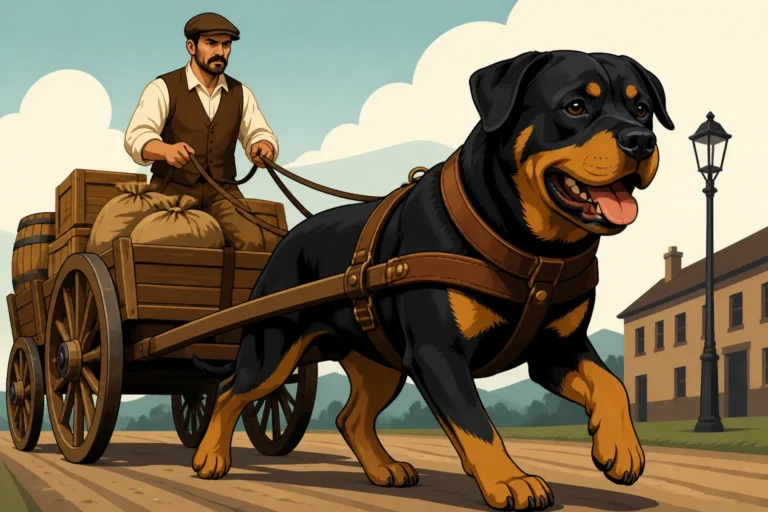
Rottweilers hauled heavy meat carts and drove cattle for butchers in Germany long before railways transformed regional trade.

Rottweiler ancestors guarded money for butchers and Roman drovers by carrying coin pouches around their necks.

The Rottweiler history as a Metzgerhund explains how Roman drover dogs became working butcher dogs in Germany.

Rottweil served as a major medieval cattle market where Roman drover dogs shaped the origin of the Rottweiler.

Roman drover dogs traveled with legions across Europe, herding livestock and protecting supplies before reaching Germany.

The Mastiff-type ancestors of the Rottweiler include ancient Roman Molossus dogs that managed livestock for marching legions.

Roman drover dogs protected livestock herds and supplied food for the marching legions across the ancient empire.