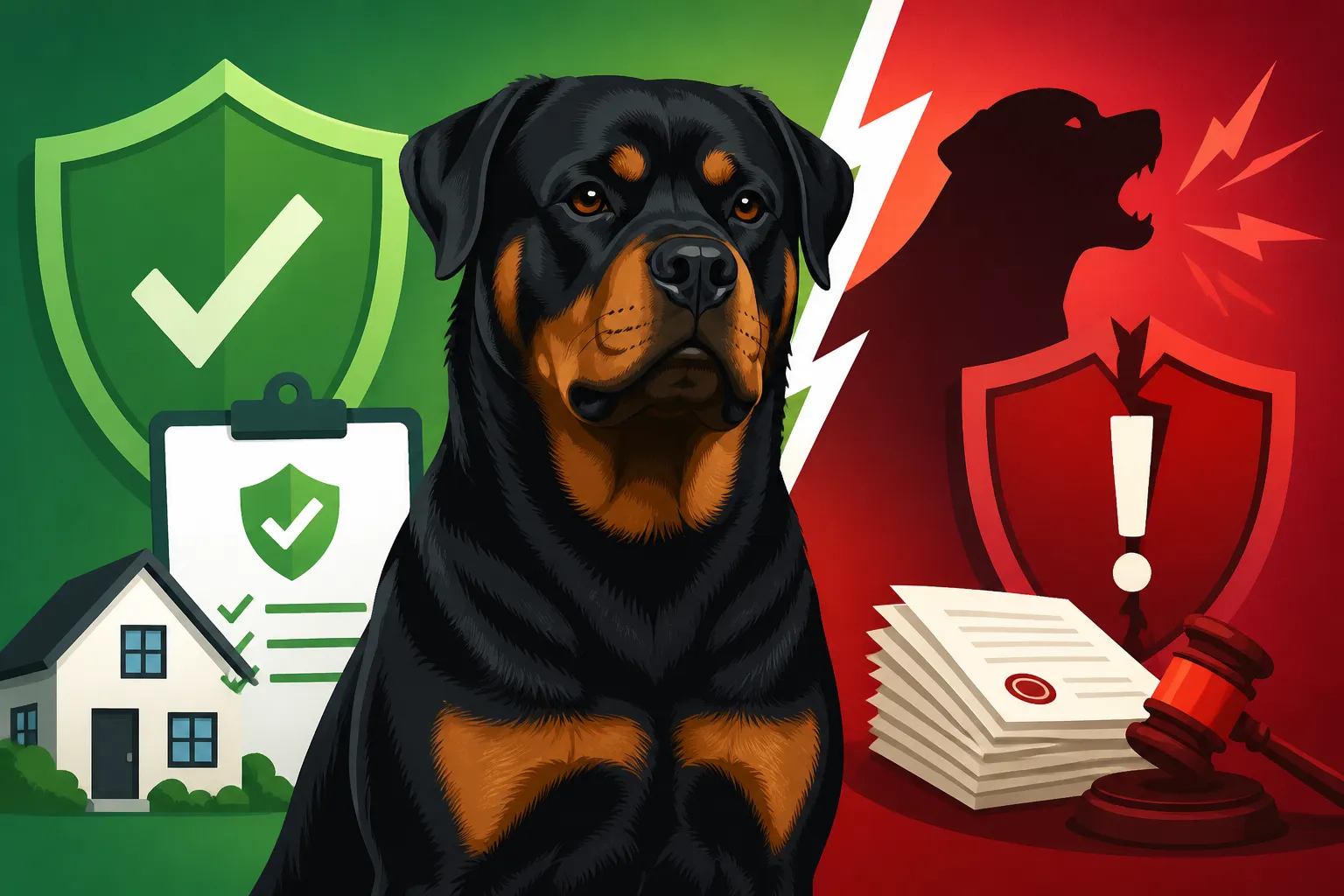
The $200 to $600 a Rottweiler Adds to Liability
Bringing a Rottweiler into your life is an incredible experience, but it also comes with a unique set of responsibilities and sometimes, unexpected financial considerations. One of the biggest surprises many new Rottweiler owners face is how their beloved companion can impact something as seemingly unrelated as homeowners or renters insurance. This guide will meticulously break down how owning a Rottweiler can add anywhere from $200 to $600 (or more!) to your annual liability costs and offer strategies to navigate these expenses.
Understanding Homeowners Insurance and Your Rottweiler
It's a frustrating reality that specific dog breeds, including our wonderful Rottweilers, are often singled out by insurance companies. This isn't a judgment on your individual dog, but rather a reflection of actuarial data and public perception that can significantly affect your premiums and even your ability to get coverage.
Why Rottweilers Are Often on Restricted Breed Lists
The plain truth is that Rottweilers, along with breeds like Pit Bulls, German Shepherds, and Dobermans, frequently appear on "restricted" or "aggressive breed" lists maintained by many insurance carriers. This categorization isn't fair to the millions of well-behaved, loving Rottweilers out there, but it stems from historical statistics related to bite incidents and perceived risk. Insurance companies are in the business of assessing and mitigating risk, and unfortunately, these statistics, however skewed or generalized, play a significant role in their underwriting decisions. They view these breeds as having a higher potential for claims related to bodily injury or property damage, leading to either higher premiums, specific exclusions, or outright denial of coverage. It’s a bitter pill to swallow when you know your dog is a gentle giant, but it's the reality we face.
The Direct Impact on Your Premiums
When an insurance company identifies a restricted breed in your household, several things can happen. At best, you might see a surcharge on your existing homeowners or renters policy. This surcharge can typically range from $200 to $600 annually, depending on your location, the specific insurer, and the overall value of your policy. For instance, in states where breed restrictions are less common, the impact might be on the lower end, but in areas with a history of breed-specific legislation, the increase could be substantial. Some companies might offer to cover your home but exclude any liability claims arising from your Rottweiler. This means if your dog were ever to bite someone, your insurance wouldn't pay a dime, leaving you personally on the hook for potentially astronomical medical and legal fees. This specific exclusion is a silent trap many owners don't realize they've agreed to until it's too late.
Navigating Different Insurance Carriers
Finding a carrier willing to insure a home with a Rottweiler can feel like a game of hide-and-seek. Many major insurers, like State Farm, Allstate, and Liberty Mutual, might have more flexible policies, often evaluating dogs on a case-by-case basis rather than imposing blanket bans. They might ask for documentation of your dog's temperament, training, or even a Canine Good Citizen (CGC) certificate. However, smaller or regional carriers can be more rigid. It’s not uncommon to be turned down flat or to find that your existing policy might be non-renewed once they discover you have a Rottweiler. This can lead to a scramble to find new coverage, often at a higher rate. Don't be surprised if you have to call multiple agencies and explain your situation in detail. You might find that the best approach is to seek out independent insurance brokers who work with a variety of underwriters and can help you compare options. While pet insurance companies like Healthy Paws focus on veterinary bills, they don't typically influence homeowners liability, so you'll need separate strategies for each. Be sure to specifically ask about "Homeowners Insurance When You Own a Rottweiler" when you're shopping around.
The Financial Risk Beyond Basic Premiums
The annual premium increase is just one piece of the puzzle. The true financial risk lies in the potential for a serious incident, which can result in devastating costs that far outstrip any yearly insurance premium.
What Happens After a Bite Incident
Let's talk about the worst-case scenario. If your Rottweiler, for any reason, bites or injures someone, the financial repercussions can be staggering. Medical bills for a severe bite can quickly run into tens of thousands of dollars, especially if surgery, extensive wound care, or long-term therapy is required. Beyond medical costs, you could face legal fees, lost wages for the injured party, and even pain and suffering settlements. Without adequate liability coverage, these costs come directly out of your pocket. We're talking about figures that could easily reach hundreds of thousands, potentially bankrupting a family. Even if your Rottweiler has never shown an ounce of aggression, accidents happen. A startled dog, a child who doesn't understand boundaries, or even just misinterpreting a dog's signals can lead to an incident. This is why understanding "The Rottweiler Reputation That Reaches Insurers" is so important when considering your financial planning.
Umbrella Policies for Added Protection
For Rottweiler owners, an umbrella insurance policy isn't just a good idea; it's often an absolute necessity. An umbrella policy provides additional liability coverage beyond the limits of your homeowners, auto, and other primary policies. If a claim against you exceeds the limits of your primary homeowners policy, your umbrella policy kicks in to cover the difference, typically offering coverage in increments of $1 million or more. While your homeowners policy might have a liability limit of $300,000 or $500,000, a severe dog bite case can easily surpass that. The extra peace of mind that an umbrella policy offers is invaluable, knowing you have a safety net for situations that could otherwise destroy your financial future. The cost for a $1 million umbrella policy is usually quite reasonable, often in the range of $150-$300 per year, but having a restricted breed might influence this.
Documenting Training and Temperament
One of the most proactive steps you can take to mitigate insurance risk and potentially reduce costs is to meticulously document your Rottweiler's training and excellent temperament. This means keeping records of all training classes, especially puppy classes and advanced obedience courses. Certifications like the AKC Canine Good Citizen (CGC) are gold-standard proof of a well-behaved dog and can sometimes sway an insurer's decision. Some progressive insurance companies will consider such documentation, viewing a well-trained dog as a lower risk. It shows you're a responsible owner who has invested in your dog's behavior. Even if it doesn't directly lower your premium, having these records can be crucial if you ever need to defend your dog's character in the event of an incident. This connects directly to the importance of early and consistent training, as outlined in articles like "Rottweiler Puppy Training Through the First Year" and "Documenting Rottweiler Training for an Insurer."
Strategies for Managing Rottweiler-Related Insurance Costs
It might feel overwhelming, but there are concrete steps you can take to manage these costs and ensure you're adequately protected without breaking the bank.
Researching Insurers Before You Buy or Adopt
The absolute best time to address this issue is before you bring your Rottweiler home. Call your current homeowners or renters insurance provider and be upfront about your plans. Ask specifically about their breed restrictions and how owning a Rottweiler would affect your policy. Don't just ask if they cover "dogs"; ask about Rottweilers. If your current insurer has prohibitive policies or refuses coverage, start shopping around immediately. Look for companies known for being breed-neutral or those that evaluate individual dogs. Websites like independent insurance broker sites can sometimes help you compare multiple carriers. Being proactive prevents nasty surprises and ensures you're not left without coverage once your new family member arrives. Many folks discover they're on a restricted list after the fact, leading to frantic calls and increased stress, as described in "Rottweiler Owners Turned Down by Landlords" regarding housing, but the same applies to insurance.
The Role of Responsible Ownership and Training
Beyond just documentation, responsible ownership is the cornerstone of managing your liability risk. This means proper socialization from a young age, consistent training, and always supervising your dog, especially around strangers or children. A well-socialized and trained Rottweiler is less likely to react negatively to new situations. Early socialization, as discussed in "Socializing a Rottweiler Puppy Properly," can prevent many behavioral issues down the line. Investing in training classes is not just for good manners; it's a critical component of risk management. A dog that reliably responds to commands like "stay," "come," and "leave it" is a safer dog. Remember, even minor behavioral issues can escalate, as highlighted in "Rottweiler Behavior Problems That Start Small." Furthermore, consider the financial aspect of training. While there's a cost involved, knowing "Rottweiler Training and What the Classes Cost" upfront helps you budget for this essential investment in your dog's future and your financial security.
Exploring Alternative Insurance Solutions
If traditional homeowners insurance proves too difficult or expensive, there are a few alternative avenues to explore.
Some states or local municipalities may have fair housing laws that prohibit discrimination based on breed, which can sometimes influence insurance providers, though this is not universal. You might also look into specialized liability policies for dog owners, though these can be harder to find and may still come with breed restrictions.
Another option might be to ask if your current homeowners policy can be amended to specifically exclude coverage for dog-related incidents, then seek a standalone animal liability policy from a different carrier. This is a more complex approach but might be necessary if you face widespread denials. These standalone policies are specifically designed to cover liability related to your dog, regardless of what your homeowners policy does or doesn't cover. Some pet insurance providers, like Chewy or Ollie, offer robust pet health insurance, but standalone liability coverage is a different beast and requires careful research. Always confirm the details of coverage, including limits, deductibles, and any breed-specific exclusions.
| Insurance Scenario | Average Annual Cost Increase | Coverage Status | Risk Level for Owner |
|---|---|---|---|
| Standard Policy (No Restrictions) | $0 | Full Liability | Low |
| Policy with Breed Surcharge | $200 – $600 | Full Liability | Low-Medium (depends on claim limits) |
| Policy with Canine Exclusion | $0 – $100 | No Dog Liability | Extremely High (owner fully exposed) |
| Non-Renewal / Policy Denial | N/A (must find new policy) | No Coverage | Immediate High |
| Umbrella Policy (Added) | $150 – $300 | Excess Liability | Very Low (extra layer of protection) |
| Standalone Animal Liability | $300 – $800+ | Specific Dog Liability | Low-Medium (if comprehensive) |
It's a lot to consider, but understanding these nuances is critical for any responsible Rottweiler owner. Your goal is to find comprehensive coverage that protects your assets without penalizing you unfairly for the breed you've chosen to love.
Disclaimer
This article is for general informational purposes only and does not constitute professional advice. Laws, prices and regulations vary by location and change over time. Consult a qualified professional for guidance on your specific situation.