How Long to Wait After a Rottweiler Meal Before Exercise
It’s a question that keeps so many of us Rottweiler owners up at night: that worry about bloat, especially after a meal. You’ve just fed your beloved big dog, they’re feeling content, and then the kids want to play, or it’s time for the evening walk. Knowing how long to wait after a Rottweiler meal before exercise isn't just about good manners; it’s a critical health decision that could save their life. This guide will walk you through the specifics, explaining the risks and providing clear, actionable advice to help you manage your Rottweiler’s meal and activity schedule safely.
Understanding Bloat Risk in Rottweilers
Let's face it, owning a Rottweiler means being intimately familiar with the term "bloat." It's one of those terrifying realities of large, deep-chested breeds that every owner dreads. You’re constantly balancing their need for activity with the ever-present threat of Gastric Dilatation-Volvulus (GDV), a condition where the stomach fills with gas and then twists on itself. It’s incredibly painful, incredibly fast-moving, and often fatal if not treated immediately. It’s not just a minor stomach ache; it’s an emergency that demands your vigilance.
The Mechanics of Bloat and Gastric Dilatation-Volvulus (GDV)
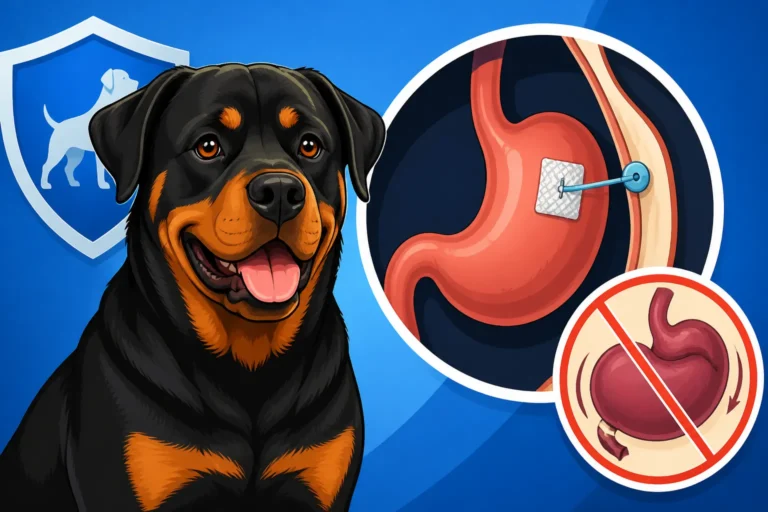
When we talk about bloat, we're really talking about two stages. The first stage, gastric dilatation, is when your Rottweiler's stomach distends with gas, fluid, or food. Imagine a balloon inflating inside their belly. This alone is uncomfortable and can put pressure on other organs, but it's the second stage, volvulus, that turns it into a life-threatening crisis. In volvulus, that distended stomach then twists around its axis, effectively cutting off both the entrance and exit. Nothing can go in, nothing can come out.
This twisting action also severely compromises blood flow to the stomach and often the spleen, leading to tissue death, shock, and a cascade of other systemic problems throughout the body. The pressure on the diaphragm makes it hard for your Rottweiler to breathe, and the entire circulatory system is impacted. It's a medical emergency that progresses with terrifying speed, and every minute counts. This is why knowing the signs, and more importantly, preventative measures, is so vital. You can read more about what happens during bloat in a Rottweiler and the hours that matter.
Specific Rottweiler Risk Factors for Bloat
Rottweilers, by their very nature, are unfortunately predisposed to bloat. Their deep chest cavity, which gives them that powerful, imposing presence, also provides ample space for the stomach to expand and twist. It’s a cruel irony of their magnificent physique. But it’s not just their conformation; other factors play a role too. Eating rapidly, gulping down air with their food, is a big one. Think about how enthusiastically your Rottweiler sometimes attacks their dinner – that urgency can be a significant risk.
Stress and anxiety can also contribute. If your Rottweiler is particularly anxious or reacts strongly to certain situations, they might be more prone. Age also increases risk; older Rottweilers are statistically more likely to experience bloat. A family history of bloat in their lineage is another strong indicator, which is why a responsible breeder will always disclose such information. Even feeding a single large meal a day versus multiple smaller ones can elevate the risk. Understanding these factors helps you tailor your prevention strategy specifically for your dog. For instance, if your Rottweiler is a rapid eater, using a slow feeder bowl can make a huge difference.
The Golden Rule for Post-Meal Exercise
This is where the rubber meets the road, so to speak. The "golden rule" for Rottweilers, and indeed many large, deep-chested breeds, is to enforce a significant rest period both before and after meals. This isn't just a suggestion; it's a critical preventative measure that can dramatically reduce the risk of bloat. You want to give their stomach ample time to begin digestion and to settle down before any vigorous activity.
Why the Waiting Period is So Important
Imagine shaking a partially filled bottle and then twisting it. That's a simplified, albeit graphic, way to think about what can happen inside your Rottweiler's abdomen if they engage in strenuous activity with a full stomach. When a dog exercises, especially intense activities like running, jumping, or rough play, their body is in motion. This movement can cause a stomach full of food, liquid, and potentially air to slosh around. This physical agitation, combined with the normal digestive processes, creates an environment where the stomach is more susceptible to twisting.
The waiting period allows the food to settle, for initial digestion to occur, and for any swallowed air to pass naturally. It reduces the volume and mobility of the stomach contents, making it less likely for the stomach to rotate if your dog does move or stretch. Skipping this vital wait time is like playing Russian roulette with your Rottweiler’s health, a risk no loving owner wants to take. Even though emergencies are often covered by pet insurance providers like Healthy Paws, preventing bloat is always the primary goal.
Practical Tips for Managing Meal and Exercise Schedules
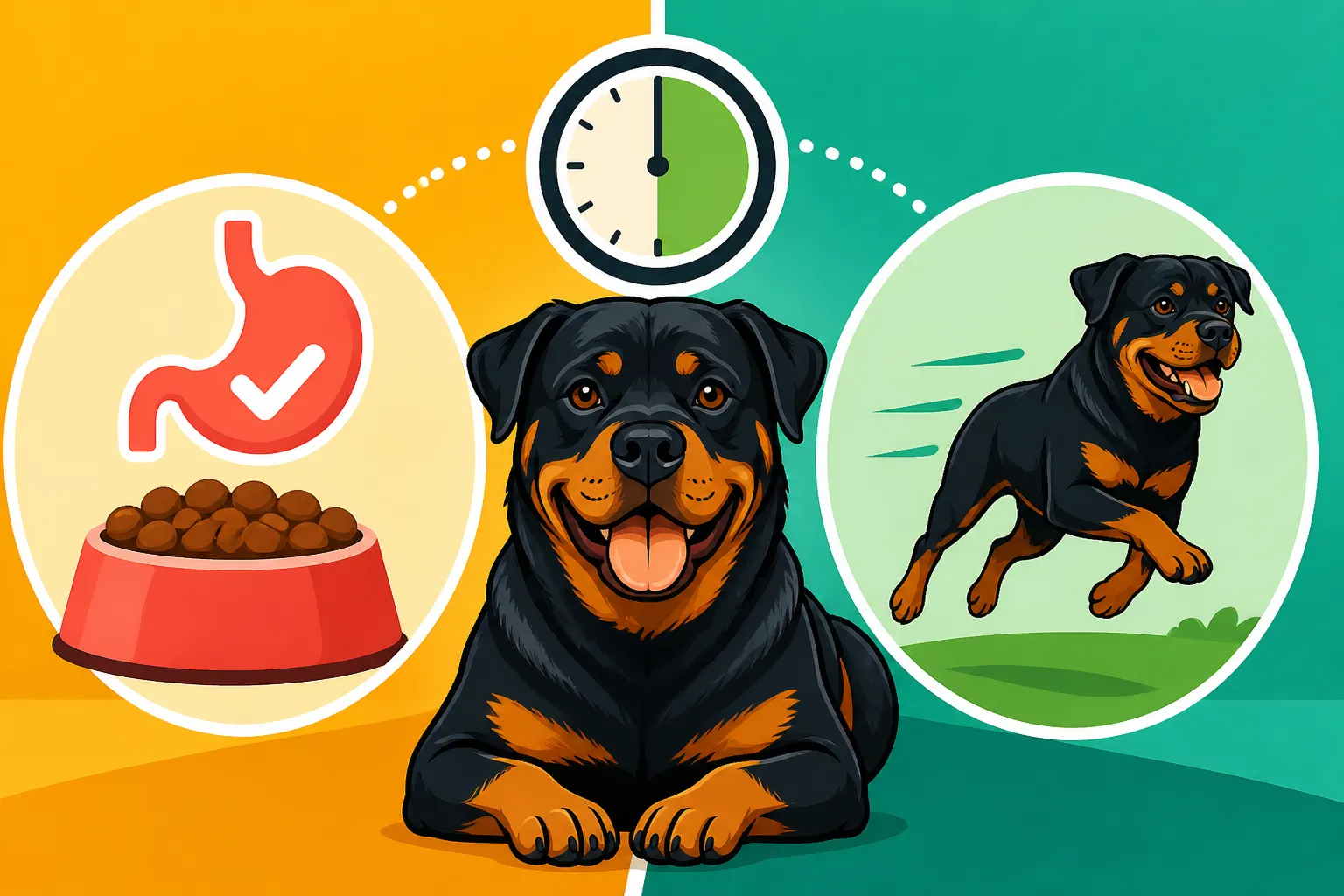
So, what does this look like in daily life? The widely accepted guideline, supported by veterinary professionals and experienced Rottweiler owners, is to wait at least 30 minutes before a meal and a minimum of 2 hours after a meal before engaging in any strenuous exercise. Some owners, especially those with particularly anxious or high-risk Rottweilers, extend this post-meal wait to 3 hours, just to be extra safe.
Here’s a table that breaks down a sample schedule:
| Activity | Recommended Timing Relative to Meal | Notes |
|---|---|---|
| Vigorous Exercise | At least 30 mins before a meal | Allow them to cool down and rehydrate before eating. |
| Mealtime | After pre-meal rest | Feed in a calm environment. Consider slow-feeder bowls. |
| Post-Meal Rest | At least 2-3 hours after a meal | Absolutely no running, jumping, or rough play. Leash walks are even risky during this window. |
| Light Activity | After post-meal rest | Gentle walks, potty breaks are fine during the waiting period if done calmly. |
| Strenuous Exercise | After post-meal rest | Full-blown play, running, training sessions, dog park visits. |
This means if your Rottweiler eats breakfast at 7:00 AM, intense play or a long run shouldn't happen until 9:00 AM or even 10:00 AM. For an evening meal at 6:00 PM, the zoomies or a vigorous game of fetch should be entirely off-limits until 8:00 PM or later. It requires a bit of planning, especially for busy households, but it’s a non-negotiable part of responsible Rottweiler ownership. Remember to factor in your dog's individual metabolism and habits. If your Rottweiler is still full of energy and wants to play immediately after eating, it’s your job to redirect that energy to a calm activity, like a quiet chew toy or a cuddle session on the couch. Splitting their daily food into two or even three smaller meals, as discussed in Feeding Rules That Lower Rottweiler Bloat Risk, can also significantly reduce the risk by never putting too much volume into the stomach at one time.
What Counts as Exercise and Why It Matters
When we talk about avoiding "exercise" after a meal, it's important to be clear about what we mean. It's not just about an hour-long run at the dog park. Many seemingly innocent activities can still pose a risk for a Rottweiler, especially with a full stomach. The key is understanding the difference between high-impact, vigorous activities and gentle, low-impact movements.
High-Intensity Activities to Avoid
After your Rottweiler has eaten, you absolutely must avoid any activity that involves sudden stops, starts, jumps, rolls, or anything that causes their body to twist or jar their internal organs. This includes, but isn't limited to:
- Running: Whether it's a sprint in the yard, a jog with you, or tearing around with another dog. The repetitive jarring and internal movement are highly problematic.
- Jumping: Leaping for a frisbee, jumping off furniture (especially high places like beds or cars), or even jumping up to greet someone.
- Rough Play: Wrestling with other dogs or people, tug-of-war, or any game that involves sudden changes in direction or body contortions.
- Agility or Obedience Training: While these are fantastic for Rottweilers, sessions involving quick maneuvers, jumps, or fast retrieves should be postponed.
- Swimming: Although it’s low impact, the act of swallowing water and the effort of swimming can lead to gulping air and stomach distention, which is a major risk factor. Therefore, swimming should also be avoided on a full stomach.
Think about the internal forces at play. A full, heavy stomach being sloshed around and twisted can easily initiate the terrible chain of events that leads to bloat. It’s far better to err on the side of caution and postpone these activities. This vigilance is particularly important during the period when Rottweiler Growth Plates and Why They Close So Late, as they are also more susceptible to other injuries during this time.
Low-Impact Activities and When They Are Safe
While a full rest period is crucial, it doesn't mean your Rottweiler needs to be completely immobile. Short, calm potty breaks are generally fine. A slow, leashed walk around the block, where they simply amble along, sniffing the bushes, and going about their business, is usually considered safe if done gently. The key here is "gentle" and "slow." No pulling, no lunging, and no sudden bursts of energy.
After the recommended 2-3 hour waiting period, you can gradually reintroduce more active play. Start with something moderately active and observe your dog. Every Rottweiler is an individual, and while the general guidelines are vital, paying attention to your specific dog's digestion and comfort levels is also important. If they seem unusually sluggish or uncomfortable after eating, even a light walk might be too much, and you'd want to consult your vet.
Enrichment activities that involve mental stimulation rather than physical exertion are perfect for the post-meal downtime. Think puzzle toys that dispense treats slowly, a KONG stuffed with frozen peanut butter, or a quiet chew toy that they can enjoy calmly on their bed. These activities keep their minds engaged without putting their stomach at risk. Investing in good quality, durable chew toys that can stand up to a Rottweiler's powerful jaw is a wise move.
Recognizing the Signs of Bloat and Taking Action
Even with the most diligent preventative measures, bloat can sometimes occur. It’s a terrifying thought, but knowing what to look for and acting swiftly is paramount. This is not a situation where you "wait and see"; it's an immediate, life-threatening emergency. Having a plan and knowing your nearest emergency vet is crucial.
Early Warning Signs to Never Ignore
Recognizing the early signs of bloat is absolutely critical, as prompt veterinary intervention significantly increases the chances of survival. Trust your gut feeling if something seems off with your Rottweiler. They know their bodies, and their behavior often changes when they're in distress. Here's what to watch for:
- Restlessness and Pacing: Your Rottweiler might seem unable to get comfortable, constantly shifting position, or pacing frantically. This isn't just normal restlessness; it's an agitated, distressed state.
- Distended Abdomen: This is often a classic, but not always the first sign. Their belly might appear swollen, tight, and drum-like when tapped. This can be subtle at first, especially in a heavily-built Rottweiler, so feel gently.
- Non-Productive Retching: This is a hallmark sign. Your dog will try to vomit, often violently, but nothing (or very little foamy saliva) will come up. It's a truly agonizing sight to witness. This is a very specific sign, as you can learn in A Rottweiler Retching Without Bringing Anything Up.
- Drooling and Foaming at the Mouth: Excessive salivation can accompany the retching and discomfort.
- Pain and Discomfort: They might moan, whine, or snap if you try to touch their abdomen. They might stretch out in odd positions, trying to relieve pressure.
- Weakness and Collapse: As bloat progresses, your dog can go into shock, leading to weakness, pale gums, rapid heart rate, and eventually collapse.
- Shortness of Breath: The distended stomach puts pressure on the lungs, making breathing difficult and shallow.
It's a distressing list, but memorizing these signs can literally save your dog's life. Don't second-guess yourself if you observe any combination of these symptoms.
The Critical Urgency of Emergency Veterinary Care
If you suspect bloat for even a second, do not hesitate. This is an immediate, life-threatening emergency. Call your veterinarian or the nearest emergency veterinary hospital immediately while you are on your way. Tell them you suspect bloat (GDV) and that you are inbound. This allows them to prepare for your arrival and begin treatment without delay. The window of opportunity for successful treatment is often measured in just a few hours.
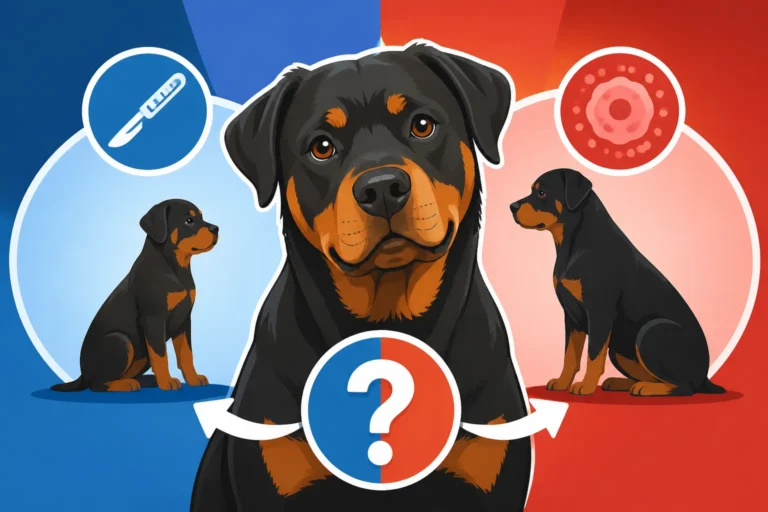
Treatment for bloat almost always involves emergency surgery to de-rotate the stomach and reposition it correctly. Often, a procedure called a gastropexy is performed at the same time, where the stomach is surgically tacked to the abdominal wall to prevent future twisting. While a gastropexy doesn't prevent the stomach from dilating with gas, it dramatically reduces the risk of it twisting again. You can learn more about Gastropexy to Prevent Rottweiler Bloat and consider discussing this preventive measure with your vet, especially if your Rottweiler is considered high-risk.
The costs associated with bloat surgery are substantial, often ranging from several thousands of dollars, depending on the severity and complications. This is where comprehensive pet insurance, like plans offered by Healthy Paws, can be an absolute lifesaver, helping to cover a significant portion of these unexpected and expensive emergency vet bills. Every minute counts with bloat, so rapid action is the single most important factor for a positive outcome.
Disclaimer
The information provided in this article is for general informational purposes only and is not a substitute for professional veterinary advice. Always consult with a qualified veterinarian for any health concerns or before making any decisions related to your Rottweiler's health and treatment.