The Rottweiler Faults That Disqualify Outright
It’s a unique feeling, isn't it? That moment you bring home your magnificent Rottweiler puppy, full of potential, and you start dreaming about what they might achieve. Maybe you’ve pictured them confidently trotting around a show ring, earning ribbons and accolades. But then you hear whispers of "disqualifying faults," and a knot forms in your stomach. What exactly are these things, and could your beloved companion unknowingly possess one? This guide will pull back the curtain on the specific traits and characteristics that would cause a Rottweiler to be immediately dismissed from the conformation ring, helping you understand the stringent standards of the breed.
Understanding Disqualifying Faults in Rottweilers
When we talk about a dog being "disqualified" in the show ring, it's not just a minor issue; it's a hard stop. It means that particular dog, regardless of its other fine qualities, cannot compete or be awarded points because it possesses a trait explicitly stated in the breed standard as disqualifying. It’s a very definitive judgment, and for a dedicated breeder or owner, it can be heartbreaking, especially if they had high hopes for their dog's show career.
What the Breed Standard Represents
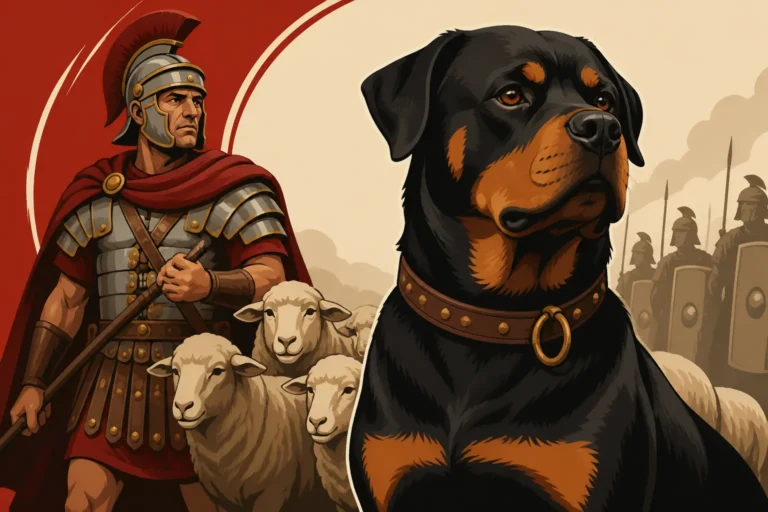
Think of the breed standard as the blueprint for the ideal Rottweiler. It's painstakingly crafted by the parent club, in this case, the American Rottweiler Club (ARC) in conjunction with the American Kennel Club (AKC), to describe the physical appearance, movement, and temperament that embody the breed's historical purpose and characteristics. This standard guides breeders in their efforts to produce sound, typical Rottweilers, and it gives judges a framework for evaluating dogs in the show ring. Every part of it—from the shape of the head to the way the tail is carried—is there for a reason, rooted in the breed's origins as a powerful, confident drover and guardian. For a deeper dive into the ideal Rottweiler, you might want to read Rottweiler Size Under the AKC Standard.
The standard isn't just about pretty looks; it's about preserving the working capabilities and health of the breed. A fault might simply detract from the overall impression, making a dog less competitive, but a disqualifying fault is something that fundamentally goes against the essence of the breed or could severely impede its function or health. It’s the difference between a slightly crooked picture on the wall and a cracked foundation in a house.
The Difference Between Faults and Disqualifications
It’s crucial to understand that not every deviation from the ideal standard is a disqualification. Most deviations are considered "faults," which are graded in severity. A minor fault might just mean a dog places lower in a class, while a serious fault could prevent it from winning anything significant. For example, a Rottweiler with a slightly round eye might be faulted, but it won't be disqualified. However, a dog with an eye color that is too light would be out of the running.
Disqualifications are the ultimate "no-go" items. They are explicitly listed in the standard and leave no room for a judge's interpretation. If a dog presents with a disqualifying fault, the judge must eliminate it from competition. There’s no discussion, no second chance in that ring. It’s a swift, clear decision designed to protect the integrity and distinct characteristics of the breed. These aren’t arbitrary rules; they often reflect issues that could impact the dog's health, temperament, or ability to perform its historical role.
Physical Disqualifications: When Form Fails the Standard
The Rottweiler is a dog of powerful and robust build, and its physical structure is integral to its working heritage. Any significant deviation that undermines this structure or its defining characteristics will lead to disqualification in the show ring. These are often things that impact their overall health or function, not just aesthetics.
Structural and Size Issues
A Rottweiler’s bite is one of its most defining characteristics, critical for its historical role in herding and guarding. A scissor bite, where the outer side of the lower incisors touches the inner side of the upper incisors, is the only acceptable bite in the breed standard. Any deviation from this is a serious matter.
- Overshot or Undershot Bite: An overshot bite means the upper jaw protrudes significantly beyond the lower, while an undershot bite means the lower jaw extends beyond the upper. Both are disqualifying faults because they indicate a fundamental problem with the jaw structure. This isn't just about appearance; it can affect how the dog grasps objects, eats, and even breathes in severe cases. You'll find detailed information on the correct bite in The Rottweiler Bite and Jaw Under the Standard.
- Wry Mouth: This is a condition where the jaw is twisted, causing the incisors to not align properly side-to-side. It’s a clear structural defect and immediately disqualifies.
- Missing Teeth: While not all missing teeth are disqualifying, the standard specifically disqualifies a Rottweiler with missing any permanent tooth other than the first premolars. Given the importance of a strong, complete set of teeth for a working dog, this makes perfect sense.
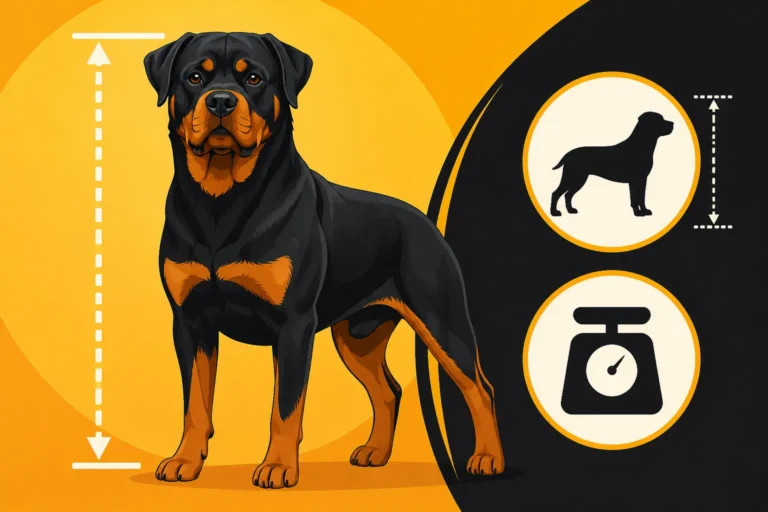
- Incorrect Size: The Rottweiler standard has specific height and weight guidelines, reflecting its powerful, compact build. While some variation is allowed, a dog that falls significantly outside these ranges is considered atypical. For males, the standard calls for a height of 24-27 inches at the withers, and females 22-25 inches. Any male measuring under 24 inches or over 27 inches, or any female under 22 inches or over 25 inches, is disqualified. This ensures the breed maintains its characteristic powerful yet agile frame, as outlined in Rottweiler Size Under the AKC Standard.
Eye, Ear, and Tail Discrepancies
The eyes, ears, and tail of a Rottweiler all contribute to its expressive nature and adherence to the breed standard. Deviations here can drastically alter the breed's intended look and sometimes signal underlying issues.
- Eye Color: The standard calls for eyes of medium size, almond-shaped, and of uniform dark brown color. Any other color, particularly yellow or light eyes, is considered a disqualifying fault. This isn't just aesthetic; dark eyes are traditional for the breed and contribute to its stoic, confident expression. If you're curious about this specific requirement, check out The Rottweiler Eye Color the Standard Accepts.
- Entropion or Ectropion: These conditions relate to the eyelids. Entropion is where the eyelid rolls inward, causing the lashes to rub against the eye, which can be painful and lead to damage. Ectropion is where the eyelid rolls outward, exposing the delicate inner lid, making the eye susceptible to irritation and infection. Both are health concerns and disqualify.
- Ear Set: Rottweiler ears are medium in size, triangular, and carried drooping, set high and wide on the head. A Rottweiler with erect or semi-erect ears (like a German Shepherd's) would be immediately disqualified. The correct ear set is part of the breed's distinct look and contributes to its overall expression, as detailed in Rottweiler Ear Set and How They Are Carried.
- Tail: Traditionally, Rottweiler tails were docked. However, many countries and even some shows now allow natural tails. If a dog's tail is docked, it should be short, consisting of one to two vertebrae. If it is kept natural, it should be carried level with the back or slightly above. A Rottweiler with a natural tail that is curled tightly over the back or carried excessively high, or a docked tail that is too long or completely missing, can be disqualified. The discussions around tail docking are complex, as explored in Rottweiler Tail Docking and the Modern Argument.
Color, Markings, and Temperament: Beyond the Physical
While structural soundness is paramount, a Rottweiler's coat color, markings, and temperament are equally vital aspects of its breed identity. These elements speak to the very core of what a Rottweiler is meant to be.
Unacceptable Coat Colors and Markings
The Rottweiler's striking black coat with rust markings is one of its most recognizable features. Any deviation from this specific color pattern is a serious disqualifying fault.
- Incorrect Basic Color: The breed standard is unequivocal: the Rottweiler must be black. Any other base color, such as red or blue, is a disqualifying fault. While you might occasionally hear of "red Rottweilers," these are not recognized or accepted within the purebred standard and would be disqualified. You can learn more about this in Whether a Red Rottweiler Is Recognized at All. Similarly, some might wonder about an "all-black Rottweiler," but the characteristic rust markings are mandatory; a dog completely devoid of these markings would also be disqualified. Read about this specific point in Whether an All-Black Rottweiler Really Exists.
- Incorrect Markings: The rust markings are expected to be rich and clearly defined, located specifically over the eyes, on the cheeks, on each side of the muzzle, on the throat, on the chest (two triangles), on the forelegs (from knee to paw), on the inside of the rear legs, and beneath the tail.
- White Markings: Any white marking on the dog is a disqualifying fault, with the exception of a few isolated white hairs on the toes. This means no white chest patches, no white on the muzzle, etc.
- Misplaced Markings: While not always a disqualification, markings that are too large or too small can be severely faulted. For example, if the rust markings are so extensive they merge or obscure the black coat too much, it would be a fault that could lead to disqualification. The precise placement and intensity of these markings are part of the breed's distinctive appearance, as explored in The Rottweiler Coat and Its Rust Markings and Rottweiler Markings That Are Too Large to Pass.
Temperament and Behavior Disqualifications
The Rottweiler’s temperament is arguably as important as its physical characteristics, reflecting its history as a confident, protective companion. The standard demands a calm, confident, and courageous dog, neither overly shy nor overly aggressive.
- Shyness: A Rottweiler that shows extreme shyness, cowering, or attempting to hide from the judge is a disqualifying fault. This goes against the breed's inherent self-assuredness and could indicate a lack of proper socialization or an unstable genetic temperament. A Rottweiler should be aloof but not fearful. You can delve into the specific expectations for temperament by reading The Temperament Clause in the Rottweiler Standard.
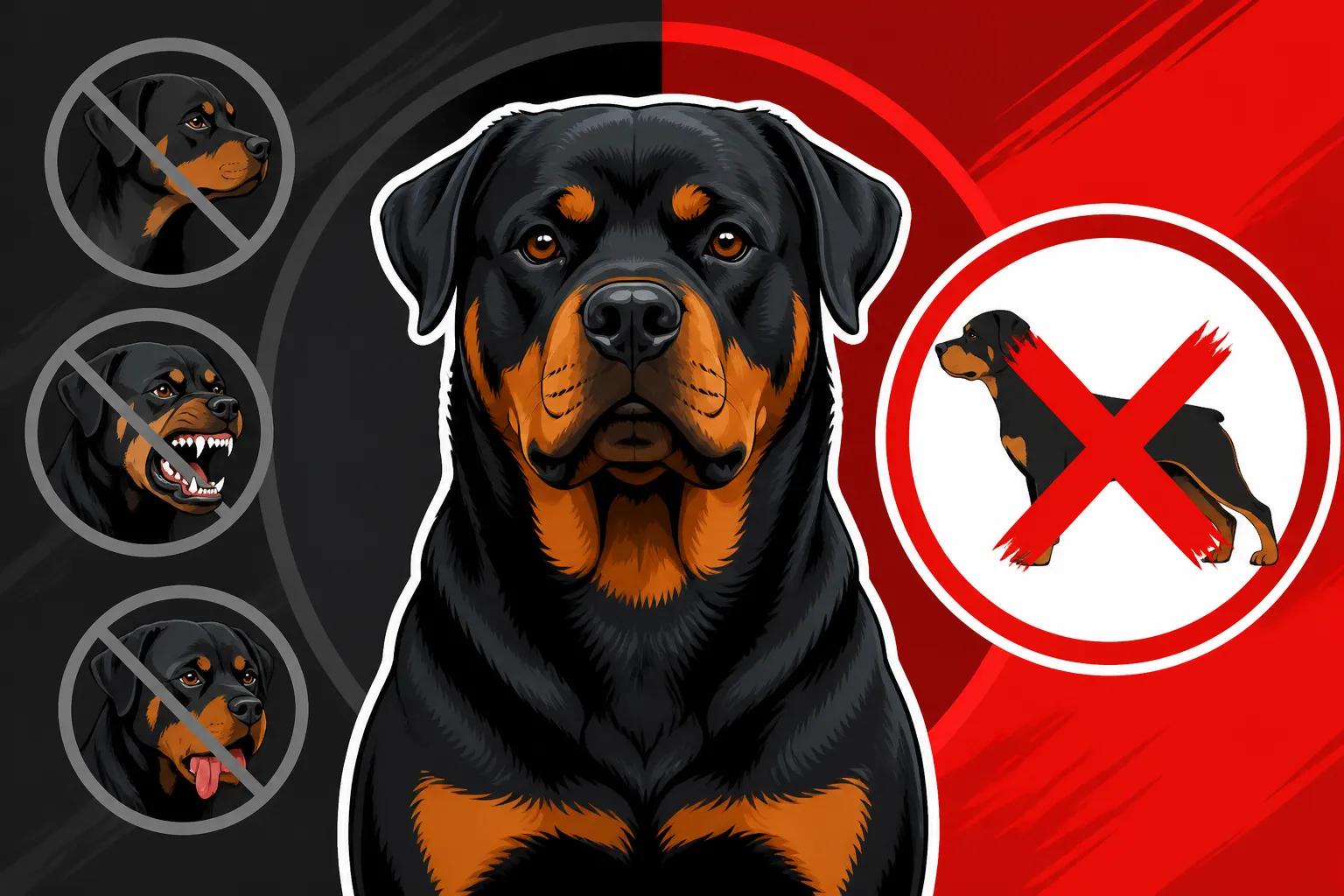
- Viciousness/Aggression: Equally, any Rottweiler that exhibits unprovoked aggression or viciousness towards people or other dogs in the ring is immediately disqualified. A judge needs to be able to safely examine the dog. A truly sound Rottweiler is confident and stable, not looking for a fight or acting unpredictably. This kind of temperament issue is a serious concern for any breed, but especially for a powerful dog like a Rottweiler. While their guarding instinct is natural, it must be controlled and never manifest as unprovoked aggression.
When you're looking for a good quality harness or lead for your powerful Rottweiler, especially one with a calm temperament, you'll want something sturdy that you can trust. You can often find a wide selection of robust gear suitable for large breeds on online platforms like Chewy, ensuring both comfort and control during your walks.
Why Disqualifying Faults Matter (Even for Pet Owners)
Even if you have no intention of ever stepping foot in a show ring, understanding disqualifying faults is incredibly valuable. It gives you insight into the breed’s health, its genetic background, and the kind of dog you are welcoming into your home. It’s not just about ribbons; it’s about responsible breeding and ownership.
The Impact on Breeding Programs
For breeders, adhering to the breed standard and avoiding disqualifying faults is paramount. A responsible breeder will meticulously evaluate their breeding stock to ensure they are free from these faults, not just for the show ring, but for the betterment of the breed itself.
- Maintaining Breed Integrity: Disqualifying faults often point to genetic issues. Breeding dogs with these faults can perpetuate undesirable traits, leading to health problems, structural unsoundness, or temperamental instability in future generations. A breeder who focuses on eliminating these faults is contributing to a healthier, more predictable, and true-to-type Rottweiler population. This is why good breeders are so particular about things like The Five Clearances a Rottweiler Breeder Must Have.
- Ethical Considerations: An ethical breeder won't breed a dog with a disqualifying fault. While such a dog can make a wonderful pet, using it for breeding goes against the fundamental principles of responsible canine husbandry. It’s a commitment to improving the breed, not just reproducing it. This is why thorough health testing and adherence to the standard are so important.
Understanding Your Rottweiler's Heritage
For pet owners, knowing about disqualifying faults helps you appreciate the efforts of responsible breeders and understand the significance of a "well-bred" Rottweiler.
- Health and Temperament Indicators: Often, structural disqualifications (like severe bite issues or entropion/ectropion) are also health concerns that can impact a dog's quality of life. Temperament disqualifications like extreme shyness or aggression are major red flags for a dog's suitability as a family companion. A well-bred Rottweiler, free from these issues, is more likely to be a healthy, stable, and enjoyable member of your family.
- Informed Choices: If you’re ever considering getting another Rottweiler, knowing about these faults empowers you to ask better questions of breeders. You can inquire about the health clearances of the parents, view their pedigrees, and observe the temperament of the litter and its dam. Even if you're getting a rescue, understanding these traits can help you appreciate the journey that dog has had and prepare for any potential challenges. When stocking up on essentials for your Rottweiler, from high-quality food to grooming supplies, places like Chewy are excellent resources for finding products that support their overall health and well-being. Keeping up with grooming is key, and having a good quality brush can help manage the breed's shedding, which is a consideration for any owner, even if your dog isn't destined for the show ring.
Ultimately, while the show ring may seem like a distant world to many pet owners, the standards upheld there serve a vital purpose. They preserve the health, temperament, and unique characteristics of the Rottweiler, ensuring that these magnificent dogs continue to embody the qualities that have made them beloved companions and capable workers for centuries.
Disclaimer
This article is for general informational purposes only and does not constitute professional advice. Laws, prices and regulations vary by location and change over time. Consult a qualified professional for guidance on your specific situation.