What Was Traded in Rottweil’s Cattle Market
Many people today look at a Rottweiler and see a powerful, imposing dog, often associating them primarily with protection or even a stern demeanor. What often gets lost in this modern perception, though, is the incredible history woven into their very DNA – a history rooted in commerce, travel, and the vibrant, bustling life of an ancient European marketplace. It's easy to forget that these magnificent dogs weren't always just pets or guard dogs; they were once indispensable working partners, key to the economic engine of a specific German town. This guide will take you back in time to the town of Rottweil, revealing the vital role its cattle market played and, more importantly, what exactly was traded there that shaped the very essence of the Rottweiler we know and love today.
The Historical Heart of Rottweil: A Bustling Trade Hub
Imagine a time before cars and trains dominated transport, when goods moved on foot or by cart, and local markets were the beating heart of regional economies. This was the world where the Rottweiler began its story, specifically in the ancient Roman-founded town of Rottweil, nestled in the scenic Neckar valley of southwest Germany. To understand the Rottweiler, you truly have to understand the dynamic marketplace it served.
The Town's Strategic Location and Importance
Rottweil wasn't just any old town; it was strategically located at a crossroads of ancient Roman roads, making it a natural hub for trade. Think of it as a central waypoint where drovers, merchants, and farmers from surrounding regions converged. This geographical advantage meant that Rottweil became a significant trading post, particularly for livestock. Rivers and Roman routes provided pathways for people and goods to move, establishing Rottweil as a crucial connection point between different communities and their resources. The town essentially became a bottleneck, a place where business had to happen. Its Roman origins meant a long history of infrastructure, even if rudimentary by today's standards, that facilitated the gathering and exchange of goods. This prime location ensured a steady stream of traffic and, consequently, a thriving market environment.
When the Markets Thrived
The cattle markets in Rottweil truly hit their stride during the Middle Ages and continued to flourish right up until the mid-19th century. For centuries, these markets were renowned across Europe, attracting buyers and sellers from far and wide. Picture vast herds of cattle, pigs, and sheep being driven for days or even weeks from various parts of the continent to be bought and sold. It wasn't a seasonal event; it was a constant, pulsating trade that defined the town's identity and livelihood.
The scale of these operations was immense, and the logistics of managing hundreds, sometimes thousands, of animals and their accompanying drovers and traders was no small feat. This consistent, high-volume activity created an environment where a reliable, robust, and intelligent working dog wasn't just helpful – it was absolutely essential. These markets were a noisy, chaotic, and often dangerous place, teeming with people, animals, and, crucially, money. This constant motion and valuable exchange laid the groundwork for the development of a dog like the Rottweiler, whose entire purpose was to bring order and protection to this vital economic activity. How the Rottweiler's Ancestors Reached Germany helps explain the very beginnings of this story, tying into the broader historical movements that brought these working dogs to the region.
Beyond Cattle: The Diverse Goods of Rottweil's Market
While the image of vast cattle herds is central to the Rottweiler's history, the markets of Rottweil were far more diverse than just livestock. They were a microcosm of the region's economy, reflecting everything from agricultural bounty to the craftsman's skill. This variety of goods only increased the need for a versatile and trustworthy canine partner.
Livestock and the Butcher's Role
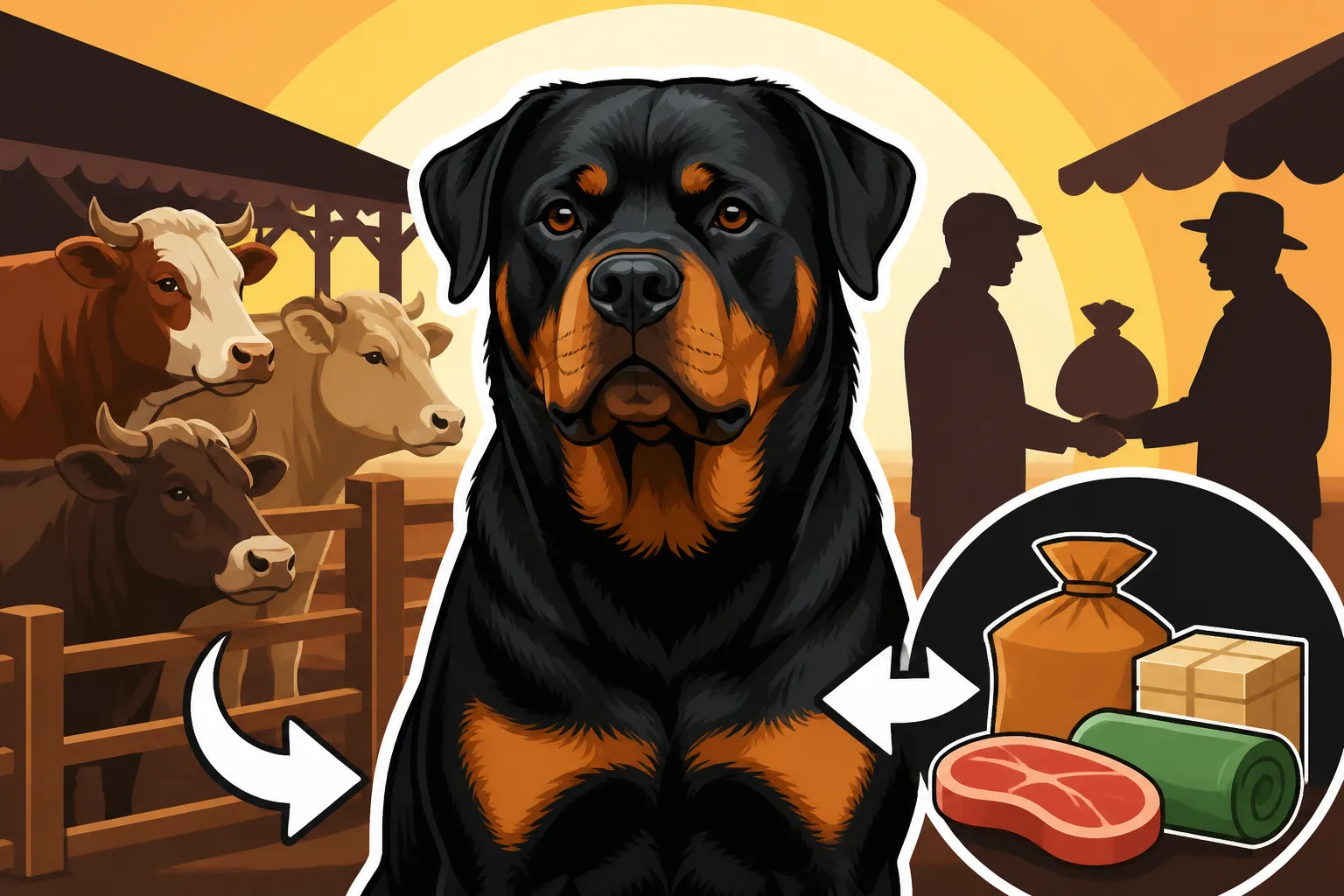
Of course, cattle were king. Enormous herds of "Rottweiler Metzgerhunde" (butcher's dogs) – the direct ancestors of today's Rottweiler – were instrumental in driving these animals to market, keeping them together during the chaotic buying and selling, and then herding them to their new owners or slaughterhouses. These were big, powerful animals, and a dog needed equal strength and intelligence to manage them effectively. Beyond cattle, sheep, pigs, and even horses were traded, providing meat, wool, hides, and labor for the communities.
The butchers, or "Metzger," were the primary employers of these dogs, hence the name. These individuals were not just slaughterers; they were significant merchants who handled large sums of money and valuable goods. They relied on their dogs not just to move the animals but to protect their hard-earned profits. It wasn't uncommon for butchers to tie their purses containing the day's earnings around their Rottweiler's neck for safekeeping, a testament to the trust they placed in these animals. This historical reliance on the dogs for financial security illustrates just how integral they were to the butcher's trade. Why Butchers Called the Rottweiler a Metzgerhund gives an even deeper dive into this unique relationship.
Agricultural Products and Local Crafts
The cattle market wasn't just about the animals themselves; it was surrounded by ancillary trades and goods. Farmers would bring their seasonal produce – grains, vegetables, fruits, and dairy products – to sell to the drovers and townsfolk. Imagine stalls piled high with fresh bread, local cheeses, and barrels of wine or beer. This meant more people, more activity, and more opportunity for goods to go missing if not properly watched.
Alongside foodstuffs, local artisans would showcase their crafts. There would be leather goods made from the very hides of the animals traded, blacksmiths selling tools and hardware, weavers offering textiles, and woodworkers displaying furniture or carved items. These were often bespoke, high-value items, requiring the same level of protection as a purse full of coins. The market was a true hub of commerce, a place where nearly anything one needed for daily life or livelihood could be found, bought, or traded. This bustling environment, full of valuable and diverse goods, demanded a watchful eye, a role the Rottweiler excelled at.
Money and Valuables
As you can imagine, with such a massive volume of trade, significant amounts of money changed hands. Coins, gold, and other valuables were constantly present in the marketplace. Merchants, drovers, and butchers carried their earnings or their capital for purchasing, making them prime targets for thieves and bandits. This is where the Rottweiler truly shone as a protector. They were not merely intimidating; they were fiercely loyal and discerning.
The practice of tying money bags to their strong collars or even around their necks speaks volumes about their reputation for vigilance and deterrence. A Rottweiler was a living, breathing safe deposit box, far more effective than any lockbox a person could carry alone. This need for secure transport and guarding of wealth directly contributed to the Rottweiler's inherent protective instincts. The Money a Rottweiler Was Trusted to Guard elaborates on this fascinating aspect of their history, highlighting how their presence was often enough to prevent theft. Modern Rottweiler owners sometimes find dog-specific money belts or secure storage solutions for walks, perhaps even from places like Chewy, though our dogs aren't carrying our wallets anymore!
Here’s a snapshot of the kinds of goods and their associated Rottweiler roles in the historic Rottweil market:
| Type of Good | Specific Items | Rottweiler's Role |
|---|---|---|
| Livestock | Cattle, pigs, sheep, horses | Herding, driving, managing herds, protecting |
| Agricultural Produce | Grains, vegetables, fruits, dairy products | Guarding merchant stalls, deterring theft |
| Crafted Goods | Leather, tools, textiles, wooden items | Watching over valuable inventory, accompanying |
| Valuables | Coins, gold, merchant's earnings, personal items | Direct protection of money bags, personal guard |
| Transported Goods | General freight, heavy loads | Pulling carts, assisting with heavy lifting |
The Rottweiler's Indispensable Role in Market Commerce
The Rottweiler, or "Metzgerhund," wasn't just present in the markets; they were absolutely central to their operation. Their unique blend of strength, intelligence, and unwavering loyalty made them irreplaceable partners in a demanding and often dangerous environment.
Guarding Goods and Guiding Herds
Think about the sheer scale of the cattle drives. Drovers, sometimes with only one or two dogs, were responsible for moving hundreds of massive, stubborn animals over long distances. The Rottweiler’s natural droving instinct, coupled with their imposing presence, allowed them to control these herds, keeping them on track and preventing them from scattering or running into danger. Once at the market, they were tasked with keeping the animals confined to their designated pens, preventing escapes that could cause chaos and financial loss. The Rottweiler Droving Instinct and Bumping really gets into the physical way they would move the animals, using their body weight and presence.
Beyond the living merchandise, the dogs guarded the stationary goods. Imagine a butcher's stall piled with cuts of fresh meat, or a merchant's wagon laden with valuable leathers. Thieves were always a risk, and a Rottweiler's reputation for being a formidable protector meant that few would dare to approach a guarded stall. Their keen senses meant they were alert to suspicious activity long before a human might notice, providing an invaluable early warning system. This active guardianship was not just about brute force, but about constant vigilance and a calm, self-assured presence. What a Metzgerhund Did in a Day's Work paints a vivid picture of these dogs' daily grind.
Cart Pulling and Transport
Before the advent of railways, the primary way to move heavy goods locally was by cart, pulled by animals. Rottweilers, with their robust build, incredible strength, and tireless work ethic, were perfectly suited for this task. They would pull carts laden with meat, produce, or other market wares from the slaughterhouses to the stalls, or from a merchant's home to the market square. This was taxing work, requiring stamina and physical power.
This history of carting is a huge part of why the Rottweiler developed into such a well-muscled, deep-chested dog. Their physical conformation today still reflects this heritage of being strong, enduring draft animals. While you might not see modern Rottweilers pulling carts through town squares anymore, their love for tasks, their powerful build, and their desire to have a job to do are direct legacies of this past. Today, you can still participate in draft work or carting competitions with your Rottweiler, honoring their ancestors' labor. Equipment for such activities can even be found on sites like Chewy, though it's geared more for recreation than heavy commerce now. Rottweilers Pulling Carts Before the Railways delves deeper into this fascinating aspect of their working life.
The Bond Between Butcher and Dog
The relationship between a Rottweiler and its owner (often a butcher or drover) in those days was far more than just master and pet; it was a partnership of survival and prosperity. These dogs weren't just tools; they were family, companions, and essential business assets. The bond was built on mutual trust, clear communication, and shared purpose. A butcher's livelihood, and even personal safety, often depended on the reliability and courage of their dog.
This deep-rooted history of partnership explains much about the Rottweiler's enduring temperament today. They are loyal, intelligent, and thrive when given a job and a clear leader. They form incredibly strong bonds with their families and often exhibit a calm confidence that stems from centuries of being relied upon to make critical decisions and handle demanding situations. The confidence and self-assurance many owners describe in their Rottweilers today is a direct echo of the trust their working ancestors earned in the bustling, sometimes perilous, environment of the market.
The Legacy of Rottweil's Markets on the Modern Rottweiler
It's truly incredible how centuries of working in a specific environment can shape an entire breed. The vibrant, demanding atmosphere of Rottweil's cattle markets didn't just give the Rottweiler its name; it carved out the very traits that define the breed today.
Enduring Traits from a Working Past
When you look at a Rottweiler today, many of their most distinctive characteristics are direct reflections of their time as "Metzgerhunde."
- Physical Strength and Robust Build: Their powerful, muscular bodies, broad chests, and substantial bone structure were essential for herding large, unruly cattle and pulling heavy carts. This strength allowed them to stand their ground against a charging bull or haul a wagon full of meat without faltering. Today, this translates into a dog that needs ample space and appropriate exercise, and perhaps a heavy-duty dog bed from Chewy to support their frame.
- Intelligence and Trainability: Managing livestock and guarding valuables required a dog that could learn quickly, understand complex commands, and make intelligent decisions in rapidly changing situations. They couldn't be easily distracted or overwhelmed. This legacy makes them highly trainable and eager to please their owners, especially when given a clear purpose.
- Protective Instincts: The need to guard merchants, money, and livestock instilled a deep-seated protective drive. They had to be naturally watchful and discerning, able to differentiate between a friendly face and a potential threat. While modern Rottweilers are rarely guarding purses of gold, that inherent protective nature remains.
- Loyalty and Devotion: The close working relationship fostered an intense loyalty to their human partners. Their lives, and the lives of their owners, depended on this mutual trust and unwavering bond. This is why Rottweilers are known for being incredibly devoted to their families today.
These aren't just superficial traits; they are fundamental aspects of the Rottweiler's identity, directly inherited from their working ancestors. Rottweiler Temperament and That Self-Assured Aloofness further explores how these historical roles manifest in their modern personality.
Understanding Their Instincts Today
Knowing this history isn't just a fun fact; it's a vital key to understanding and living harmoniously with a modern Rottweiler. When your Rottweiler stands between you and a stranger, or subtly bumps you to guide you, they are echoing the instincts of their market-working forebears.
- The Guarding Impulse: Their innate desire to protect their family and home is a direct link to guarding butchers and their earnings. This isn't aggression; it's a deep-seated sense of responsibility. Proper socialization and training are crucial to channel this instinct appropriately, ensuring they understand who to guard and when. The Rottweiler Guarding Instinct and How to Shape It offers valuable insights into managing this trait.
- The Need for a Job: A Rottweiler that is bored or under-stimulated can develop behavioral issues. Their ancestors had demanding jobs all day long, and modern Rottweilers still thrive on having a purpose. This could be obedience training, agility, therapy work, or simply being an active, engaged family member. They love to learn and participate.
- Aloofness with Strangers: Their historical role often meant being wary of unfamiliar faces in a busy marketplace, a trait known as "aloofness." They weren't bred to be effusively friendly with everyone; they were bred to assess and protect. This means they often take time to warm up to new people, observing before engaging, which can sometimes be misunderstood as unfriendliness.
By appreciating the bustling, diverse, and demanding cattle markets of Rottweil, we gain a profound understanding of the magnificent Rottweiler breed. Their history is not just about what they did, but about what they became because of it, shaping them into the strong, intelligent, loyal, and protective companions we cherish today.
Disclaimer
This article is for general informational purposes only and does not constitute professional advice. Laws, prices and regulations vary by location and change over time. Consult a qualified professional for guidance on your specific situation.