Toxic Doses Scaled to a Rottweiler’s Body Weight
It’s a terrifying moment for any dog owner: you turn your back for a second, and your magnificent Rottweiler has just swallowed something they absolutely shouldn't have. For those of us with giant breeds, the worry is often compounded by questions like, "Is the amount they ate enough to really hurt them?" and "Does their size make them more resilient, or just mean it takes more of something toxic?" This guide will walk you through how a Rottweiler's impressive body weight influences toxic doses, what common items pose the biggest threats, and how to prepare for those heart-stopping emergencies.
Understanding the "Toxic Dose" for a Large Dog
When we talk about toxic doses, we're usually referring to a specific amount of a substance per unit of body weight that can cause harm. For smaller dogs, even a tiny amount of certain toxins can be catastrophic. With a Rottweiler, weighing in at 80 to 135 pounds or more, the sheer volume needed to reach a dangerous level can sometimes be significantly higher. However, this isn't a license to be complacent. It simply means understanding that while your Rottweiler might shrug off an amount that would fell a Chihuahua, there are still very real, and sometimes hidden, dangers.
Why Weight Matters in Toxin Exposure
Think about it this way: a substance like xylitol, an artificial sweetener, is incredibly potent. For a small dog, even a single stick of gum can be deadly. A 100-pound Rottweiler would need to ingest quite a few sticks of gum to hit the same lethal dose per pound, but a handful of sugar-free candies could still easily land them in critical condition. Their larger blood volume and overall body mass mean that toxins are diluted across a greater area, potentially taking longer to reach critical concentrations in vital organs. This can sometimes buy you a little more time, but it absolutely doesn't make them immune.
For substances like chocolate, the toxicity depends on the type of chocolate and the amount of theobromine it contains. Darker chocolate and baking chocolate have much higher concentrations. A sliver of milk chocolate that barely registers for your Rottie could be devastating for a toy poodle. But let your Rottweiler get into a full bag of dark chocolate chips, and you're still looking at a very serious emergency. The key takeaway here is that while the "amount" might seem larger in absolute terms for a Rottweiler, the concentration and type of toxin are equally, if not more, critical.
The Pitfalls of "Too Little to Matter" Thinking
One of the most dangerous assumptions we can make as Rottweiler owners is that "they're so big, it won't matter." This can lead to delays in seeking veterinary care or underestimating the severity of an exposure. While a single grape might not cause immediate kidney failure in a Rottweiler, the cumulative effect or an allergy to even a minute amount could still trigger a problem. The concept of "toxic dose" is a guideline, not an absolute. Individual sensitivity, pre-existing health conditions, and even an empty stomach can all alter how a toxin affects your dog.
It’s also important to remember that not all toxins are simply "dose-dependent." Some substances, like certain mold toxins found in spoiled food, can cause severe neurological signs or liver damage even in relatively small quantities, regardless of body weight. Always err on the side of caution. If there's any doubt, a quick call to your vet or pet poison control is always the best first step. You can read more about what items are definitively off-limits in What a Rottweiler Should Never Be Fed.
Common Household Toxins and the Rottweiler's Size
Our homes are full of potential hazards, and what might be an inconvenience for a smaller dog can become a major undertaking to manage when you have a curious, powerful Rottweiler. Their height and strength mean they can reach counters, open cabinets, and generally get into places smaller dogs can only dream of.
Everyday Items That Pose a Risk
Let's break down a few common household items and how they specifically relate to your Rottweiler's size:
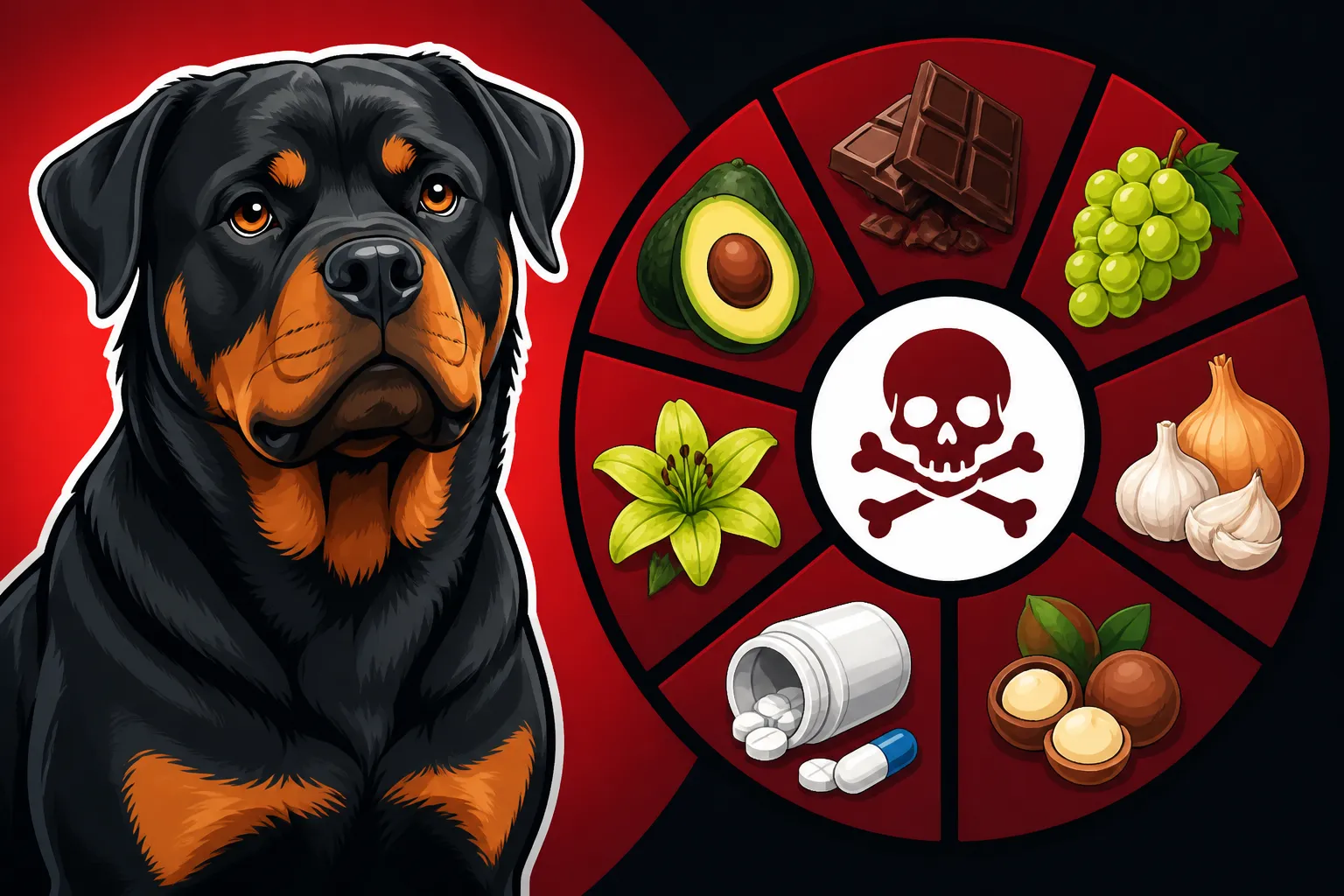
- Human Medications: This is a huge one. An ibuprofen or an antidepressant intended for a human could be deadly. While it might take more pills for a Rottweiler to reach a toxic dose than a tiny dog, they're also far more likely to get into an entire bottle of medication left on a nightstand or counter. A full bottle of, say, Tylenol, which might contain 100 or more pills, could easily exceed a toxic threshold for even a large Rottweiler. Keep all medications, prescription or over-the-counter, in secure, dog-proof containers and completely out of reach.
- Foods Toxic to Dogs: We often hear about chocolate, grapes, raisins, onions, garlic, and xylitol. As mentioned, the sheer volume of these items your Rottweiler can consume is greater. A 5-pound bag of grapes, a pan of brownies made with dark chocolate, or a large bag of sugar-free candy (often containing xylitol) could be devoured in minutes. This is why strict vigilance is necessary. Even seemingly harmless foods like avocado, if eaten in large quantities (especially the pit), can cause digestive upset and potential obstruction for a Rottweiler. Remember, their enthusiasm for food can lead them to eat far more than a smaller dog before you even notice.
- Household Chemicals: Cleaning products, antifreeze, rodenticides, and pesticides are another category where a Rottweiler's size could seem like a "buffer," but it's a false sense of security. While it might take a larger gulp of floor cleaner to cause immediate corrosive damage, even small, repeated exposures to certain chemicals can lead to chronic illness. Rodenticides, for instance, are often flavored to attract animals and contain active ingredients that accumulate or have delayed effects. A Rottweiler could easily consume enough bait to cause severe internal bleeding or neurological damage.
| Toxin Category | Example Item | Primary Danger Points for Rottweilers |
|---|---|---|
| Human Medications | Ibuprofen, Antidepressants | High potential to consume large quantities of pills in one sitting |
| Foods | Xylitol, Dark Chocolate, Grapes, Onions | Can consume significant amounts before owner notices; higher absolute dose needed but still achievable quickly |
| Household Cleaners | Bleach, Floor Cleaner | Direct ingestion causes corrosive damage; large size means larger quantity consumed |
| Pest Control | Rodenticides, Antifreeze | Attractively flavored; large consumption can lead to severe internal damage; delayed effects possible |
| Plants | Lilies, Sago Palm, Oleander | While less common to eat large quantities, strong toxins can still impact a large dog |
Medications and Supplements: The Human vs. Canine Divide
It’s incredibly tempting to think, "My Rottweiler has a little ache, maybe a baby aspirin will help." Stop right there. Human medications are formulated for human metabolism and often contain ingredients or concentrations that are toxic to dogs. Even seemingly innocuous supplements, if not specifically designed for canines, can be dangerous. For example, some human joint supplements contain xylitol.
Never administer human medication to your Rottweiler without explicit instructions from a veterinarian. The consequences can range from severe gastrointestinal upset to kidney failure, liver damage, or worse. The cost of an emergency vet visit for poisoning can be substantial; you can anticipate these kinds of expenses by reviewing articles like Emergency Vet Bills a Rottweiler Owner Should Expect. It's always cheaper and safer to ask your vet first.
Preventative Measures and Emergency Preparedness
When you have a Rottweiler, prevention isn't just a good idea, it's a necessity. Their strength, intelligence, and sheer size mean they can often overcome barriers that might deter smaller, less determined dogs. Thinking ahead about what could go wrong and having a plan in place is crucial for their safety.
Securing Your Home and Yard
The first line of defense against toxic ingestion is securing your environment. Don't assume anything is out of reach for your Rottweiler. Counter surfing is a Rottweiler specialty, and cabinet doors are often no match for a determined snout or paw.
- Kitchen & Pantry: Install child-proof locks on all lower cabinets that contain food, cleaning supplies, or trash cans. Keep all human foods, especially those known to be toxic (like chocolate, grapes, onions, garlic, coffee products, sugar-free items with xylitol), either in high, securely latched cabinets or in the refrigerator/freezer. Even food scraps, like leftover cooked bones or fatty trimmings, can cause severe pancreatitis or obstructions in a Rottweiler.
- Bathrooms & Laundry Rooms: Medications, cleaning products, and even toiletries like toothpaste (some contain xylitol) should be stored in high, locked cabinets. Keep toilet lids down to prevent drinking from treated water.
- Garage & Shed: This is often a treasure trove of danger. Antifreeze, rat poison, pesticides, fertilizers, and even motor oils are all highly toxic. Ensure these are in sealed containers, on high shelves, or in locked cabinets. Be mindful of spills, as a curious Rottweiler might lick them up.
- Yard & Garden: Identify any toxic plants in your garden. Lilies, sago palm, oleander, and azaleas are just a few common ones. Consider fencing off areas with hazardous plants or removing them entirely. Ensure all fertilizers, weed killers, and insecticides are stored securely and apply them when your Rottweiler isn't present, following product instructions for pet safety. Remember, a Rottweiler's powerful nose can lead them to discover hidden dangers you might not even realize are there. Many Rottweiler owners benefit from thinking about What Rottweiler Owners Get Wrong in the First Year when it comes to puppy-proofing.
Creating an Emergency Contact List and Kit
Knowing who to call and what to do in a crisis can literally save your Rottweiler's life. Don't wait until panic sets in to figure out phone numbers.
- Emergency Contacts: Have your regular vet's number, the number for the nearest 24-hour emergency vet clinic, and the Pet Poison Helpline or ASPCA Animal Poison Control Center numbers readily available. Stick them on your fridge, save them in your phone, and make sure anyone who cares for your Rottweiler (pet sitter, family member) has them too.
- Emergency Kit: While you should never induce vomiting without professional guidance, having some basics on hand can be helpful if advised by a vet. This might include:
- Hydrogen peroxide (only if directed by a vet for inducing vomiting, and never for certain toxins like corrosives or petroleum products).
- Activated charcoal (again, only if directed by a vet).
- A muzzle (even the sweetest Rottweiler can bite out of pain or fear when poisoned).
- Your vet records, including your Rottweiler's weight and any known allergies or medical conditions.
- A robust leash and collar or harness, ready for a quick departure. For adult Rottweilers, harnesses from brands like Chewy are excellent for managing their strength during a stressful situation.
It’s also wise to consider pet insurance, especially for a large breed like a Rottweiler. While policies won't cover pre-existing conditions, enrolling them early can provide peace of mind for unexpected emergencies. Different plans offer various levels of coverage for accidents, illnesses, and even wellness. You can usually find options online or through major pet retailers like Amazon, often with customizable deductibles and reimbursement percentages.
What to Do in a Suspected Poisoning Event
The moments after you suspect your Rottweiler has ingested something toxic are critical. Your actions can significantly impact the outcome. Remain calm, act quickly, and always prioritize professional veterinary guidance.
Immediate Steps After Exposure
Panic is a natural reaction, but it's important to take a deep breath and follow these steps:
- Remove Your Rottweiler from the Source: Immediately get your dog away from whatever they ingested. This prevents further consumption and allows you to gather crucial information.
- Gather Information: This is perhaps the most important step. What exactly did they eat? How much? What was the active ingredient (if known, like on a medication bottle or chemical cleaner)? When did they eat it? If possible, bring the packaging, label, or a sample of the substance (if it's vomit or the original material) with you to the vet. This information helps the vet determine the severity and the best course of action.
- Call for Professional Advice: Do not wait to see if symptoms develop. Call your veterinarian, the emergency vet, or a pet poison control center immediately. Tell them you have a Rottweiler, their approximate weight, what they ingested, how much, and when. Do not try to induce vomiting or give any home remedies unless specifically instructed by a professional. Some toxins can cause more harm if vomited, and others require specific medical intervention. This is why The First Call When a Rottweiler Swallows Something is so vital.
When to Rush to the Emergency Vet
While calling is always the first step, sometimes the advice will be to get to the vet now. Certain symptoms warrant immediate, no-delay action:
- Collapse or Loss of Consciousness: If your Rottweiler suddenly collapses or is unresponsive, this is a severe emergency. Every second counts. You might notice signs like those described in A Rottweiler That Collapses Suddenly During Play.
- Seizures or Tremors: Uncontrolled shaking, convulsions, or disorientation indicate neurological toxicity, which requires urgent veterinary care.
- Difficulty Breathing: Labored breathing, gasping, or blue gums are life-threatening signs.
- Severe Vomiting/Diarrhea or Bloody Vomit/Stool: While some stomach upset might be mild, severe or bloody gastrointestinal signs can indicate serious internal damage or bleeding.
- Obvious Pain or Distress: Whining, crying, inability to get comfortable, or severe abdominal pain should prompt an immediate vet visit.
Even if your Rottweiler seems fine initially, some toxins have delayed effects. For example, anticoagulant rodenticides can take days to show symptoms, but by then, internal bleeding may be severe. Always follow the vet's instructions, even if it means a late-night drive to the emergency clinic.
Supporting Your Rottweiler During Recovery
If your Rottweiler is treated for poisoning, the recovery period will depend on the toxin, the severity of the exposure, and their individual response. Your vet will provide detailed aftercare instructions, which might include:
- Medication: To counter the toxin, manage pain, protect organs, or prevent secondary infections.
- Dietary Restrictions: A bland diet, often recommended by brands like Ollie or specific veterinary formulas, might be necessary to soothe a sensitive stomach. Feeding an Adult Rottweiler at a Hundred Twenty Pounds often involves careful dietary management, which becomes even more critical during recovery.
- Rest and Monitoring: Your Rottweiler will likely need a quiet, comfortable space to rest. Monitor them closely for any new or worsening symptoms.
- Follow-Up Appointments: Blood tests or other diagnostics may be required to ensure their organs are recovering properly.
Remember, a Rottweiler's size means they require larger doses of supportive care, from fluids to medications, which can impact the overall cost of treatment. Being prepared for these possibilities, both financially and emotionally, is part of being a responsible Rottweiler owner.
Disclaimer
This article is for general informational purposes only and does not constitute professional advice. Laws, prices and regulations vary by location and change over time. Consult a qualified professional for guidance on your specific situation.