Rottweiler Heat Exhaustion Warning Signs
Summer can be a wonderful time for adventures with our beloved Rottweilers, but it also brings a serious hidden danger: heat exhaustion. These magnificent, powerful dogs, with their dense coats and impressive size, are surprisingly susceptible to overheating, and missing the early signs can quickly turn a fun outing into a life-threatening emergency. This guide is dedicated to helping you recognize those crucial warning signs of heat exhaustion in your Rottweiler, so you can act fast and keep your furry family member safe when the temperatures climb.
Why Rottweilers Are So Prone to Overheating
It’s easy to look at a Rottweiler’s stoic demeanor and assume they can handle anything, but when it comes to heat, they’re actually quite vulnerable. Their physical characteristics and physiology make them less efficient at cooling themselves down compared to many other breeds. Understanding why they struggle can help us be more vigilant and proactive in preventing overheating in the first place.
The Impact of a Black Coat and Body Mass
Think about stepping out in direct sunlight wearing a black shirt versus a white one – that black shirt just soaks up the heat, right? The same principle applies to our black and rust Rottweilers. Their dark, dense double coats, while providing excellent insulation in cooler weather, become a significant liability in the heat. That black fur absorbs and retains solar radiation much more intensely than lighter coats, turning their body into a heat magnet.
Beyond the coat, a Rottweiler’s sheer body mass plays a huge role. These are big, muscular dogs, often weighing over a hundred pounds. A larger body mass generates more internal heat during activity, and there’s simply more tissue that needs to be cooled down. This combination of a dark coat and substantial body means they can heat up much faster and hold onto that heat longer than smaller, lighter-colored breeds. It's a double whammy for them in hot weather.
Brachycephalic Tendencies and Breathing Challenges
While Rottweilers aren't considered a true brachycephalic (short-nosed) breed like a Bulldog or Pug, many modern Rottweilers do have a somewhat shorter muzzle compared to their ancestors or other long-nosed breeds. This can slightly impede their ability to efficiently pant, which is a dog's primary method of cooling down. Panting works by evaporating moisture from the tongue and respiratory tract, dissipating heat. If the airflow is even slightly restricted, this crucial cooling mechanism becomes less effective.
Additionally, a Rottweiler's robust build means they often have less surface area relative to their body volume compared to lankier breeds. This makes it harder for them to radiate heat away from their bodies through their skin. Any pre-existing respiratory issues, even mild ones, can further exacerbate this challenge, making them work harder to breathe and generate even more internal heat when stressed by high temperatures.
The Role of Humidity and Environment
It’s not just the temperature that matters; humidity is often the silent killer. When the air is saturated with moisture, the evaporative cooling effect of panting is drastically reduced. Imagine trying to dry your laundry on a very humid day – it takes forever because the air can’t absorb much more moisture. The same applies to your Rottweiler’s panting; if the air is already full of water vapor, the sweat evaporating from their tongue and lungs can’t carry away as much heat.
This means a 75°F day with 90% humidity can be far more dangerous than an 85°F day with low humidity. Always consider the "feels like" temperature and factor in both heat and humidity when planning any outdoor activity for your Rottweiler. Concrete and asphalt also absorb and radiate heat, acting like a griddle on their paw pads and radiating heat back up to their bodies. Even a brief walk on hot pavement can increase their core temperature significantly. Safe Outdoor Temperature for a Rottweiler is a vital read for understanding this balance.
Early Warning Signs of Heat Exhaustion
Catching heat exhaustion early is paramount. Your Rottweiler won't tell you in words that they're feeling unwell, so it's up to us to become fluent in their body language and subtle cues. These initial signs might seem minor, but they are critical indicators that your dog is in distress and needs immediate intervention. Ignoring them can lead to a rapid decline into dangerous heatstroke.
Excessive Panting and Drooling
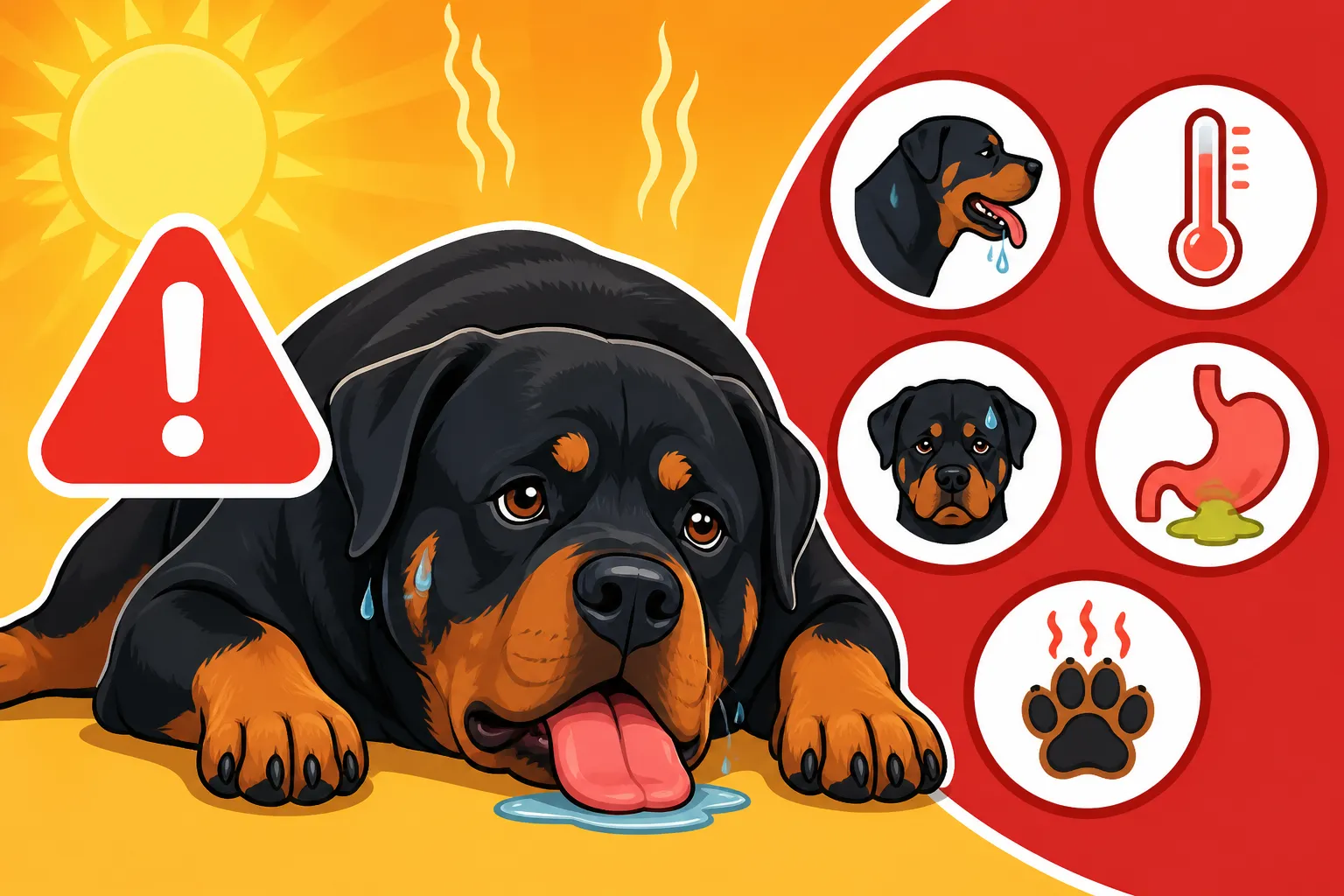
One of the first and most obvious signs that your Rottweiler is struggling with the heat is an increase in their panting. While panting is normal for dogs when they're warm or excited, excessive panting is different. It will be rapid, shallow, and persistent, even after they've stopped exercising or moved into the shade. They might seem to be struggling to catch their breath, their chest heaving noticeably.
Along with the heavy panting, you'll likely see a significant increase in drooling. Their mouth will be open wider than usual, and strands of thick, ropey saliva might hang from their lips. This isn't just a bit of slobber; it's a clear indication their body is working overtime to cool down through evaporation, pushing out more moisture to try and shed heat. If their tongue is also a very bright red, almost cherry-red, it's another sign their body temperature is rising dangerously.
Changes in Energy and Behavior
Your Rottweiler's normal energy levels are a good baseline for comparison. If they're usually playful and active, but suddenly seem lethargic, weak, or unresponsive in warm weather, that's a huge red flag. They might slow down on a walk, lag behind, or refuse to continue playing a game of fetch. It's not just a sign of being tired; it's a sign of overheating.
You might also notice a change in their coordination. They could appear dizzy or disoriented, stumbling slightly or walking with an unsteady gait. Some dogs will seek out shade or try to find a cool spot to lie down, almost obsessively. They might seem anxious or restless, unable to settle down, or conversely, become extremely dull and unresponsive. Pay close attention to these shifts from their usual demeanor; they're trying to tell you something.
Physical Indicators to Watch For
Beyond panting and behavior, there are several physical cues that can indicate your Rottweiler is getting too hot. Their gums might appear darker than usual, possibly a bright red, which indicates increased blood flow as their body tries to dissipate heat. While usually pink, a very pale or even bluish tint is a sign of severe distress and requires immediate veterinary attention. You can also check their capillary refill time by pressing gently on their gum with your finger, releasing, and noting how quickly the color returns. If it takes longer than two seconds, it's a concern.
Another indicator is their body temperature, though you’ll need a rectal thermometer for an accurate reading. A normal dog temperature is usually between 101°F and 102.5°F. If your Rottweiler’s temperature is above 104°F, they are in serious trouble. Their skin and ears might feel unusually warm to the touch, and they might even exhibit muscle tremors as their body struggles to cope with the rising heat. These are all signs that require urgent action.
Progressing to Heatstroke: Critical Symptoms
If the early warning signs are missed or ignored, heat exhaustion can rapidly escalate into full-blown heatstroke, a life-threatening condition that causes severe damage to internal organs. This is a veterinary emergency, and knowing these critical symptoms can mean the difference between life and death for your Rottweiler. Time is of the essence when heatstroke sets in.
Vomiting, Diarrhea, and Gastrointestinal Distress
As a Rottweiler's core body temperature continues to rise to dangerous levels, their internal organs begin to shut down, and the gastrointestinal system is often one of the first to show severe distress. You might notice your dog starts to vomit, sometimes repeatedly. This vomiting can be accompanied by diarrhea, which may be severe and contain blood.
This gastrointestinal upset is not just uncomfortable; it's a sign of internal damage and can lead to rapid dehydration, further compounding the problem. The body is effectively in shock, and the digestive system cannot function properly. If you see your Rottweiler experiencing these symptoms after being in the heat, do not delay—this is a clear signal that they need immediate emergency care.
Neurological Symptoms and Collapse
Heatstroke profoundly affects the central nervous system, leading to a range of alarming neurological symptoms. Your Rottweiler might become very confused or disoriented, staring blankly or bumping into objects. They could experience seizures, which are a terrifying sight and indicate severe brain distress. Their muscles might twitch uncontrollably, and their eyes may become glazed or bloodshot.
Ultimately, if not treated, your Rottweiler may collapse, becoming unresponsive or falling unconscious. This is a dire emergency. At this stage, their body's ability to regulate its own temperature has completely failed, and every minute counts. The Emergency Signs That Send a Rottweiler In covers these and other critical situations where immediate veterinary attention is vital.
Gum Color and Capillary Refill Time
Earlier, we talked about bright red gums as an early sign. As heatstroke progresses, this can change. The gums might become extremely pale, almost white, or even take on a bluish-purple tinge. This indicates very poor circulation and oxygenation, signaling severe shock and organ failure. The blood vessels are constricting in an attempt to shunt blood to vital organs, but it's often a losing battle.
Checking the capillary refill time (CRT) becomes even more critical here. If you press on the gums and the color takes a very long time to return—more than two or three seconds—or doesn't return at all, your Rottweiler is in profound circulatory collapse. This symptom, combined with others like collapse or seizures, indicates an immediate and severe life-threatening situation.
Immediate Actions to Take When Your Rottweiler Overheats
Spotting the signs of overheating is just the first step; knowing exactly what to do immediately is crucial. These first aid steps can significantly improve your Rottweiler’s chances of recovery and potentially save their life while you're on your way to the vet. Do not hesitate, and do not try to "wait and see" if your dog improves.
Moving to a Cooler Environment and Offering Water
The very first thing you need to do is get your Rottweiler out of the heat source. This means moving them indoors into an air-conditioned space, or at the very least, into deep, dense shade. If you're near a car, get them into the vehicle with the AC blasting. Every second counts, so don't waste time.
Once in a cooler spot, offer them small amounts of cool, fresh water. Don't force them to drink, and avoid letting them gulp down large quantities, as this can lead to vomiting, which will worsen dehydration. If they’re too weak or disoriented to drink, don't worry about it for now; cooling their body is the priority. Water Intake for a Rottweiler on a Hot Day is a good resource to understand their hydration needs generally.
Cooling Techniques: Water and Fans
The goal is to lower their core body temperature, but gradually. Do NOT submerge them in ice water, as this can cause their blood vessels to constrict, trapping heat inside their body and potentially leading to shock. Instead, use cool (not freezing cold) water. Wet towels can be placed over their body, especially in areas where large blood vessels are close to the surface, like the armpits, groin, and neck. You can also wet their paw pads and the insides of their ears.
A garden hose on a gentle spray setting can be used to thoroughly wet their coat, but make sure the water isn't too cold. Running a fan nearby can aid evaporative cooling, especially if you have access to one. Keep wetting and fanning them as you prepare to transport them to the vet. Remove any tight collars or harnesses that might restrict breathing. Remember, this is about getting their temperature down safely, not shocking their system. You can even find specialized Cooling Mats and Vests for a Rottweiler on sites like Amazon or Chewy to help with this.
When to Seek Emergency Veterinary Care
Let's be absolutely clear: if you suspect heatstroke, always consider it an emergency. Even if your Rottweiler seems to be recovering after initial cooling efforts, they still need to be seen by a veterinarian immediately. Internal organ damage (kidney, liver, brain, heart) can occur rapidly and may not be immediately apparent.
Call your vet or the nearest emergency animal hospital while you are performing first aid so they can be prepared for your arrival. Give them a heads-up about your dog's symptoms and breed. The vet will continue active cooling measures, monitor vital signs, check for organ damage, and provide intravenous fluids and other supportive care as needed. Do not underestimate the severity of heatstroke; it requires professional medical intervention.
Preventing Heat Exhaustion in Your Rottweiler
Prevention truly is the best medicine when it comes to heat exhaustion in Rottweilers. Being proactive and making smart choices can ensure your dog enjoys the warmer months safely, avoiding the stress and danger of overheating. It’s all about understanding their limits and adjusting your routine to accommodate them.
Adjusting Exercise Routines
This is perhaps the most critical preventive measure. During hot weather, avoid exercising your Rottweiler during the hottest parts of the day, which are typically between 10 AM and 4 PM. Instead, aim for early morning walks or late evening excursions when temperatures are cooler. Remember, the ground can retain heat for hours, so even if the air feels cooler in the evening, check the pavement temperature with your hand; if it’s too hot for your bare hand, it’s too hot for their paws. Exercising a Rottweiler in Summer Heat provides more details on safe activity levels.
Shorten the duration and intensity of walks and playtime. A brisk 30-minute walk in the spring might need to become a leisurely 15-minute potter around the block in the summer. Avoid strenuous activities like running alongside a bike or intense fetch sessions. Focus on mental enrichment indoors or short, calm outings. Remember that even a walk around the block can be too much for an older dog; Senior Rottweiler Mobility Decline can be exacerbated by heat.
Providing Ample Shade and Hydration
Never leave your Rottweiler outdoors in the sun without access to ample, consistent shade. A single tree might offer shade at noon but none by 2 PM, so ensure there's a shaded area that moves with the sun or a solid structure they can retreat under. A covered patio, a dog house, or a pop-up canopy can provide reliable shelter. Yard Shade a Black-Coated Rottweiler Needs is worth reviewing for setting up safe outdoor spaces.
Always have fresh, cool water available, both indoors and outdoors. Consider placing multiple water bowls around your home and yard. On walks, carry a portable water bottle and a collapsible bowl, so you can offer water frequently. If your Rottweiler isn't drinking enough, you can try adding a splash of low-sodium chicken broth to their water to encourage them. Remember, hydration is key to maintaining body temperature.
Utilizing Cooling Products and Practices
There are many products available designed to help dogs stay cool. Cooling mats, vests, and bandanas can be incredibly effective. These often contain gel that activates with pressure or water that provides evaporative cooling. You can find a wide range of options on online retailers like Chewy or Amazon. Make sure to choose products sized appropriately for a large breed like a Rottweiler.
Other practices include allowing them access to a kiddie pool filled with shallow, cool water where they can stand or lie down to cool their belly and paws. Frozen treats, like Kongs stuffed with peanut butter or yogurt and then frozen, can provide mental stimulation and help them cool down from the inside out. Even a simple cool, damp towel placed on their bed or in their crate can offer relief on a hot day. Be mindful of their diet as well; some owners use fresh food services like Ollie which can be more hydrating, but always introduce new foods gradually.
| Symptom Category | Mild Heat Stress (Exhaustion) | Moderate Heat Stress (Exhaustion to Early Heatstroke) | Severe Heatstroke (Emergency) |
|---|---|---|---|
| Panting/Breathing | Heavy, rapid panting, but still rhythmic | Very heavy, frantic panting; struggling to catch breath | Extremely shallow or gasping breaths; difficulty breathing |
| Drooling | Increased drooling, thick saliva | Profuse, ropey saliva; foamy around mouth | No drooling (due to severe dehydration) or frothing |
| Energy/Behavior | Lethargy, reluctance to move, seeking shade, restlessness | Weakness, stumbling, disorientation, anxiety, dullness, unresponsiveness | Collapse, loss of consciousness, seizures, coma |
| Gums | Bright red, dark pink | Dark red, brick red | Pale, white, bluish-purple, or gray |
| Capillary Refill | 1-2 seconds | 2-3 seconds | Greater than 3 seconds or absent |
| Other Physical | Warm to touch, raised body temperature (103-104°F) | Vomiting, diarrhea (may be bloody), muscle tremors | Vomiting, bloody diarrhea, internal bleeding, kidney failure, organ damage |
Disclaimer
This article is for general informational purposes only and does not constitute professional advice. Laws, prices and regulations vary by location and change over time. Consult a qualified professional for guidance on your specific situation.