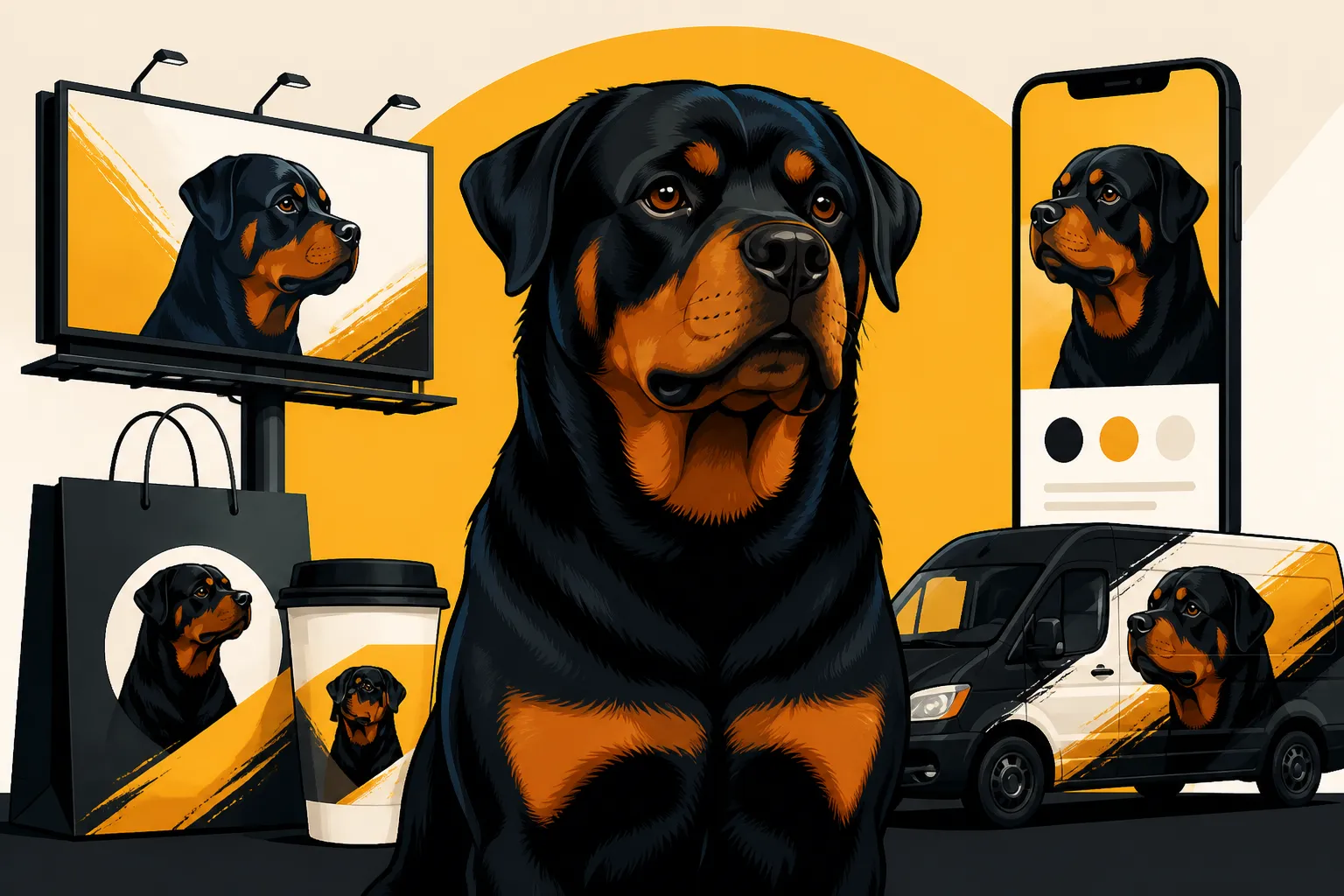
Rottweilers Used in Advertising and Branding
For many, the image of a Rottweiler conjures up a specific set of ideas, often rooted in outdated stereotypes rather than the reality of these intelligent, loyal companions. It's a real challenge for Rottweiler owners to constantly battle misconceptions, especially when simply walking their well-behaved dog. This guide will delve into how Rottweilers are actually portrayed in advertising and branding, examining the choices brands make and the impact these portrayals have on public perception.
The Shifting Image of the Rottweiler in Media
It's no secret that the Rottweiler has faced an uphill battle in public perception. For decades, they were typecast, often unfairly, as aggressive or dangerous. This deeply ingrained image was frequently reinforced by media portrayals, making it hard for everyday owners to show the true nature of their beloved dogs. But in recent years, there's been a subtle, yet significant, shift in how these magnificent animals are presented, especially in the world of advertising.
From Guard Dog to Family Companion: A Public Perception Journey
Historically, the Rottweiler’s strong guarding instincts and imposing physique led to their frequent use as a symbol of threat or protection in film and television. Think of the brooding, silent guardian, or worse, the snarling antagonist. This narrative, while dramatic, completely missed the nuance of the breed. What was often overlooked was their historical role as a drover dog, a "butcher's dog" in Rottweil, Germany, where they were trusted companions and workers, protecting money bags and herding cattle. The Roman Drover Dogs Behind the Rottweiler is a fascinating read about their origins. This early, practical role saw them as intelligent and biddable, not inherently aggressive.
However, as societies urbanized and the need for cattle-driving dogs waned, the perception of Rottweilers in popular culture often swung towards the extreme. The very traits that made them excellent guardians—their strength, their confidence, their reserved nature with strangers—were twisted into something menacing. Owners understand the frustration of seeing their sweet, goofy dog portrayed as a monster. The journey from this stereotype to the current, more balanced view is a testament to the dedicated work of breeders and owners who advocate for the breed.
How Early Media Depictions Shaped Public Opinion
Back in the 1980s and 90s, the Rottweiler's reputation took a significant hit. Sensationalized news stories and dramatic movie roles painted a picture of an unpredictable and dangerous animal, leading to widespread fear and even breed-specific legislation in some areas. How the Rottweiler Reputation Changed in the 1980s explores this period in more detail. These depictions, often devoid of context regarding training, breeding, or individual temperament, stuck in the public consciousness like superglue. People who had never met a Rottweiler formed strong, negative opinions based solely on what they saw on screen or read in a headline.
This created a huge disconnect for owners, who knew their dogs to be loyal, loving, and deeply devoted family members. Imagine owning a dog that leans into you for comfort, enjoys a good belly rub, and is gentle with children, only for strangers to cross the street to avoid you. It’s a disheartening reality many Rottweiler families still contend with today. Early media often capitalized on the imposing physical presence of the Rottweiler without ever showcasing their inherent calm confidence or their deeply affectionate side, making it an uphill battle for the breed to be seen for who they truly are.
The Power of Visuals: Overcoming Stereotypes Through Exposure
Thankfully, things are slowly but surely changing. As the internet and social media have provided platforms for real owners to share the daily lives of their Rottweilers, a more authentic image has begun to emerge. Pictures and videos of Rottweilers cuddling with cats, playing gently with toddlers, or performing impressive obedience routines have started to chip away at the old stereotypes. This organic, user-generated content shows the breed in a light that advertising agencies are now recognizing and leveraging.
The power of a positive visual cannot be overstated. When a brand chooses to feature a Rottweiler looking calm, happy, and integrated into a family setting, it subtly challenges the prevailing narrative. It tells a story of a capable, intelligent dog that is also a cherished pet. This visual exposure, especially in mainstream advertising, is crucial for normalizing the breed and helping the public see beyond the powerful physique to the sensitive, loving creature within. It’s about replacing fear with familiarity, one commercial at a time.
Why Brands Choose the Rottweiler Image
So, why would a brand, knowing the baggage the Rottweiler name sometimes carries, choose to feature one in their advertising? It's a strategic decision, often aimed at leveraging certain perceptions while also subtly subverting others. The answer lies in the unique blend of attributes that a well-presented Rottweiler can convey, making them a powerful, if sometimes unexpected, choice for a marketing campaign.
Conveying Strength and Reliability
At their core, Rottweilers embody strength, power, and an undeniable presence. These are traits that many brands want to associate with their products or services. Think of a financial institution wanting to convey security, or a car manufacturer emphasizing durability. A Rottweiler, with its muscular build and self-assured demeanor, can visually represent these qualities without needing a single word. They exude a sense of steadfastness and confidence.
This isn't just about raw power; it's about reliability. A well-trained Rottweiler is a picture of composure and control, even when performing a job. This translates visually into a product or service that can be trusted, that won't let you down. When you see a Rottweiler calmly sitting next to a family, it subtly communicates a sense of protection and dependability that resonates with consumers looking for security and peace of mind. They are, after all, a breed known for their loyalty and commitment, traits that speak volumes about a brand’s promise.
The "Gentle Giant" Trope: Subverting Expectations for Impact
Perhaps one of the most effective uses of Rottweilers in advertising is when brands play on the "gentle giant" trope. This strategy involves deliberately showcasing the Rottweiler's softer, more affectionate side, contrasting it with their formidable appearance. The surprise and delight this creates in the viewer is a powerful emotional hook. A large, powerful dog gently licking a child's face or playfully nudging a tiny kitten creates an immediate, memorable image that challenges preconceptions.
This subversion of expectation makes the advertisement stand out. It makes the viewer pause, reconsider, and often, feel a warm connection to both the dog and, by extension, the brand. It’s a clever way to showcase empathy and understanding, suggesting that the brand, like the Rottweiler, might be more nuanced and caring than first impressions suggest. Brands that successfully employ this often manage to humanize their message, showing that they understand the complexity and richness of relationships, whether between people and their pets or between a company and its customers. This helps counter negative views and fosters a deeper appreciation for the breed itself. The Rottweiler Surprises Owners Report Most covers how commonly people underestimate the gentleness of these dogs.
Reaching Specific Demographics and Tapping into Loyalty
Brands also use Rottweilers to connect with specific demographics, particularly those who appreciate loyalty, strength, and a certain grounded authenticity. Rottweiler owners, and those who admire the breed, often feel a strong sense of community and pride. By featuring a Rottweiler, a brand can tap into this existing loyalty and signal that they understand and value these qualities. It's a nod to a discerning audience that sees beyond superficial appearances.
Moreover, Rottweilers can be particularly effective in advertising for pet-related products. When you see a robust, healthy Rottweiler enjoying a particular food or toy, it speaks to the quality and durability of the product for large, strong breeds. Products available at places like Chewy, for instance, often feature a diverse range of dog breeds to show their product applicability. For a Rottweiler owner, seeing their breed represented can build immediate trust and relevance, knowing the product is designed to withstand the rigors of a powerful dog. This targeted approach can be highly effective in cultivating a loyal customer base that identifies with the values the breed represents.
Memorable Rottweiler Appearances in Ads and Pop Culture
Rottweilers have made their mark in various forms of media, from brief commercial cameos to starring roles in films, helping to shape and sometimes reshape their public image. These appearances, whether intentional or not, contribute significantly to how the general public perceives the breed.
Iconic Commercials and Campaigns Featuring Rottweilers
Over the years, several brands have chosen Rottweilers for their advertising, often with memorable results. While specific campaigns can be fleeting, the impact of a well-placed Rottweiler can be long-lasting. Think of car commercials that need to convey safety and power; a Rottweiler in the back seat, calmly observing the passing scenery, can speak volumes. There have been instances where home security companies have subtly featured a Rottweiler, not as an aggressive threat, but as a reassuring presence, a natural protector of the home and family. The Rottweiler Guarding Instinct and How to Shape It is a core part of their historical temperament.
Even in more whimsical ads, Rottweilers have shown up. For example, some pet food brands or even general lifestyle brands, looking to appeal to a broad audience, have used the 'gentle giant' approach, showing a Rottweiler interacting tenderly with children or other animals, reinforcing their role as cherished family members. These campaigns work because they don't just sell a product; they tell a story, and that story often helps to normalize the Rottweiler as a loving, integral part of a household, challenging the negative stereotypes people encounter in public. The Reactions Rottweiler Owners Get in Public are often still tinged with these old ideas.
Rottweilers in Film and Television: Beyond the Villain Role
While Hollywood has certainly been guilty of typecasting Rottweilers as villains or intimidating guard dogs, there have also been notable instances where they've played more nuanced or even heroic roles. Films where the Rottweiler is the loyal protector, the goofy sidekick, or the steadfast companion help to broaden public understanding. A well-written, well-acted canine role can do wonders for a breed's image, proving that temperament is not just about size or breed, but about training, socialization, and individual personality.
Of course, the shadow of past roles still looms. For every movie where a Rottweiler is a beloved pet, there’s another where it’s a terrifying presence. However, the increasing presence of Rottweilers in more positive, everyday roles in TV shows and family movies contributes significantly to a more balanced view. When children grow up seeing Rottweilers as friendly characters, it helps to dismantle the fear that was so prevalent in previous generations.
How Social Media and User-Generated Content Amplify the Breed's Presence
In the digital age, social media platforms like Instagram, TikTok, and Facebook have become incredibly powerful tools for shaping perceptions of dog breeds. Rottweiler owners are particularly adept at sharing heartwarming, funny, and impressive content featuring their dogs. From viral videos of Rottweilers performing complex tricks to simple photos of them napping with a cat, this user-generated content offers an unfiltered, authentic look into life with a Rottweiler.
This organic exposure is perhaps the most impactful form of "advertising" for the breed. It comes from real people, sharing real experiences, and it bypasses the traditional filters of media gatekeepers. Pet supply retailers, including online platforms, often feature customer-submitted photos of various breeds using their products. Imagine seeing a happy Rottweiler chewing a favorite toy from Chewy, for instance. This kind of content builds a sense of community and relatability, showcasing the breed's true nature as affectionate, playful, and deeply integrated into family life. It has arguably done more to repair the Rottweiler's image than any professionally produced campaign, simply by allowing their true personalities to shine through.
Responsible Portrayal: A Brand's Role in Breed Advocacy
When brands choose to feature Rottweilers, they take on a subtle yet significant responsibility. Their portrayal can either reinforce harmful stereotypes or actively contribute to breed education and advocacy. A thoughtful and responsible approach to using the Rottweiler image can have a profound positive impact on the breed's future.
Highlighting Positive Traits and Responsible Ownership
The most effective way for brands to act as breed advocates is to deliberately highlight the Rottweiler's positive traits: their intelligence, loyalty, calm confidence, and affectionate nature. Instead of simply relying on their powerful image, ads can show them actively engaged in positive activities – playing with family, excelling in obedience, or even assisting people as therapy or service dogs. Rottweilers at Work in Police and Therapy Roles demonstrates their incredible versatility and work ethic.
Furthermore, brands can subtly promote responsible ownership. An ad showing a Rottweiler wearing a well-fitted harness or on a properly managed leash, for instance, can set a good example. Or perhaps a scene where a Rottweiler is receiving praise for good behavior, implicitly promoting positive reinforcement training. These subtle cues tell a story not just about the product, but about the values of a good pet owner, and by extension, a good brand. It helps to educate the public that a well-behaved Rottweiler is the result of dedicated effort and proper care, rather than a fluke.
The Impact of Misrepresentation on Breed-Specific Legislation
Misrepresentation in media isn't just about hurt feelings for owners; it has real-world consequences. Negative or sensationalized portrayals of Rottweilers have historically fueled public fear, contributing to the implementation of breed-specific legislation (BSL) in many communities. These laws often restrict ownership, impose harsh regulations, or even ban Rottweilers outright, despite evidence that such legislation is ineffective at improving public safety. Why Breed-Specific Laws Keep Naming the Rottweiler is a topic that continues to cause distress for many owners.
When brands use Rottweilers responsibly and positively, they actively work against this tide of misrepresentation. They help to normalize the breed, showing them as valuable members of society rather than dangerous outliers. Every positive image chipping away at the stereotype helps reduce the fear that often underpins BSL. It's a form of visual advocacy that educates the general public and decision-makers alike, demonstrating that the reality of a Rottweiler is often far removed from the media-fueled fiction.
Encouraging Education and Understanding Through Marketing
Ultimately, brands featuring Rottweilers have the opportunity to encourage greater education and understanding of the breed. This can be achieved not just through the visual message, but also through partnerships with reputable breed clubs, rescue organizations, or animal welfare groups. For example, a pet supply brand could run a campaign that features Rottweilers and also includes educational tips on responsible ownership, training, or breed-specific health concerns.
Imagine a campaign, perhaps in partnership with a pet care retailer like Chewy, highlighting the importance of Socializing a Rottweiler Puppy Properly or discussing the needs for Rottweiler Growth Plates and Why They Close So Late. By integrating educational elements, brands can move beyond mere product promotion to become champions for the breed. This creates a win-win situation: the brand enhances its image as socially conscious and responsible, and the Rottweiler breed benefits from broader understanding and a more accurate public perception. It’s a powerful way to foster a future where these magnificent dogs are truly understood and appreciated for all their wonderful qualities.
| Aspect of Rottweiler | How Brands Leverage It | Example Product/Service | Desired Consumer Takeaway |
|---|---|---|---|
| Strength/Power | Symbolize durability, security | Heavy-duty vehicles, security systems, athletic wear | Reliable, unbreakable, protective |
| Loyalty/Devotion | Evoke trust, long-term commitment | Financial services, insurance, family-oriented brands | Trustworthy, dedicated, always there |
| Calm Confidence | Project assurance, stability | Luxury goods, professional services, calming products | Poised, discerning, in control |
| Gentle Nature | Create emotional connection, surprise | Children's products, pet food, general consumer goods | Nurturing, unexpected softness, empathetic |
| Protective Instinct | Reinforce safety, peace of mind | Home security, personal safety devices, family cars | Vigilant, safe, secure environment |
Disclaimer
This article is for general informational purposes only and does not constitute professional advice. Laws, prices and regulations vary by location and change over time. Consult a qualified professional for guidance on your specific situation.