What a JLPP Carrier Rottweiler Can Be Bred To
Breeding a carrier Rottweiler safely requires pairing with a genetically clear partner to ensure zero affected puppies result.
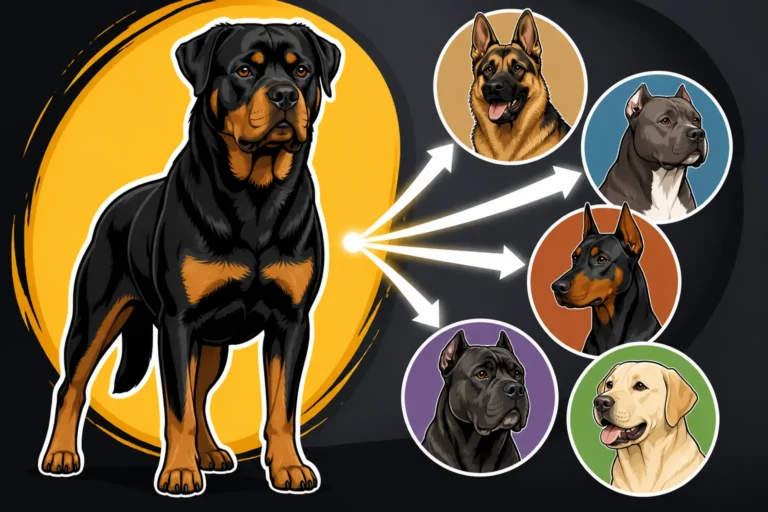
Breeding a carrier Rottweiler safely requires pairing with a genetically clear partner to ensure zero affected puppies result.

The RAB3GAP1 DNA test identifies the gene mutation causing JLPP in Rottweilers and explains what clear results mean for breeders.
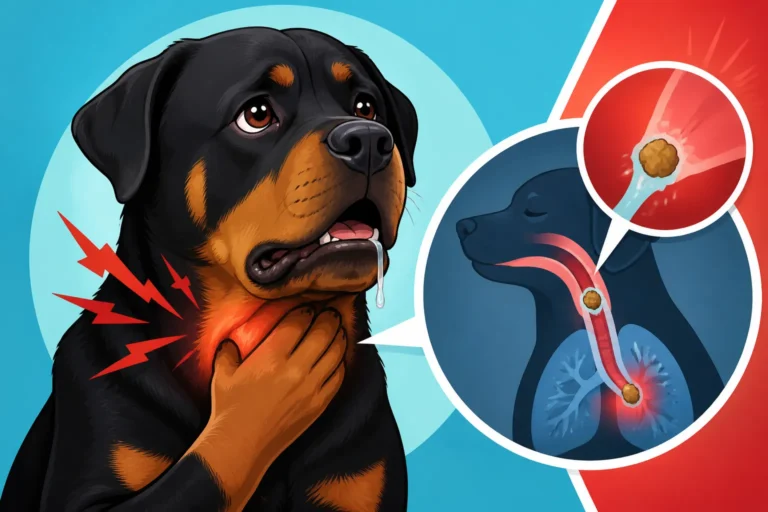
Rottweiler swallowing trouble and megaesophagus create severe aspiration pneumonia risks that require prompt veterinary care and owner vigilance.

A changed Rottweiler puppy bark can stem from normal vocal development or signal health issues requiring veterinary care.

Rottweiler puppies affected by Juvenile Laryngeal Paralysis and Polyneuropathy typically show symptoms between three and six months of age.

Juvenile Laryngeal Paralysis and Polyneuropathy is a genetic disorder causing severe breathing difficulties and progressive nerve degeneration in puppies.

Cardiac clearance for Rottweilers helps breeders prevent genetic heart diseases like subaortic stenosis and dilated cardiomyopathy.

Rottweiler heart disease genetics, including subaortic stenosis and dilated cardiomyopathy, and how these conditions run in family lines.

Medications prescribed for Rottweilers in heart failure explain what they do to manage dilated cardiomyopathy and subaortic stenosis.

Specialized veterinary cardiologists diagnose subaortic stenosis and dilated cardiomyopathy in Rottweilers using advanced echocardiograms.