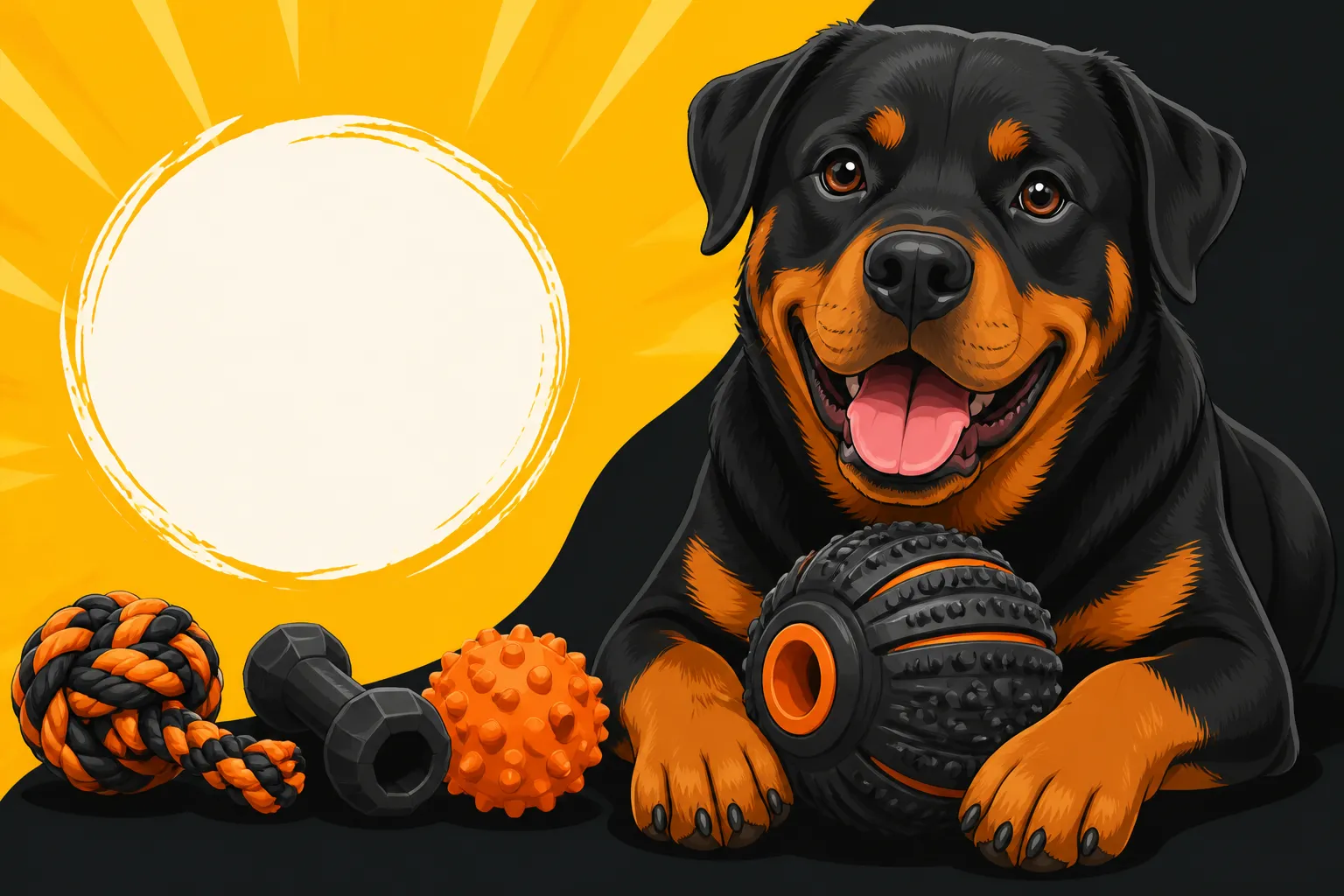
Rottweiler Toys That Last More Than a Day
If you've ever watched your beloved Rottweiler make short work of a brand-new, supposedly "indestructible" toy, you know the frustration. It's disheartening to spend your hard-earned money on something meant to bring joy and enrichment, only for it to be reduced to sad, chewed-up remnants in mere hours, or even minutes. This guide is dedicated to helping you navigate the world of dog toys, understanding why Rottweilers are such formidable chewers, and finding options that truly stand a chance against their powerful jaws.
Understanding the Rottweiler Jaw: Why Most Toys Don't Stand a Chance
It’s not just your Rottweiler; it's a breed trait. Rottweilers possess incredible bite strength, honed over generations of working as drover dogs, herding and guarding cattle. Their powerful jaws, broad muzzles, and strong neck muscles are all built for purpose, and that purpose translates directly into how they interact with toys. When a typical dog toy proclaims itself "tough" or "heavy duty," it's often designed for a much smaller, less determined chewer. Your Rottweiler, on the other hand, considers these claims a personal challenge.
The Physics of a Rottweiler Bite
A Rottweiler's bite force is substantial. While specific numbers can vary and are often debated, it's widely accepted that they can exert hundreds of pounds of pressure per square inch. This isn't just about the initial bite; it's about the sustained chewing, grinding, and tearing action that comes with it. Imagine a powerful vice clamping down repeatedly, and you start to get an idea of the forces at play. This immense pressure means that flimsy plastics or soft rubbers simply don't stand a chance. They are easily punctured, torn, and then systematically dismantled.
For many owners, the sight of a shredded toy isn't just a nuisance; it's a safety concern. Small pieces can be ingested, leading to potential choking hazards or internal obstructions. This is why investing in truly durable toys isn't just about saving money; it's about safeguarding your dog's health. When we talk about finding Rottweiler toys that last more than a day, we're talking about toys designed to withstand this incredible power, rather than just give way to it. This also ties into important discussions like Rottweiler Dental Disease and Cracked Teeth, as inappropriate toys can lead to serious dental issues.
The Rottweiler's Need to Chew
Beyond just having a strong jaw, Rottweilers often have a profound innate need to chew. This isn't always about hunger; it's a natural behavior that serves several purposes. For puppies, it's about exploring their world and easing the discomfort of teething. For adults, chewing helps keep their jaws strong, cleans their teeth, and provides mental stimulation. It can also be a stress reliever or a way to burn off excess energy. Without appropriate outlets, this chewing instinct can turn destructive, leading to chewed furniture, shoes, or even doorframes.
Understanding this deep-seated need is crucial. It means you can't just take away flimsy toys; you need to replace them with something satisfying and safe. This isn't a problem to be corrected, but a natural drive to be channeled. Providing excellent "Rottweiler Chew Toys That Survive the Jaw" is an essential part of responsible ownership, preventing frustration for both you and your dog.
Materials That Matter: What to Look for in a Durable Toy
When it comes to toys for a Rottweiler, the material is everything. Forget cute designs or squeakers that last five minutes; focus on the core construction. The right materials can make the difference between a toy that becomes tomorrow's trash and one that provides weeks, even months, of safe entertainment.
High-Grade Natural Rubber and Thermoplastic Rubbers (TPR)
These are often your best bet. High-grade natural rubber is incredibly resilient, offering a satisfying give without easily tearing. It’s also generally non-toxic and holds up well to heavy chewing. Look for toys that feel substantial and dense, not light and hollow. Brands that specialize in power chewer toys often use proprietary blends of rubber, which are specifically formulated for maximum durability.
Thermoplastic Rubber (TPR) is another excellent option. It's a synthetic material that combines the properties of plastic and rubber, offering flexibility, strength, and resistance to tearing and punctures. TPR toys often have interesting textures that appeal to a Rottweiler's mouth feel, and they tend to be very resilient. When shopping on sites like Chewy, you'll often see these material descriptions in the product details, so pay close attention.
Heavy-Duty Nylon
Nylon is another material that can stand up to serious chewing, though it behaves differently than rubber. Nylon toys are typically very hard and are designed to be gnawed on slowly, rather than compressed or torn. They come in various shapes and flavors, which can make them more appealing. The key with nylon is to monitor them carefully. As a Rottweiler chews, small flakes or bristle-like pieces may come off. These are usually designed to be safely ingested in small quantities, but if your dog manages to break off a large chunk, it could be a hazard. Always supervise initial play and inspect nylon toys regularly.
Here's a quick comparison of common toy materials for heavy chewers:
| Material Type | Durability Rating (Rottweiler Scale) | Pros | Cons | Best For |
|---|---|---|---|---|
| High-Grade Natural Rubber | Excellent | Extremely tough, resilient, satisfying chew, generally safe | Can be pricey, some have strong rubber smell initially | Sustained chewing, fetch, stuffing treats |
| Thermoplastic Rubber (TPR) | Very Good | Durable, flexible, good texture variety, often buoyant | Some lower quality TPR can degrade faster | Chew toys, retrieve toys, puzzle toys |
| Heavy-Duty Nylon | Good | Very hard, long-lasting, often flavored, helps clean teeth | Can be too hard for some dogs, may create sharp edges, potential for swallowing large pieces | Dedicated chewing, dental health |
| Hard Plastics (non-chew) | Poor to Fair | Inexpensive, varied shapes | Easily destroyed, very sharp edges when broken, choking hazard | Light play only, not suitable for Rottweilers |
| Rope Toys | Poor | Good for tug, helps with teeth | Easily shredded, fibers can cause internal blockages, choking hazard | Supervised tug only, not for unattended chewing |
Avoiding Common Toy Traps
While the lure of a plush toy is strong, and a squeaker toy seems fun, these are generally not suitable for unsupervised Rottweiler play. Soft fabrics are ripped apart instantly, and the stuffing becomes a tempting, dangerous snack. The same goes for thin plastic toys or anything with small, easily detachable parts.
Rope toys, while popular for tug-of-war, can also be problematic. As your Rottweiler chews on them, fibers can come loose and be ingested. Over time, these fibers can accumulate in the digestive tract, potentially leading to serious blockages. If you use rope toys, they should be strictly for supervised tug play and put away immediately afterward. Consider focusing on toys that won't shred or splinter easily.
Beyond Material: Choosing the Right Type of Toy for Your Rottweiler
Material is foundational, but the type of toy also plays a huge role in its longevity and your Rottweiler's engagement. Different toys serve different purposes, and a good rotation keeps things interesting and helps toys last longer.
Indestructible Chew Toys
These are the workhorses of your Rottweiler's toy collection. Look for solid rubber or dense nylon options. Many of these toys are designed with irregular shapes or textures to make chewing more satisfying and to help clean teeth. Some popular examples include classic Kong toys (the black "Extreme" line is usually best for Rottweilers), Nylabone DuraChew products, and certain brands like Goughnuts. These are often available from retailers like Chewy, which makes finding a variety of durable options easier.
When selecting a chew toy, ensure it's appropriately sized for your Rottweiler. A toy that's too small could be a choking hazard, even if made from a durable material. It should be large enough that your dog cannot comfortably fit the entire toy in their mouth.
Interactive Puzzle and Dispensing Toys
These toys are fantastic for mental enrichment, which is just as important as physical exercise for a smart breed like the Rottweiler. Puzzle toys require your dog to figure out how to get treats or kibble out, challenging their minds and slowing down their eating. This can be especially useful for "Rottweiler Impulse Control Games".
Look for puzzle toys made from the same durable rubber or hard plastic (where the plastic is not meant to be chewed and is robust enough to not break) as regular chew toys. Some excellent options include various treat-dispensing balls and fillable toys. These aren't meant for aggressive chewing, but for problem-solving. Supervision is still important, especially with new puzzle toys, to ensure your Rottweiler uses them as intended rather than trying to destroy them to get to the goodies.
Durable Fetch and Tug Toys
While rubber chew toys can double as fetch toys, there are specific products designed for high-impact retrieve. Heavy-duty rubber balls, often solid or with very thick walls, are ideal. Avoid tennis balls, as the abrasive felt quickly wears down a Rottweiler's teeth, and they're easily shredded. Look for hard rubber balls that are too big to swallow but small enough for a comfortable carry.
For tug toys, prioritize those made from thick, braided rubber or robust canvas. Again, supervision is key to prevent your dog from shredding the toy after a vigorous tug session. A good tug toy provides an excellent outlet for their natural drives and strengthens your bond through cooperative play. Remember, a toy should be large enough that your Rottweiler cannot get the entire thing into their mouth, especially during an energetic tug game.
Strategies to Extend Toy Lifespan and Keep Your Rottweiler Engaged
Even the most durable toys won't last forever, but with a few smart strategies, you can significantly extend their lifespan and keep your Rottweiler interested and challenged.
Toy Rotation and Supervised Play
One of the simplest and most effective strategies is to rotate your Rottweiler's toys. Instead of having all toys available all the time, keep a selection of 3-4 out and put the rest away. Swap them out every few days or once a week. This keeps the toys feeling "new" and exciting, preventing your dog from becoming bored and obsessively focused on destroying one particular item.
Crucially, always supervise play, especially with new toys or those that are starting to show wear. This allows you to intervene if a toy is breaking into dangerous pieces or if your Rottweiler is developing an unhealthy destructive obsession. Supervised play also strengthens your bond and helps you understand your dog's play style. What seems like an innocuous toy to you could become a hazard if your Rottweiler suddenly decides to de-stuff it.
Matching Toy Durability to Chewing Style
Not all Rottweilers chew with the same intensity. Some are "power chewers" who live to destroy, while others are "gentle giants" who are more interested in carrying or cuddling. Observe your dog's chewing style. If they methodically break down every fiber and shred every seam, you need the absolute toughest options. If they're more about carrying, mouthing, or lightly gnawing, you might have a slightly wider range of options.
However, it's always safer to err on the side of caution. Given the breed's natural jaw strength, it's wise to start with durable toys and only introduce less robust options under strict supervision if you truly understand your dog's limits. When your dog is still a puppy, teaching "Rottweiler Puppy Play Biting With Children" is important, and appropriate chew toys can redirect that energy.
The Role of Enrichment Beyond Toys
While toys are a vital part of a Rottweiler's life, they're just one component of overall enrichment. Mental stimulation, physical exercise, and training are equally important for a well-adjusted and satisfied dog.
Consider integrating activities such as:
- Training sessions: Even short 10-15 minute sessions several times a day can tire out a Rottweiler mentally.
- Sniffing walks: Letting your dog explore the world with their nose is incredibly enriching.
- Appropriate exercise: Remember that a "A Growing Rottweiler's Joints and Overexercise" is a real concern, so ensure exercise is safe and appropriate for their age.
- Interaction with you: Your attention and engagement are often the best "toy" of all.
By providing a holistic approach to your Rottweiler's needs, you'll find they are less likely to channel all their energy into dismantling their toys, making those durable toys last even longer. And when it comes to keeping your Rottweiler healthy and happy, ensuring they have safe, engaging toys is part of the package, just like finding a good pet insurance plan from a provider like Healthy Paws can help manage unexpected health costs.
Disclaimer
This article is for general informational purposes only and does not constitute professional advice. Laws, prices and regulations vary by location and change over time. Consult a qualified professional for guidance on your specific situation.